LeadershipNot yet confirmed elsewhere1 publisher3 min readPublished
Six months of on-off war has turned Gulf interruption into a line item, not a scenario
Foreign Affairs dates the US and Israeli war on Iran to February 28. What has followed reads less like a single shock than a duty cycle at airports, refineries, desalination plants and ports.
The Board Room · Leadership desk
What happened
- Foreign Affairs dates the US and Israeli war on Iran to February 28 and calls the six months since extraordinarily chaotic for the region.
- Airports and oil refineries in the region have repeatedly had to pause operations.
- Months of negotiation have not stopped it, and both capitals appear set on fighting intermittently to exhaust the other side.
Why it matters
- constraint Repeated pauses of unknown length break throughput assumptions rather than asset registers, so buffers have to be sized for recurrence instead of for one event.
- exposure Anyone whose contingency route was simply "not Hormuz" now needs a second one, because the incident arc already includes ground outside the Gulf.
- contradiction The same article treats diversification as newly serious and as necessarily limited; taken together, new arms suppliers change procurement without changing how often operations stop.
- precedent If OPEC+ strain persists alongside the pauses, availability starts being bargained case by case rather than smoothed institutionally, and buyers price the two risks as one.
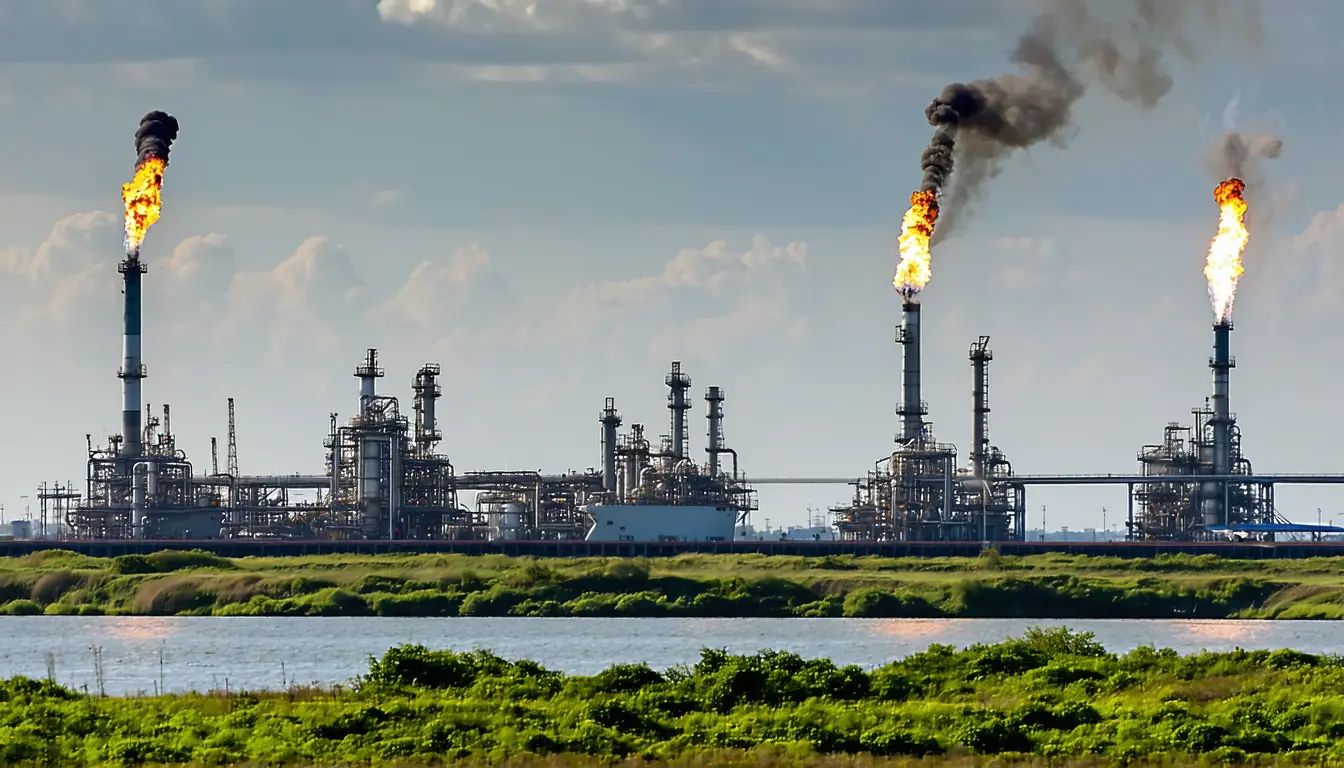
A plant destroyed once is a capital loss with a claim number attached. A plant that stops, restarts and stops again is an availability problem, and it lands in throughput, contract penalties and working capital rather than in a damage assessment. Foreign Affairs describes the second pattern: airports and oil refineries repeatedly pausing operations [3], desalination plants among the targets of drone and missile cycles [2], and ports sitting idle at times because of Iranian attacks on ships in the Strait of Hormuz [4].
Count the asset categories the article names as hit or halted and you get six: military bases, energy infrastructure, desalination plants, airports, refineries and ports [16]. That spread matters more than any individual strike, because it removes the trick of routing around one bottleneck. Water, fuel, air freight and sea freight do not fail independently when the same drone inventory reaches all of them.
The clock is the other half of the pricing problem. The war began on February 28 according to Foreign Affairs [1], the disrupted stretch it describes runs the length of the war, and both Tehran and Washington look content to keep fighting on and off to wear down the other's materiel and willpower [5][15]. Intermittent is the operative word for anyone writing next year's budget: the missing input is not an end date but a duty cycle nobody has published.
The affected ground has already widened past the Gulf. A port in Egypt was hit by drones, with no country claiming responsibility and the United States blaming Iran [7], and the Houthis and Iranian-aligned Iraqi militias have joined the fighting [6]. Contingency plans built around avoiding Hormuz are working with a smaller safe area than they were in February [20].
Then the coordination problem, which is the part operators tend to underprice. The UAE resents how muted the condemnations from Oman, Qatar and Saudi Arabia were over Iranian strikes on Emirati infrastructure [8], and Foreign Affairs argues those rifts are frustrating the region's own efforts to adapt to the war [9]. There is no single regional counterparty to negotiate restart priority with, and the states that share a coastline are not sharing a position.
The guarantor question closes it. Gulf capitals pledged trillions of dollars of spending in the United States, raised oil output, funnelled investment deals to the president's family, and in Qatar's case gifted him a private jet [11]; the article's assessment is that Trump then launched two wars against Iran anyway, putting Israel's aim of debilitating the Islamic Republic ahead of Arab states' preference for stability, and that this showed Washington cannot be trusted [10]. The hedges are real: a Saudi mutual defence pact with Pakistan and Turkey this month [12], and weapons bought from Europe, South Korea, Turkey and Ukraine [13]. The same piece concedes there is no alternative security partner, with China unwilling to convert economic weight into military help, Russia consumed by its own war and Europe unable to coordinate on defence [17]. Changing suppliers does not change the interruption rate.
What remains is the shock absorber. OPEC+ could itself come under extreme stress, and uneven economic damage could unsettle Gulf politics that buyers have long treated as a constant [18][19]. If the institution that smooths supply is straining while the assets that deliver it keep pausing, price risk and availability risk stop being separable.
What to watch
- Whether restart priority at Gulf ports and refineries starts being negotiated collectively rather than state by state.
- Another unclaimed strike on non-Gulf infrastructure of the kind that hit the Egyptian port, which would settle whether that was an outlier.
- Any US-Iran agreement that ends the on-off pattern rather than pausing it between rounds.
Clarity's read
What the record supports and how the coverage leans. The claims behind it follow.
Reality
- Evidence30
- Adoption
- Insufficient
- Hype gap+30
- Incentives55
- Confidence35
Claim ledger
Ranked by verification strength, evidence, and original report placement.
- [1]
The United States and Israel went to war against Iran on February 28, according to Foreign Affairs.
- [2]
Since the war began, countries in the region have faced cycles of drone and missile strikes against their military bases, energy infrastructure and water desalination plants.
- [3]
Regional airports and oil refineries have repeatedly needed to pause operations.
- [4]
Regular ports have at times sat idle because of Iranian attacks on ships in the Strait of Hormuz.
- [5]
Despite months of negotiations, Tehran and Washington seem poised to keep fighting on and off in an effort to wear down the other's materiel and willpower.
- [6]
The war has expanded, with more members of Iran's regional proxy network joining, including the Yemen-based Houthis and Iranian-aligned Iraqi militias.
- [7]
A port in Egypt was hit by drones; no country claimed responsibility, and the United States blamed Iran.
- [8]
The UAE has resented the muted nature of the condemnations that Oman, Qatar and Saudi Arabia made of Iran's attacks on Emirati infrastructure.
- [9]
Foreign Affairs says intra-regional disagreements are feeding resentment and frustrating efforts to adapt to the evolving war.
- [10]
Foreign Affairs writes that Trump launched two wars against Iran, prioritising Israel's desire to debilitate the Islamic Republic over Arab states' desire for stability, and that this showed the region Washington cannot be trusted.
- [11]
Middle Eastern officials made efforts to win Trump over, including pledging trillions of dollars of spending in the United States, raising oil output, funnelling investment deals to the president's own family, and, in Qatar's case, gifting him a private jet.
- [12]
This month Saudi Arabia forged a mutual defence pact with Pakistan and Turkey.
- [13]
Regional governments are buying more weapons from suppliers in Europe, South Korea, Turkey and Ukraine.
- [14]
China already trades hundreds of billions of dollars worth of goods with the region and is currently the top destination for its crude.
- [15]
The disrupted period is roughly six months long and has no stated end point, because the chaotic stretch the article describes is coextensive with a war that started on February 28 and that both sides appear ready to continue intermittently.
- [16]
The article names six distinct categories of asset struck or halted: military bases, energy infrastructure, water desalination plants, airports, oil refineries and ports.
- [17]
Any pivot away from the United States will be limited because there is no alternative security partner at present: China is loath to use its economic might to offer military assistance, Russia is bogged down in its own war, and Europe struggles to coordinate on defence.
- [18]
Institutions central to the region, such as OPEC+, could further come under extreme stress as the conflict drags on.
- [19]
Some regional economies will be affected more than others, which could upend even the Gulf states' traditionally stable politics.
- [20]
The incident map extends beyond the Gulf itself, covering the Strait of Hormuz, Emirati infrastructure, an Egyptian port, and participants based in Yemen and Iraq, so plans that route around Hormuz face a smaller unaffected area than in February.
Sources
1 independent publisher whose own reporting we read for this story.
- foreignaffairs.comThe Impossible Middle East
1 article · August 26, 2026
Topics and entities
Follow any of these and your For You feed starts watching them — no settings page required.
Topics
Entities
- IranFollow
- United StatesFollow
- IsraelFollow
- Saudi ArabiaFollow
- United Arab EmiratesFollow
- QatarFollow
- OmanFollow
- EgyptFollow
- HouthisFollow
- Iranian-aligned Iraqi militiasFollow
- OPEC+Follow
- Strait of HormuzFollow
- Donald TrumpFollow
- ChinaFollow
- RussiaFollow
- TurkeyFollow
- PakistanFollow
- UkraineFollow
- South KoreaFollow
- Foreign AffairsFollow