Leadership1 publisher2 min readPublished
Iran and Oman's Hormuz toll plan puts sea-lane access on the long-term risk register
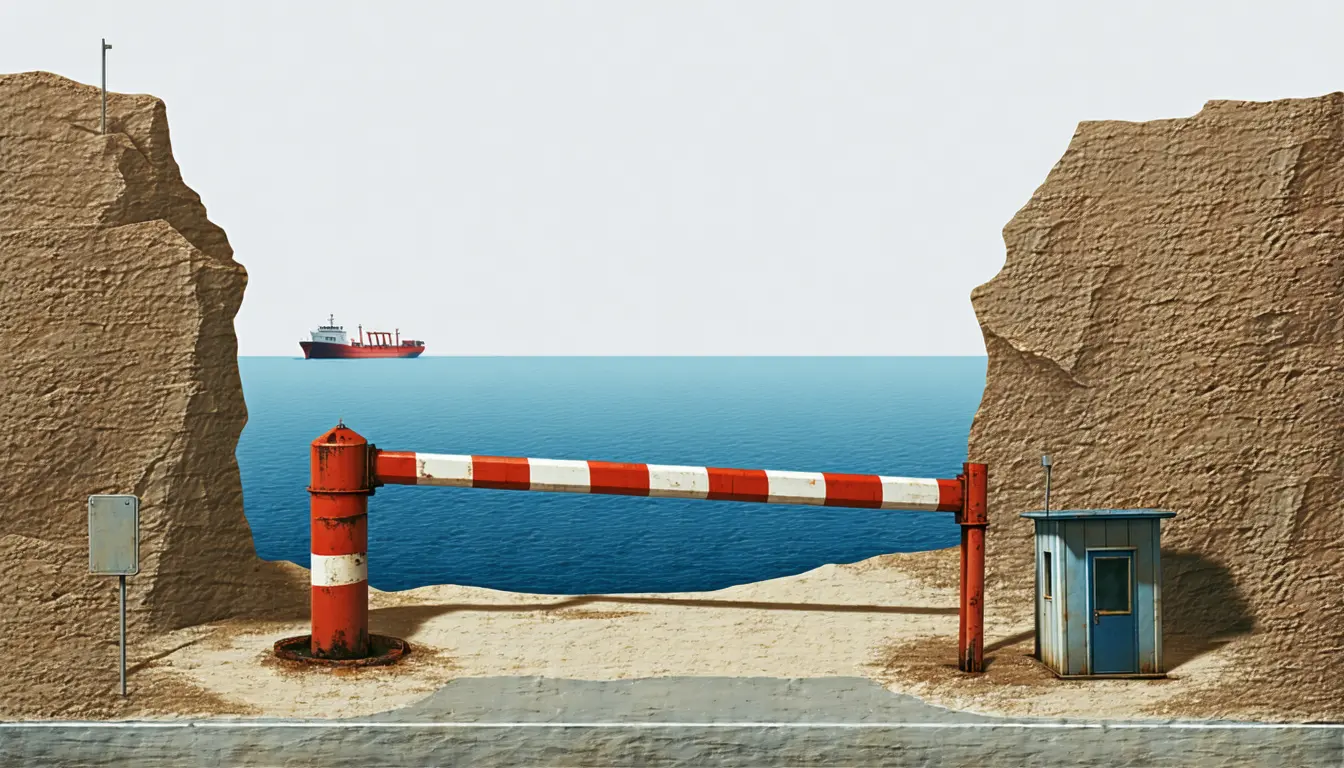
Iran and Oman plan to charge ships to pass Hormuz, and Indonesia briefly floated a toll on Malacca, which carries about 29% of maritime oil flows. With the maritime courts unable to enforce their rulings, passage fees look like a cost that lasts for years.
The Board Room · Leadership desk
Drafted by a language model from the sources cited here and checked against its claim ledger before publication. How we use AISend a correction
What happened
- Donald Trump floated the idea of a US toll on Hormuz in July, then dropped the plan.
- The Houthis are disrupting shipping at the Bab el Mandeb Strait, the entrance to the Red Sea.
- China has routinely ignored a binding 2016 UNCLOS ruling that rejected its South China Sea claims, and it keeps building artificial islands on disputed reefs.
- The UN Security Council, which could impose economic penalties or approve military action to protect shipping, is almost always stalled by a Chinese, Russian or US veto.
Compiled by The Board RoomSomething wrong?How this is made
Why it matters
- cost A Hormuz fee would fall on energy and fertilizer cargoes, so companies that buy fuel or crop inputs would end up carrying it even if they never charter a ship.
- precedent Every strait fee that survives makes the next one politically cheaper to propose, and one has already been suggested for Malacca.
- constraint No court can reliably overturn a new fee imposed on a shipper, so the shipper is left to negotiate or change route.
- decision Supply and freight contracts signed this quarter will settle who pays a Hormuz fee if collection starts before those contracts expire.
The board-deck version files the Red Sea and Hormuz under temporary disruption. A conflict raises the cost of passage, the conflict ends, and the cost comes off the budget. The Foreign Affairs essay that gathers these cases describes a slower process. During the Cold War, it notes, most governments settled on treaties and multilateral bodies meant to guarantee freedom of navigation in international waters [15]. "That order is now collapsing," the essay says [6]. It argues that great powers "have, in key areas, stopped abiding by the rules that have held for decades" [14].
A toll lasts as long as nobody with authority can remove it. According to the essay, the International Tribunal for the Law of the Sea is slow and has no enforcement mechanism, and the Permanent Court of Arbitration has the same flaw [7]. Jurisdiction opens a second gap. Only the country where a ship is registered can prosecute its crew, so a state can shield crews it sent out by declining to bring cases [10]. Russia is suspected of using ships with concealed identities to cut undersea cables [11].
A skeptic would say the toll record so far is mostly talk. Of the three toll proposals the essay describes, two have been dropped: Trump's and the Indonesian finance minister's [1]. That is fair as far as it goes. In the essay's account the Iran-Oman plan is still going ahead [2], and the Indonesian idea came up just as Iran announced its own toll [4]. "Governments around the globe are taking note of the success of the maritime blockades in the Middle East," the essay says [17].
The essay does not say what Iran and Oman would charge or when collection would begin. We do not know yet whether a Hormuz fee would be small or material. I think it belongs in plans as a standing cost of unknown size. That judgement rests on the enforcement gap more than on any single strait.
The longer-term exposure is in the Arctic. Russia is trying to assert control over large areas of Arctic waters and seabeds [16]. As the ice melts over the next two decades, commercial shipping on the Northern Sea Route along Russia's Arctic coast will grow sharply, the essay says [12]. Russia already makes foreign vessels work through what the essay calls a "complicated and suffocating system of permissions and permits" [13].
What to watch
- Whether Iran and Oman publish a fee level, a start date and the classes of vessel the Hormuz charge would cover.
- Whether Indonesia or another government with a strait on its coast revives a toll proposal once the Hormuz plan takes shape.
- Whether a dispute over a strait fee reaches the Law of the Sea tribunal or the Security Council, and what either body does with it.