Invest1 publisher3 min readPublished
Qatar mediates the Iran war with a fifth of world LNG stuck behind Hormuz
Qatar sent nearly every LNG cargo through the Strait of Hormuz, and very few have made the trip since March. Oman's exports are flowing and Muscat is mediating anyway, so exposure explains only part of the urgency.
The Investor · Invest desk
What happened
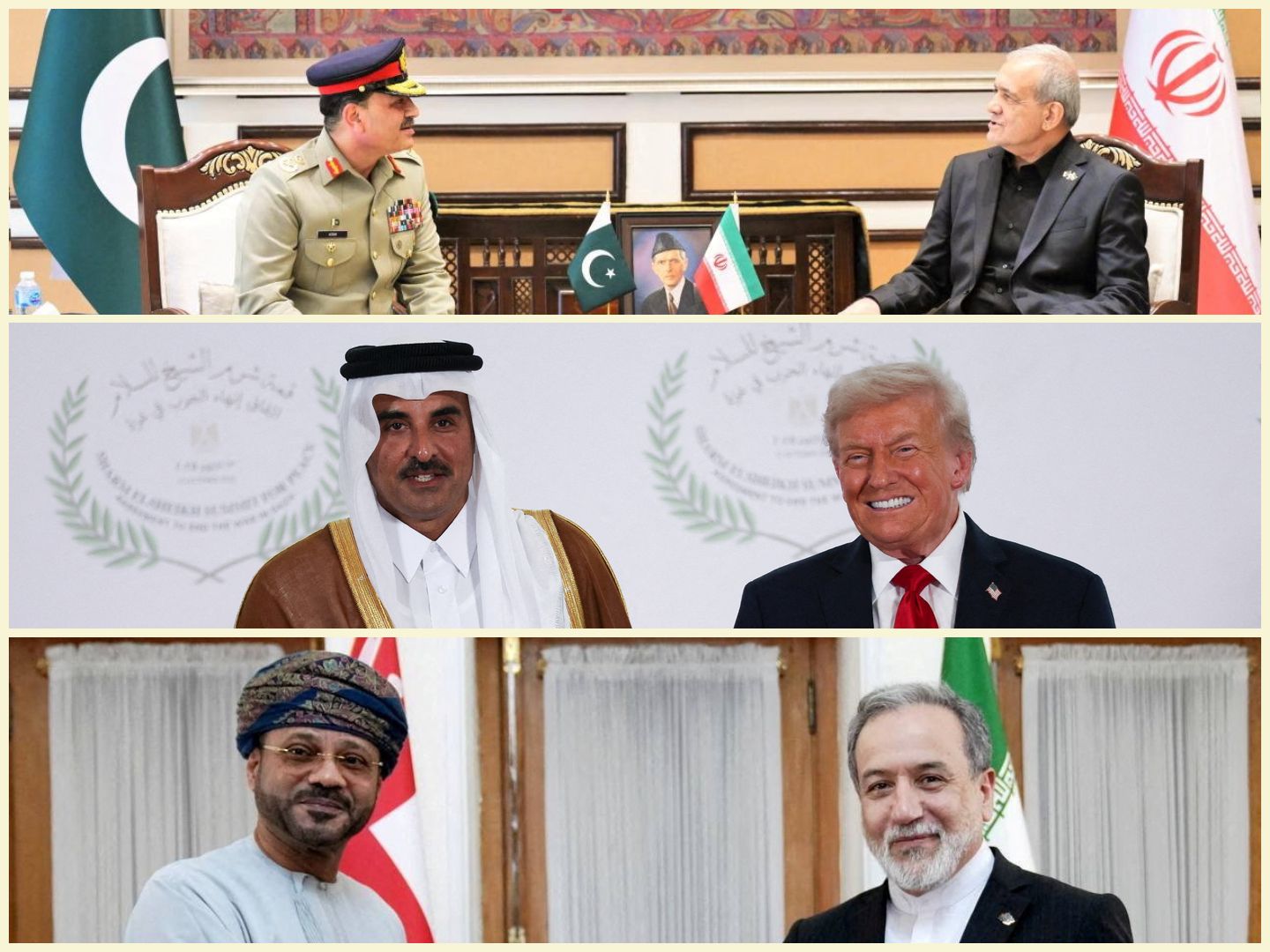
- Oman, Pakistan and Qatar are trying to broker an end to the Iran conflict while absorbing military attacks and economic strain from the same war, with Qatar and Oman hit by Iranian drones and missiles.
- Qatar exported almost one-fifth of the world's LNG before the conflict, all of it through the Strait of Hormuz, and very few cargoes have gone through since March, when Iran in effect shut the waterway.
- All three governments are pushing to restart talks during the UN General Assembly this week, with Qatar conveying messages between Washington and Tehran, its prime minister said in New York.
Compiled by The InvestorSomething wrong?How this is made
Why it matters
- constraint With pipelines useless for LNG and no alternate route being pursued, the only way Doha restores cargo flow is a settlement between two parties it does not control.
- exposure The diplomatic channel itself is physically reachable: two of the three mediators have been struck, and one has been threatened out loud by the American president.
- contradiction Oman keeps mediating with its exports intact and its economy resilient, so commercial exposure cannot be the whole explanation for why these three are at the table.
LNG tankers are a worse thing to gamble in a contested waterway than crude. Robin Mills, a non-resident fellow at Columbia University's Center on Global Energy Policy and chief executive of Qamar Energy, told Semafor the ships are more flammable, more expensive and harder to repair, and that Qatar has been reluctant to send them through the strait at all even as some oil tankers have made the trip [8]. Iran in effect shut the waterway in March, and the account is dated Sept. 21, so the halt runs to roughly six months [5][6][7].
Before the war almost one-fifth of the world's LNG came out of Qatar, and all of it went through Hormuz [4]. Pipelines cannot carry LNG, and the government has decided against alternate routes for its other exports [9]. All of the export route therefore still sits on one waterway [10]. Semafor does not put a dollar figure on the cargoes not sold.
Talal Abdulla Al-Emadi, an energy law professor at Qatar University, said the continued risk to Gulf energy infrastructure raises de-escalation "from a long-term goal to an immediate necessity" [11]. Alex Vatanka of the Middle East Institute put Doha's position in commercial terms: "Their wealth, their future, everything is tied to the physical location where they're located," he said, and the Qataris keep mediating because "they don't have an option" [12][13]. In past crises, Semafor notes, these mediators had little of their own physical infrastructure or revenue on the line [23].
Pakistan's exposure runs through fuel and wages. Losing Qatari supply has left Islamabad weighing more expensive fuel or extended evening blackouts [14], while the broader slowdown strains remittances from Pakistanis working in the Gulf [2]. Rabia Akhtar, dean of the faculty of social sciences at the University of Lahore, said Pakistan is engaged because of "the cost of staying on the sidelines" [15], and that "Pakistan does not have to enter the fighting to experience its consequences" [16]. It is the rare Iranian neighbor that has not been attacked [17].
Oman breaks the pattern. Its oil and gas exports are flowing, its economy has emerged as one of the region's most resilient, and Iran has hit it a few times anyway [18]. President Donald Trump threatened Muscat over its mediating role, saying, "If Oman gets in the way, we'll bomb the sh*t out of them" [19]. A Middle East Institute fellow called the position "a thankless job at times" [20].
Exposure explains why Doha cannot leave the table. It does not set a date. Qatar's prime minister, Sheikh Mohammed bin Abdulrahman Al Thani, said in New York on Sunday that daily developments are "changing the course of the negotiations" and that "There is no clear master strategy that we are following in order to put an end to this" [21][22]. Qatar has had the same incentive since March and is still conveying messages in September [5][21]. Two things would undercut the reading: cargoes resuming under escort while all three keep mediating at the same tempo, or Iran halting Omani exports and changing Muscat's calculation [18]. If Doha starts funding an alternate export route, it has concluded the closure will outlast the talks [9].
What to watch
- Any LNG cargo transiting Hormuz under an escort arrangement, and whether Qatar's message-passing tempo changes after it.
- Whether Doha funds an alternate export route after deciding not to pursue one.
- Whether Pakistan extends evening blackouts or buys the more expensive replacement fuel.