Leadership1 publisher3 min readPublished
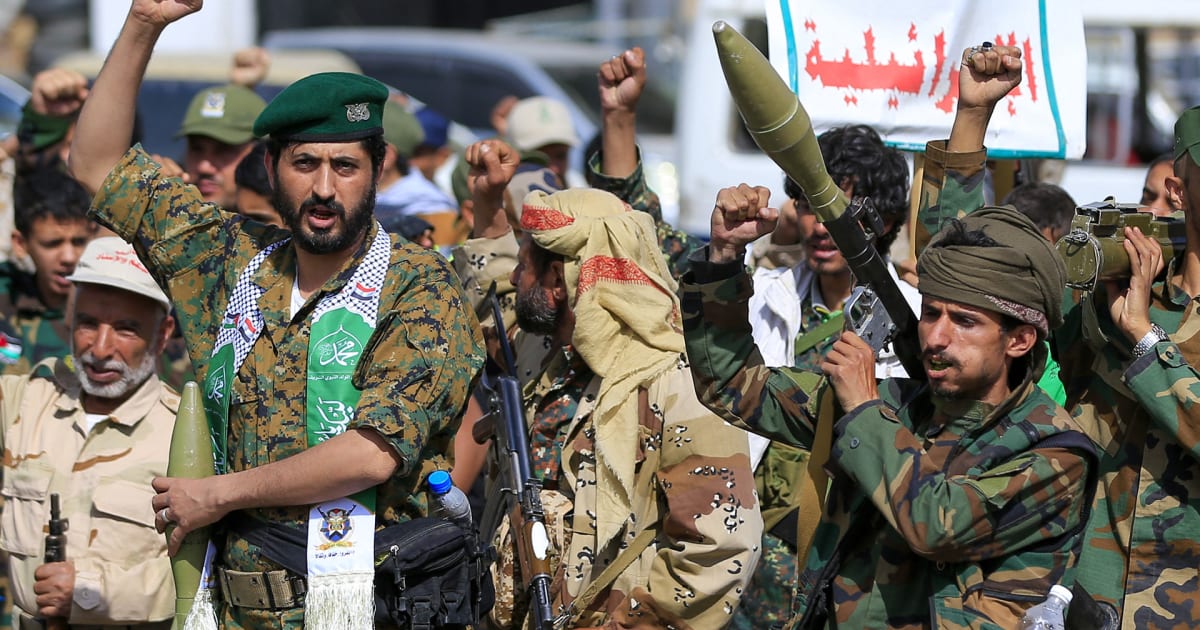
Houthi control of Bab el Mandeb removes the workaround for a closed Hormuz
Both routes that carried Gulf barrels around the closed Strait of Hormuz have now been hit, one by a drone and the other by a Houthi takeover of the Red Sea chokepoint. Oil is at $110 a barrel.
The Board Room · Leadership desk
What happened
- The Strait of Hormuz has been largely closed to maritime traffic, blocking a transit route for roughly 20 percent of the world's liquefied natural gas trade and an even higher share of the oil trade.
- Oil rose from the mid $70s a barrel in August to $110 in September.
- Houthi attacks last week on the Saudi cities of Riyadh and Yanbu make an escalation between Saudi Arabia and the Houthis a very real risk, the Foreign Affairs essay says.
Compiled by The Board RoomSomething wrong?How this is made
Why it matters
- constraint With the Red Sea chokepoint under Houthi control and the Saudi overland pipeline struck, there is no third route to divert around the next hit. The next interruption shows up in the price.
- decision Energy and freight buyers now choose between hedging at a price carrying roughly a 47 percent August-to-September premium and holding the exposure the essay puts at $150 to $200 a barrel.
- exposure Any plan built on the $80s-to-$90s band that held from April until this month is being re-run from the first print above $100 since the April peak.
- precedent Both sides previously held back from destructive strikes on Gulf energy infrastructure; with that restraint gone, facilities rather than individual tankers become the expected instrument of pressure.
Cargoes could go up the Red Sea and through the Bab el Mandeb Strait, the main alternative for shipping Gulf oil and gas [3]. Saudi Arabia could push a large portion of its exports west overland through the East-West pipeline [4]. Those two routes absorbed the closure of Hormuz. The Foreign Affairs essay says the war has now reached both of them [13]. As of mid-September the Red Sea chokepoint is under Houthi control [3], and the pipeline was temporarily disabled by a drone launched by an Iranian-affiliated militia operating out of Iraq [4].
Oil passed $125 a barrel in April, during what the International Energy Agency called the "most severe oil supply shock in history", then settled into the $80s and $90s until this month [11][10]. Producers outside the Gulf, among them the United States, Argentina, Brazil, Canada and Guyana, added an estimated 1.4 million barrels a day [12]. Nearly 20 million barrels a day of crude and refined products crossed Hormuz before the war [8], so the added supply is about 7 percent of the prewar flow [1]. Exports were running at roughly half their prewar level by August [9]. On that basis, the new barrels covered something like 14 percent of the missing volume [2].
For anyone buying fuel or chartering capacity this quarter, $110 is about 47 percent above the mid-$70s of August [3]. Hedging at that level locks in the premium the last six months created. Declining to hedge leaves the exposure the essay describes: further supply interruptions could easily push oil to $150 or even $200 a barrel now that the region's energy infrastructure is being struck [6]. The essay also argues that the United States and its allies could not protect energy infrastructure and shipments indefinitely under threat of attack [19].
The essay is an argument for diplomacy, not a market forecast. It describes the pipeline outage as temporary and never puts a number on the traffic still moving through Bab el Mandeb under Houthi control.
Timing separates two decisions. Re-pricing an energy and freight plan is this quarter's work, because the route that had been absorbing the disruption is unavailable now. A settlement runs on a longer clock. The essay calls for an agreement with Iran covering a cease-fire, a plan for keeping vital waterways open and measures that induce Tehran to comply, and it wants Riyadh to pursue a similar settlement with the Houthis [17]. Both capitals would have to make painful concessions, it says [18]. "The least bad option is a return to diplomacy," the essay says [16]. Half a year of military attacks and economic coercion has not forced Tehran and its partners into concessions, by its account [14], and President Donald Trump threatened in a UN speech on Tuesday to "annihilate" Iran [15].
What to watch
- Whether the East-West pipeline returns to full throughput, since the essay describes the outage as temporary.
- Whether Saudi Arabia and the Houthis move toward a truce, or the Riyadh and Yanbu attacks widen into a longer exchange.
- A published transit count for Bab el Mandeb under Houthi control would size what is left of the workaround.