Satellite survey of ice cliffs finds rapid retreat has so far been short-lived
A WHOI-led team tested marine ice-cliff instability against 15,330 satellite observations and reports limits to rapid retreat in Science. The data set gives modelers a global test for a mechanism that has never been directly observed.
The Scientist · Science desk
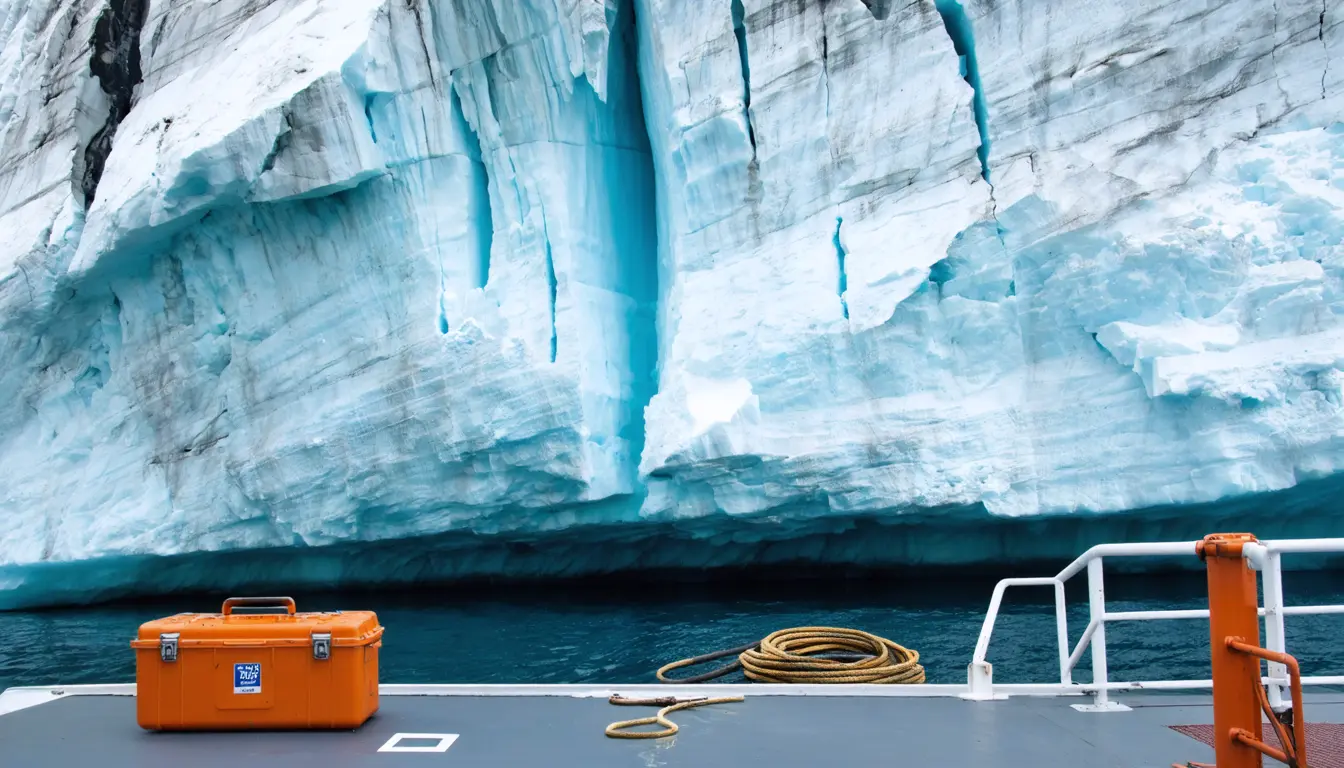
Key figures: the marine ice-cliff instability theory says cliffs taller than about 100 meters (328 feet) above the waterline can become unstable; researchers analyzed 15,330 satellite observations; global sea level has risen more than 8 inches (20 centimeters) since 1880.
| Figure | Value | Note | Claim |
|---|---|---|---|
| Theory: cliffs taller than this may turn unstable | 100 meters, about | about 328 feet above the waterline | 2 |
| Satellite observations | 15,330 observations | 4 | |
| Global sea level rise since 1880 | 8 inches, over | more than 20 centimeters | 10 |
What happened
- The theory holds that an ice cliff rising more than about 100 meters (328 feet) above the waterline may lose its structural stability and trigger ice loss that keeps itself going.
- Because the process has never been directly observed, scientists have debated whether projections of sea level rise should include it.
- The measurements come from satellite laser altimetry, which times laser pulses from the satellite to the surface and back to get elevation.
- From those elevations the team calculated cliff heights and compared them with ice thickness, water depth, crevassing and calving rates across thousands of locations.
Why it matters
- Who has to decide decision Modelers still have to decide whether to build the mechanism into projections, and the survey puts evidence on both sides of that choice.
- What's now possible capability Modelers can ask which conditions drive rapid ice loss and which limit it, then check the answer against measured cliffs.
- What it limits constraint A survey that sets cliff height beside crevassing and calving rates shows which conditions go together with fast retreat. Showing that any one of them causes it takes a model that reproduces the pattern.
The lead author's summary holds two findings side by side. "Our findings suggest ice-sheet models may underestimate how quickly tall ice cliffs can break apart. At the same time, the observations show that glaciers often thin and retreat into regions where the conditions become less favorable for continued rapid retreat," said Caroline Needell, an MIT-WHOI Joint Program doctoral student and lead author [7].
Jeremy Bassis, a geophysicist at the University of Michigan and a study author, put the second half in terms of the record. "Fortunately, all of the examples we have so far suggest that the rapid retreat documented in this study is short-lived and the glaciers eventually restabilize," he said [8]. Then he added a condition: "Whether that remains true in the future as climate change continues to push ice sheets out of their comfort zone is something we do not yet know" [12].
That condition matters because projections look forward. Sea level is already up more than 8 inches (20 centimeters) since 1880, and scientists project it will keep rising through this century as ice sheets lose mass [10].
The denominator needs care. The 15,330 is a count of individual satellite observations [4]. The account also refers to thousands of ice cliffs [9], so observations and cliffs are not the same unit. A theory about the tallest cliffs needs the count above roughly 100 meters [2], and the account does not give it, or the number of those cliffs that retreated rapidly.
The design addresses a specific gap. The account calls the study the most comprehensive observational analysis yet of the cliffs that fringe the ice sheets [1]. Earlier studies focused on individual glaciers or computer simulations; this one examines thousands of ice cliffs using one consistent set of satellite observations [9]. In our view that guards against a result that rests on one glacier, though it covers only the period satellites have been watching.
What to watch
- Ice-sheet model runs that use these observations to constrain the mechanism, and any change they produce in sea-level projections.
- The Science paper's own counts of cliffs above roughly 100 meters and of cliffs that retreated rapidly.
- Later observations of a tall cliff that retreats rapidly and does not restabilize, the case Bassis said is not yet known.
Clarity's read
What the record supports and how the coverage leans. The claims behind it follow.
Reality
- Evidence72
- Adoption
- Insufficient
- Hype gap−5
- Incentives
- Insufficient
- Confidence62
Claim ledger
Ranked by verification strength, evidence, and original report placement.
- [1]
A new study led by the Woods Hole Oceanographic Institution (WHOI) provides the most comprehensive observational analysis yet of the towering ice cliffs that fringe Earth's ice sheets.
- [2]
Marine ice-cliff instability (MICI) proposes that extremely tall ice cliffs, taller than about 100 meters (328 feet) above the waterline, can become structurally unstable and trigger a cycle of rapid, self-sustaining ice loss.
- [3]
Because the MICI process has never been directly observed, scientists have debated whether it should be included in projections of future sea level rise.
- [4]
Researchers analyzed the characteristics of ice cliffs using 15,330 individual satellite observations collected around the margins of Earth's ice sheets.
- [5]
The study, published in Science, used satellite laser altimetry, a technique that measures surface elevation by timing how long it takes laser pulses to travel from a satellite to Earth's surface and back.
- [6]
The measurements allowed the researchers to calculate cliff heights and compare them with ice thickness, water depth, crevassing and calving rates across thousands of locations around the ice sheets.
- [7]
"Our findings suggest ice-sheet models may underestimate how quickly tall ice cliffs can break apart. At the same time, the observations show that glaciers often thin and retreat into regions where the conditions become less favorable for continued rapid retreat."
- [8]
"Fortunately, all of the examples we have so far suggest that the rapid retreat documented in this study is short-lived and the glaciers eventually restabilize."
- [9]
Unlike previous studies that focused on individual glaciers or computer simulations, this work examines thousands of ice cliffs across Earth's ice sheets using a consistent set of satellite observations.
- [10]
Global sea level has already risen by more than 8 inches (20 centimeters) since 1880, and scientists project it will continue to rise throughout this century as ice sheets lose mass.
- [11]
"These observations provide a new global data set to test the theory against real-world measurements and improve ice-sheet models by identifying the conditions that drive rapid ice loss and those that limit it."
- [12]
"Whether that remains true in the future as climate change continues to push ice sheets out of their comfort zone is something we do not yet know."
Get this ledger inside ChatGPT. Ask about any of our stories and the answer brings its figure, each claim’s verdict and the sources. Free, no account.
Sources
1 independent publisher whose own reporting we read for this story.
- phys.orgGlobal ice-cliff survey tests disputed theory behind projections of accelerated sea level rise
1 article · October 15, 2026
Topics and entities
Follow any of these and your For You feed starts watching them — no settings page required.
Topics
- Satellite Remote Sensing MissionsFollow
- Ice Sheet DynamicsFollow
- Sea-level riseFollow