Two long-legged brothers are the first domestic cats with genetically confirmed Marfan syndrome
Cornell researchers report the first genetically confirmed Marfan syndrome in domestic cats, in two brothers with two altered copies of FBN1. The variant left some gene function intact, and the team says that helps explain why both reached adulthood.
The Scientist · Science desk
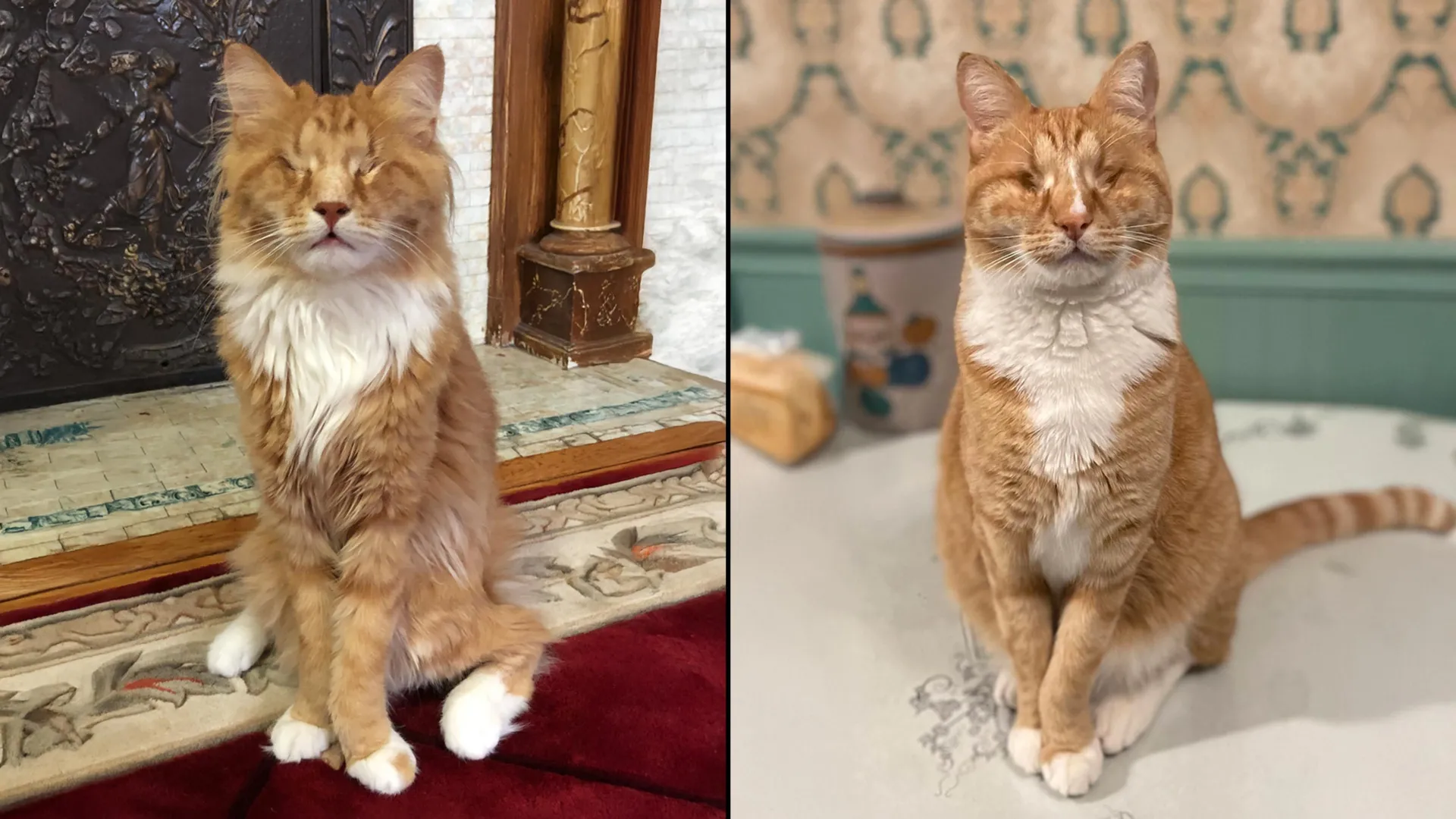
Gary and Shaggy had long limbs as kittens, later eye abnormalities and an enlarged aorta. Each has two altered FBN1 copies, one from each parent. Their variant left some gene activity. In humans one altered copy can be enough to cause Marfan. Evans says the work may help develop genetic tests.
- exposure Gary and Shaggy Unusually long limbs as kittens; later, abnormal eye structures and an enlarged aorta, claim 3
- exposure The brothers' FBN1 genes Two altered copies each, one inherited from each parent, claim 8
- capability The brothers' variant Did not completely disable the gene; some normal activity continued, claim 11
- precedent Humans A mutation in just one copy of FBN1 can be enough to cause Marfan syndrome, claim 7
- capability Veterinarians Can help them recognize similar cases; may help develop genetic tests, per Evans, claim 14
| Who | How | Kind | Claim |
|---|---|---|---|
| Gary and Shaggy | Unusually long limbs as kittens; later, abnormal eye structures and an enlarged aorta | exposure | 3 |
| The brothers' FBN1 genes | Two altered copies each, one inherited from each parent | exposure | 8 |
| The brothers' variant | Did not completely disable the gene; some normal activity continued | capability | 11 |
| Humans | A mutation in just one copy of FBN1 can be enough to cause Marfan syndrome | precedent | 7 |
| Veterinarians | Can help them recognize similar cases; may help develop genetic tests, per Evans | capability | 14 |
What happened
- Gary and Shaggy stood out as kittens for unusually long limbs, and veterinarians later found abnormal eye structures and an enlarged aorta.
- Genetic testing showed each brother inherited one altered FBN1 copy from each parent.
- Two altered copies is exceptionally uncommon and can severely disrupt production of normal fibrillin-1.
Why it matters
- capability Veterinarians now have a documented pattern to compare against: long limbs, eye abnormalities and an enlarged aorta in the same animal. Evans says the work may help develop genetic tests.
- constraint The survival explanation rests on two brothers and an inference from residual gene activity, so it cannot yet say how cats with other FBN1 variants fare.
- constraint Any feline test built from this paper would start from a single described variant.
The design was a clinical workup paired with a DNA analysis. Researchers from multiple disciplines examined Gary and Shaggy and analyzed their DNA [9]. The search led to FBN1, the gene that provides instructions for fibrillin-1 [5]. That protein is essential for healthy connective tissue, including blood vessels, bones, ligaments, skin and eyes [6]. Those are the places where the brothers' long limbs, abnormal eye structures and enlarged aorta showed up [3].
The genotype is the odd part. Marfan syndrome is primarily recognized in people [1], where it affects approximately 1 in 4,000 [4] and a mutation in one copy of the gene can be enough to cause it [7]. Gary and Shaggy each had two altered copies, one from each parent [8]. Two altered copies is exceptionally uncommon and can severely disrupt production of normal fibrillin-1 [10].
The variant is where the survival story comes from. According to the Cornell release, it did not completely disable the gene. It interfered with how the gene's instructions were processed while some normal activity continued [11]. The paper's title calls it a homozygous hypomorphic FBN1 splice region variant [2]. Cornell says that remaining function helps explain why the brothers survived into adulthood, when two copies of such a mutation could otherwise have produced a much more severe form of the disorder [12].
In our view the explanation is sensible, and it is an inference drawn from two animals. The thing this doesn't tell you is how common the variant is in cats, or whether the parents, who each passed on an altered copy, had signs of their own [8].
Dr. Jacquelyn Evans, senior author and assistant professor in Cornell's College of Veterinary Medicine and at the Baker Institute for Animal Health, said: "The findings provide a foundation for improved veterinary diagnostics" [13]. She added: "It can help veterinarians recognize similar cases in the future and may help develop genetic tests" [14].
What to watch
- Whether a genetic test for this FBN1 variant is developed, as Evans says the findings may help it along.
- Whether other cats with long limbs, eye changes and an enlarged aorta turn out to carry FBN1 variants, including in a single copy.
Clarity's read
What the record supports and how the coverage leans. The claims behind it follow.
Reality
- Evidence55
- Adoption
- Insufficient
- Hype gap+10
- Incentives
- Insufficient
- Confidence50
Claim ledger
Ranked by verification strength, evidence, and original report placement.
- [1]
In a study published in Scientific Reports, Cornell scientists reported the first molecular characterization of Marfan syndrome in domestic cats, a condition primarily recognized in humans.
- [2]
The paper is titled "A homozygous hypomorphic FBN1 splice region variant in domestic cats with Marfan syndrome" (Scientific Reports, 2026).
- [3]
Brothers Gary and Shaggy stood out as kittens because of unusually long limbs; veterinarians later identified abnormalities in their eye structures and an enlarged aorta.
- [4]
Marfan syndrome affects approximately 1 in 4,000 people, but the brothers represented the first known documented feline cases.
- [5]
The gene FBN1 provides instructions for producing fibrillin-1.
- [6]
Fibrillin-1 is essential for healthy connective tissue, helping support structures including blood vessels, bones, ligaments, skin, and eyes.
- [7]
In humans, a mutation in just one copy of FBN1 can be enough to cause Marfan syndrome.
- [8]
Genetic testing showed Gary and Shaggy each had two altered copies of FBN1, having inherited one from each parent.
- [9]
Researchers from multiple disciplines conducted medical examinations of the brothers and analyzed their DNA.
- [10]
Having two altered copies of FBN1 is exceptionally uncommon and can severely disrupt the production of normal fibrillin-1.
- [11]
The brothers' variant did not completely disable the gene; it interfered with how the gene's instructions were processed while still allowing some normal activity to continue.
- [12]
The remaining function helps explain why Gary and Shaggy survived into adulthood, even though carrying two copies of such a mutation could otherwise have resulted in a much more severe form of the disorder.
- [13]
"The findings provide a foundation for improved veterinary diagnostics," said senior author Dr. Jacquelyn Evans, assistant professor in the College of Veterinary Medicine and at the Baker Institute for Animal Health.
- [14]
"It can help veterinarians recognize similar cases in the future and may help develop genetic tests."
Get this ledger inside ChatGPT. Ask about any of our stories and the answer brings its figure, each claim’s verdict and the sources. Free, no account.
Sources
1 independent publisher whose own reporting we read for this story.
- sciencedaily.comCornell scientists identify rare human genetic disorder in two unusually long-legged cats
1 article · October 14, 2026
Topics and entities
Follow any of these and your For You feed starts watching them — no settings page required.