Raskatov argues P3, once judged harmless, deserves study beside amyloid beta in Alzheimer's
UC Santa Cruz researchers say the peptide P3, long thought harmless, can form clumps faster than amyloid beta and may damage brain cells. The claim comes from a commentary that highlights research, so P3's role in Alzheimer's disease is still a hypothesis.
The Scientist · Science desk
What happened
- Jevgenij Raskatov, a UC Santa Cruz professor, published the commentary in ChemBioChem, where he highlights research suggesting P3 forms microscopic clumps and threadlike fibrils.
- The commentary also cites evidence that P3 may interact with amyloid beta, potentially changing how it accumulates in the brain and how toxic it becomes.
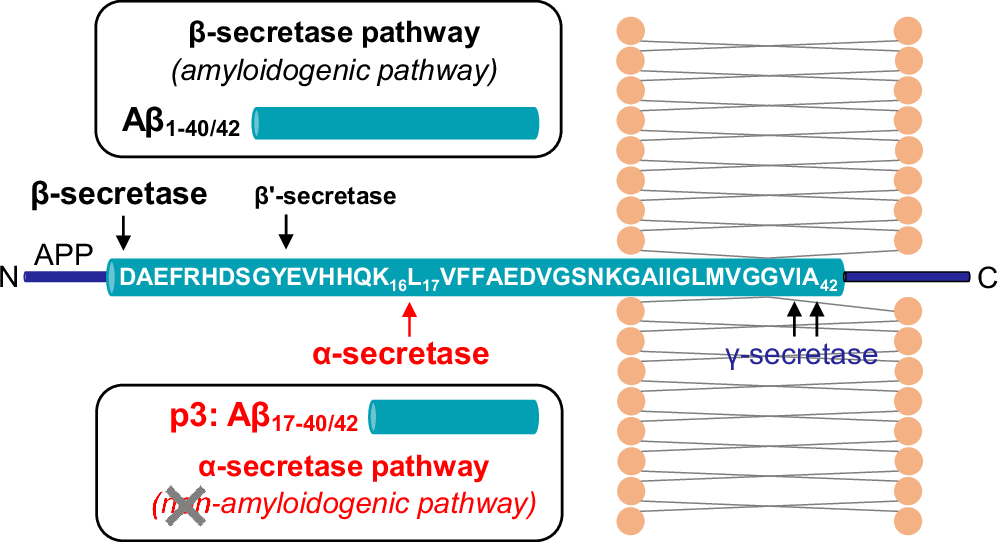
- P3 comes from a different cutting order of the Amyloid Precursor Protein: alpha-secretase acts first, then gamma-secretase, while amyloid beta is released by beta-secretase and then gamma-secretase.
- Raskatov has proposed renaming the peptide "Amyloid alpha," or A-alpha, to mark it as its own aggregating species.
Why it matters
- constraint Until P3 is measured in human brain tissue and tested against amyloid beta, the commentary can justify new experiments but not new trials.
- cost A second target has to be argued against a field that has already run more than 400 trials, most of them aimed at amyloid beta, with many failures.
- decision Groups already running amyloid aggregation or toxicity assays can decide whether to add P3 beside amyloid beta, since an interaction can only be seen with both peptides present.
Raskatov hedges his own claim in the same breath as he makes it. "The P3 peptide is, most likely, not the innocent bystander it was commonly thought to be. There's still more research to be done. But this could turn Alzheimer's research on its head," he said [11]. We would weight the first two sentences of that quote above the third.
The document is a commentary [1]. The speed comparison with amyloid beta appears in the university's summary of it [2]. The summary does not say which assays produced the comparison, at what concentrations, or whether P3 aggregates have been found in patient brain tissue. The thing this doesn't tell you is how much P3 sits beside amyloid beta in a living brain.
Raskatov's laboratory studies amyloid peptides [12], so he is arguing for a relative of his own subject. His case rests on the field's record. Antibodies such as lecanemab and donanemab are approved to help remove amyloid beta [6], and he argues the benefits so far remain limited [7]. Some treatments have also been associated with brain hemorrhages and strokes [5]. "Progress has been extremely slow, and the current state of the art in Alzheimer's therapy leaves much to be desired," he said [8].
In our view the interaction claim is the one to test first. A P3 that only clumps on its own adds a second target to study. A P3 that changes how toxic amyloid beta becomes would also bear on how results from amyloid-directed treatments are read.
What to watch
- Independent measurements of P3 in human brain tissue, reported alongside amyloid beta in the same samples.
- Experiments that mix P3 with amyloid beta and report aggregation speed and cell toxicity for each peptide alone and together.
- Whether trial analyses of amyloid-directed antibodies begin to report P3 as well.
Clarity's read
What the record supports and how the coverage leans. The claims behind it follow.
Reality
- Evidence35
- Adoption
- Insufficient
- Hype gap+40
- Incentives60
- Confidence50
Claim ledger
Ranked by verification strength, evidence, and original report placement.
- [1]
UC Santa Cruz professor Jevgenij Raskatov published a new commentary in ChemBioChem highlighting research suggesting that the peptide P3 can form microscopic clumps and threadlike structures known as fibrils.
- [2]
According to the university's summary, P3, previously believed to be harmless, can form harmful-looking protein clumps even faster than amyloid beta and may also damage brain cells.
- [3]
P3 forms when Amyloid Precursor Protein is cut by alpha-secretase first, followed by gamma-secretase, whereas amyloid beta is released when beta-secretase and gamma-secretase cut the protein in sequence.
- [4]
More than 400 clinical trials have investigated potential Alzheimer's drugs, most focusing on amyloid beta; many failed and others produced only modest benefits.
- [5]
Some Alzheimer's treatments have been associated with serious complications, including brain hemorrhages and strokes.
- [6]
Antibody treatments such as lecanemab and donanemab have been approved to help remove amyloid beta from the brain.
- [7]
Raskatov argues that the benefits achieved so far with amyloid-targeted treatments remain limited.
- [8]
"Progress has been extremely slow, and the current state of the art in Alzheimer's therapy leaves much to be desired," he said.
- [9]
Raskatov has proposed calling the P3 peptide "Amyloid alpha," or A-alpha.
- [10]
Evidence suggests P3 may interact with amyloid beta, potentially influencing how it accumulates in the brain and how toxic it becomes.
- [11]
"The P3 peptide is, most likely, not the innocent bystander it was commonly thought to be. There's still more research to be done. But this could turn Alzheimer's research on its head," said Raskatov.
- [12]
Raskatov's laboratory investigates amyloid peptides in hopes of identifying ways to prevent their harmful effects and develop better Alzheimer's treatments.
Get this ledger inside ChatGPT. Ask about any of our stories and the answer brings its figure, each claim’s verdict and the sources. Free, no account.
Sources
1 independent publisher whose own reporting we read for this story.
- sciencedaily.comScientists may have overlooked a hidden Alzheimer's culprit for decades
1 article · October 14, 2026
Topics and entities
Follow any of these and your For You feed starts watching them — no settings page required.
Topics
- Amyloid peptidesFollow
- Alzheimer's diseaseFollow
Entities
- ScienceDailyFollow
- P3 peptideFollow
- University of California, Santa CruzFollow
- Amyloid-betaFollow
- ChemBioChemFollow
- Jevgenij RaskatovFollow