Leg weights worn in youth spared guinea fowl the extra energy cost of carrying a load
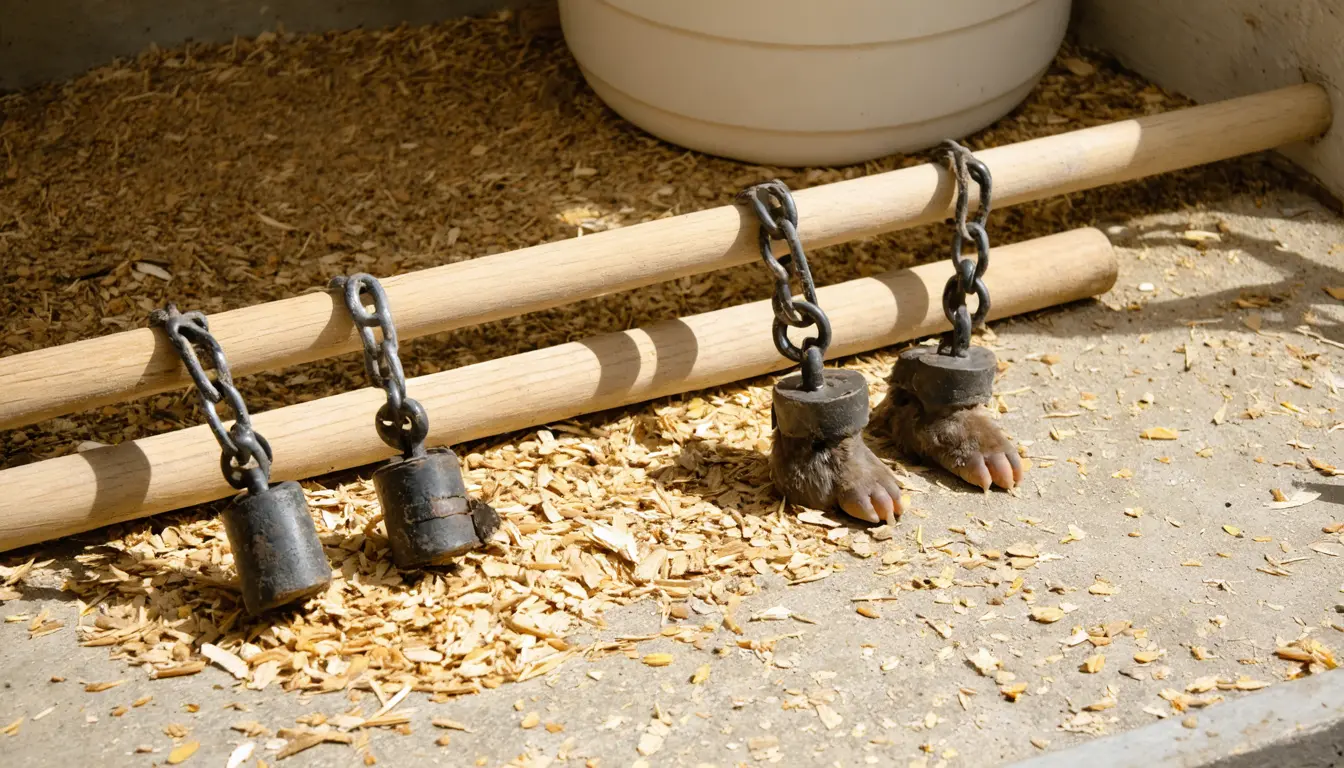
Penn State researchers found guinea fowl raised with leg weights later carried the load at no added energy cost, while untrained birds used 23% more. The comparison is controlled and the groups are small, so it supports a narrow causal claim about leg loading in one species.
The Scientist · Science desk
Key figures: birds raised without weights needed 23% more energy when the same load was attached to their legs; each lead band weighed 4% of a bird's body weight; the experiment followed 12 guinea fowl.
| Figure | Value | Note | Claim |
|---|---|---|---|
| Birds raised without weights, same load attached | 23% more energy | 2 | |
| Weight of each lead band | 4% body weight | 4 | |
| Guinea fowl followed | 12 birds | 3 |
What happened
- Half the birds wore lead bands on one leg, each weighing 4% of body weight, and the other six developed with no added weight.
- Apart from the bands, all 12 birds had the same living conditions and exercise routines.
- The work appears in Proceedings of the Royal Society B, and Penn State says it suggests the energy demands of movement are more adaptable than scientists believed.
Why it matters
- contradiction ScienceDaily's standfirst promises easier exercise for the rest of your life, but the energy assessment described came at 16 weeks, in birds still approaching adult size. Persistence into later life was not what the experiment measured.
- constraint With six birds per group, a couple of atypical animals can shift a group average, and no extra cost can only mean none was detected. The summary reports no spread to judge that by.
- precedent If the effect replicates, the hypothesis that costly movement discourages exercise gets a developmental origin that researchers could test in children.
The control is what makes the 23% interpretable. Six birds wore lead bands on one leg and six did not [13][4]. Apart from the bands, all 12 shared the same living conditions and exercise routines [5], and treadmill training began at nine weeks [6]. That design rules out housing and routine as the explanation for the gap, at least as the source describes them.
We think the claim that survives is a narrow one. Across a study window of 14 weeks [12], birds that had grown up with a loaded leg carried a load without paying more, and birds that had not paid 23% more [2]. Energy expenditure was assessed at 16 weeks, when the birds were approaching full adult size [7][3]. That is a causal result for leg loading in guinea fowl. It does not yet speak to childhood activity in general: the loading came from a lead band.
Penn State's summary calls the work "the first direct evidence that experiences during development can change how much energy animals expend when moving as adults" [10]. Jonas Rubenson, the Penn State kinesiology professor who is senior author, was more careful [11]. "This is one of the first studies to indicate that animals' behaviors and environments in youth can affect how effortful moving is as adults," he said [9].
The summary does not say what the 23% is measured against, whether the untrained birds' own unloaded walking or the trained birds, or how widely individual birds varied within either group.
Rubenson draws the public-health conclusion anyway. "This study suggests that more exercise through play and exercise during childhood could make it easier for people to remain or become more active as adults," he said [15]. The data behind that conclusion are from guinea fowl [1].
What to watch
- The full paper's results: the unloaded baseline behind the 23% figure and the spread within each group of six.
- Any follow-up that measures the birds' energy cost beyond 16 weeks, or after the leg loading stops, to test whether the saving persists.
- Any study that measures the energy cost of walking in children or adults with different childhood activity histories.
Clarity's read
What the record supports and how the coverage leans. The claims behind it follow.
Reality
- Evidence50
- Adoption
- Insufficient
- Hype gap+30
- Incentives
- Insufficient
- Confidence45
Claim ledger
Ranked by verification strength, evidence, and original report placement.
- [1]
Researchers at Penn State attached small weights to one leg of young guinea fowl, birds closely related to chickens that walk on two legs, to test whether carrying extra weight during development would change how efficiently the birds moved once they matured.
- [2]
Birds that grew up carrying the weights could walk with the added load without expending additional energy, while birds raised without weights required 23% more energy when the same load was attached to their legs.
- [3]
The experiment followed 12 guinea fowl from two weeks of age until they reached 16 weeks, when the birds were approaching their full adult size.
- [4]
Half of the birds wore lead bands on one leg, each band weighing 4% of the bird's body weight; the remaining six birds developed without any added weight.
- [5]
Apart from the weight difference, all 12 animals experienced the same living conditions and exercise routines.
- [6]
When the birds reached nine weeks of age, the researchers began training them to walk on a treadmill.
- [7]
At 16 weeks, the team assessed the birds' energy expenditure.
- [8]
The findings were published in Proceedings of the Royal Society B, Biological Sciences, and, as Penn State describes them, suggest that the energy demands of movement are more adaptable than scientists previously believed.
- [9]
"This is one of the first studies to indicate that animals' behaviors and environments in youth can affect how effortful moving is as adults," said Jonas Rubenson, senior author of the study.
- [10]
The Penn State summary says the scientists provided the first direct evidence that experiences during development can change how much energy animals expend when moving as adults.
- [11]
Jonas Rubenson is a professor of kinesiology at Penn State and the senior author of the study.
- [12]
The study window from two weeks of age to 16 weeks is 14 weeks.
- [13]
Six of the 12 birds wore lead bands, so each group had six birds.
- [14]
One widely accepted hypothesis holds that people tend to avoid movement when it feels physically demanding; if early activity influences movement efficiency in humans as in these birds, people who were less active as children might need more energy for the same movements as adults and be less inclined to exercise.
- [15]
"This study suggests that more exercise through play and exercise during childhood could make it easier for people to remain or become more active as adults," said Rubenson.
- [16]
ScienceDaily's standfirst says staying active while growing up could make exercise easier and less exhausting "for the rest of your life."
Get this ledger inside ChatGPT. Ask about any of our stories and the answer brings its figure, each claim’s verdict and the sources. Free, no account.
Sources
1 independent publisher whose own reporting we read for this story.
- sciencedaily.comThe secret to easier exercise as an adult may start in childhood
1 article · October 14, 2026
Topics and entities
Follow any of these and your For You feed starts watching them — no settings page required.