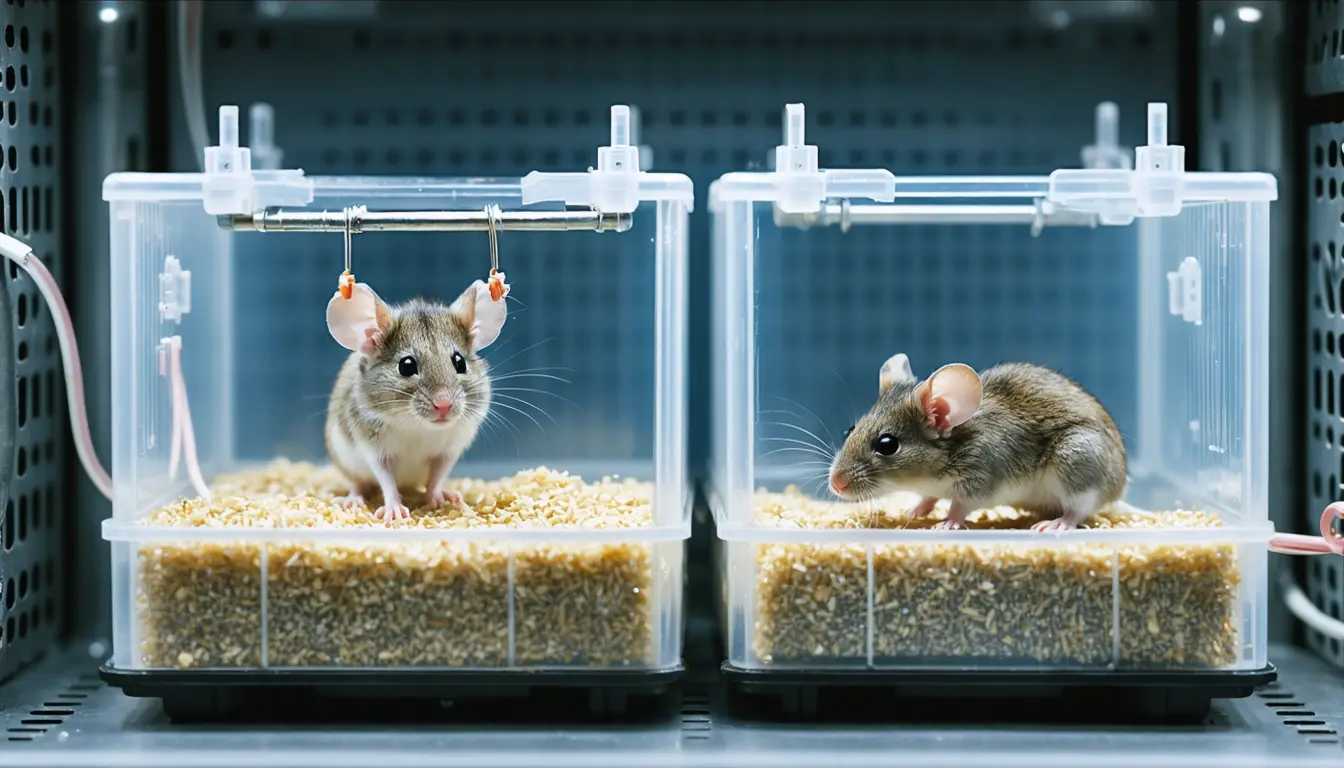
Removing or blocking PD-L2 left mice with fewer senescent cells and stronger grip
Cedars-Sinai researchers identify PD-L2 as a protein that may help senescent cells escape immune clearance, based on mouse experiments. The human evidence so far is an association, and the authors say safety and benefit in people still have to be tested.
The Scientist · Science desk
What happened
- The paper in Cell Metabolism names PD-L2 as a potential target for therapies aimed at eliminating harmful aging cells.
- Mice with reduced PD-L2 activity also handled sugar better and showed greater grip strength.
- Senescent human cells made more PD-L2 than younger cells, and the protein rose with age in certain human tissues.
Why it matters
- constraint The human data compare protein levels. They fit the mouse mechanism but do not show that PD-L2 protects senescent cells from immune clearance in people.
- capability If PD-L2 holds up as a blood marker, researchers would have a way to detect and monitor senescent cells, which are hard to count directly in living people.
- decision Whether PD-L2 becomes a treatment target in people depends on studies the authors say are still to come: first safety, then meaningful benefit.
Senescent cells stop dividing but stay alive in tissue. As they accumulate they release substances that trigger inflammation and disrupt the cells around them [5]. The immune system would normally remove them, and why it sometimes does not is the question this group went after [11].
Their answer, from a team led by Cedars-Sinai Health Sciences University, is that PD-L2 may help the cells avoid clearance [3]. In the mice, PD-L2 was either removed or blocked, and both approaches reduced senescent cells and the inflammatory substances they release [1]. Two routes to the same result are better evidence than one, because a quirk of a single method is less likely to produce both.
The human work is a comparison of levels. Senescent human cells made more PD-L2 than younger cells did, and the protein rose with age in certain tissues [6]. That fits the mouse finding, but as an association it does not show that PD-L2 shields these cells from immune attack in people.
The authors are cautious in their own words. Selim Chaib, first and co-corresponding author, said: "Our findings suggest that PD-L2 may help aging cells stay in the body when they would normally be removed by the immune system" [7]. James Kirkland, the senior author, said: "If we can find a way to block this protein, we may be able to help the immune system get rid of these cells and potentially improve health problems linked with aging" [8].
The release does not give the number of mice, the size of any change, the comparison group, or how PD-L2 was blocked [10]. So it is still open whether the better glucose handling and grip strength [2] came from the cleared cells or from PD-L2 acting elsewhere in the animal.
What to watch
- Any human safety study of PD-L2 blocking, which the authors name as the next question.
- The paper's own data on mouse group sizes, effect sizes and control animals, which the release leaves out.
- Whether PD-L2 in blood tracks senescent cell burden in people, as the authors propose.
Clarity's read
What the record supports and how the coverage leans. The claims behind it follow.
Reality
- Evidence35
- Adoption
- Insufficient
- Hype gap+30
- Incentives
- Insufficient
- Confidence55
Claim ledger
Ranked by verification strength, evidence, and original report placement.
- [1]
In laboratory mice in which PD-L2 was either removed or blocked, both approaches reduced the accumulation of senescent cells and lowered levels of the inflammatory substances they release.
- [2]
Mice with reduced PD-L2 activity showed improvements in their ability to process sugar and demonstrated greater grip strength.
- [3]
Researchers led by Cedars-Sinai Health Sciences University found a protein, PD-L2, that may allow harmful aging cells to escape detection by the immune system.
- [4]
The discovery, published in Cell Metabolism, identifies PD-L2 as a potential target for therapies aimed at eliminating harmful aging cells.
- [5]
Senescent cells stop dividing but remain alive, and over time they can accumulate and release substances that trigger inflammation and disrupt the normal activity of surrounding cells.
- [6]
Senescent human cells produced more PD-L2 than younger cells, and levels of the protein rose with age in certain human tissues.
- [7]
"Our findings suggest that PD-L2 may help aging cells stay in the body when they would normally be removed by the immune system," said Selim Chaib, PhD, research assistant professor of Medicine at Cedars-Sinai and first and co-corresponding author of the study.
- [8]
"If we can find a way to block this protein, we may be able to help the immune system get rid of these cells and potentially improve health problems linked with aging," said James Kirkland, MD, PhD, director of the Center for Advanced Gerotherapeutics and senior author of the study.
- [9]
More research is needed before the approach can be considered for treating people; future studies will investigate whether blocking PD-L2 is safe and can deliver meaningful health benefits in humans.
- [10]
The release does not state how many mice were used, how large the changes were, what the comparison group was, or how PD-L2 was blocked.
- [11]
The immune system would normally remove senescent cells, and understanding why they persist could help scientists develop new ways to reduce their harmful effects.
- [12]
Scientists also believe PD-L2 could serve as a blood marker, providing a way to detect and monitor senescent cells.
Get this ledger inside ChatGPT. Ask about any of our stories and the answer brings its figure, each claim’s verdict and the sources. Free, no account.
Sources
1 independent publisher whose own reporting we read for this story.
- sciencedaily.comScientists discover how harmful “zombie cells” hide from the immune system
1 article · October 14, 2026
Topics and entities
Follow any of these and your For You feed starts watching them — no settings page required.