Genetic and carrying-capacity models put Australia's 1788 Indigenous population at 2.22 million
Researchers with an Australian Research Council centre put Australia's Indigenous population before 1788 at a median 2.22 million. They also estimate 2.06 million excess deaths by 1861, a 93% fall that depends on a modeled baseline.
The Scientist · Science desk
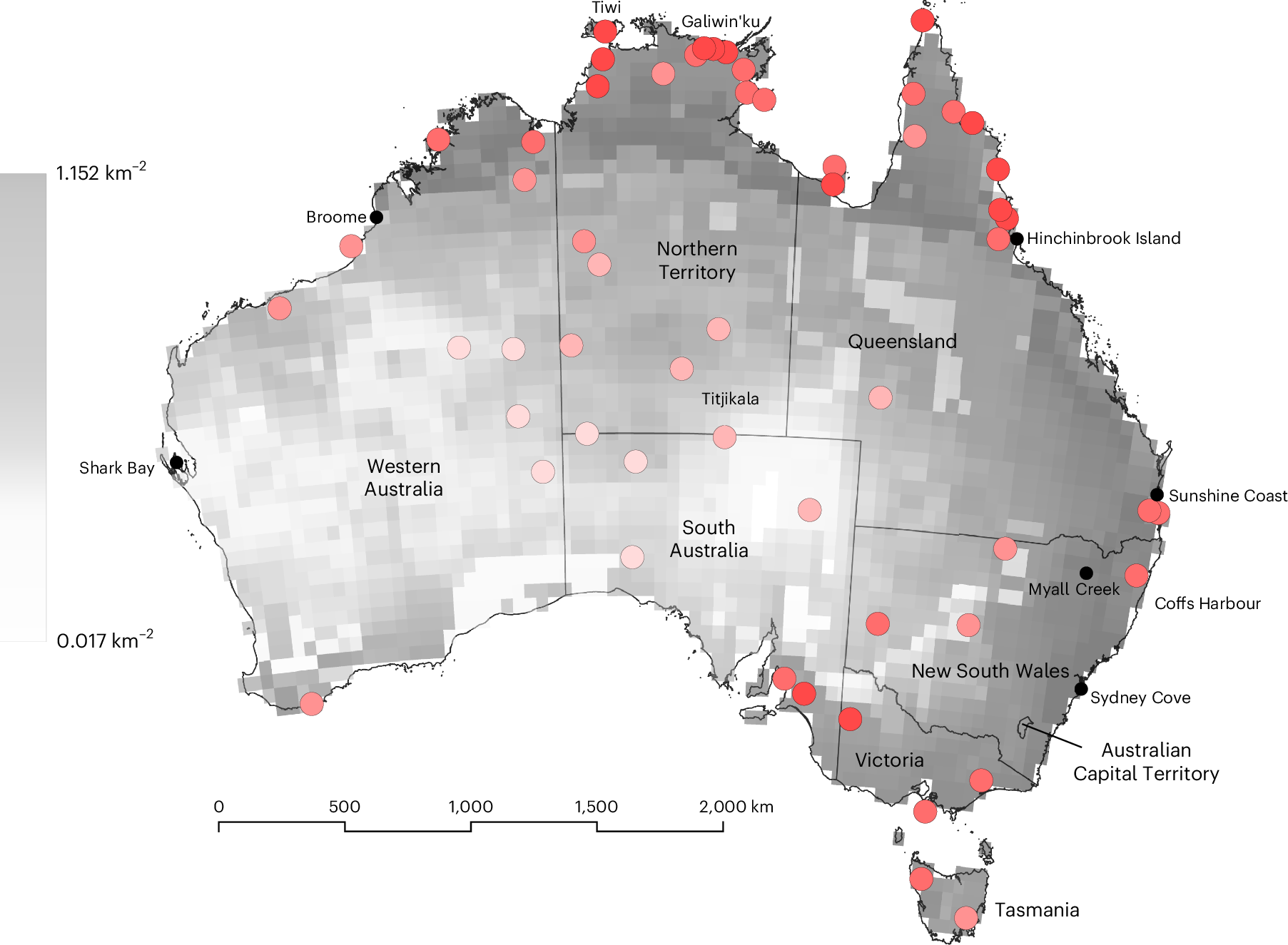
Key figures: the new median estimate of Australia's Indigenous population before colonization is 2.22 million people. Radcliffe-Brown's 1930s estimate was approximately 250,000 people. Earlier historical estimates generally ranged from 250,000 to 1 million people.
| Figure | Value | Note | Claim |
|---|---|---|---|
| Median Indigenous population before colonization | 2,220,000 people | 1 | |
| Radcliffe-Brown's estimate | 250,000 people, approx. | calculated in the 1930s | 3 |
| Earlier historical estimates, upper end | 1,000,000 people | generally ranged 250,000 to 1 million | 2 |
What happened
- Earlier historical estimates of the pre-colonial Indigenous population generally ranged from 250,000 to 1 million people.
- The 2.22 million median comes from modeled and genetics-based estimates that historical and ethnographic accounts support but do not drive.
- Using the model with early census records, the researchers put the average at roughly 28,200 excess deaths a year across the 73 years.
Why it matters
- contradiction The release's 'up to seven times' matches the ratio to neither earlier figure it cites, so the multiple is unstable and the median and its baseline are better quoted separately.
- constraint The 93% loss and the 2.06 million excess deaths both come from one modeled baseline, so neither can be firmer than that median.
- capability Because the estimate rests mainly on genetic and carrying-capacity modeling, other groups can test it with methods that do not start from colonial-era counts.
According to the Flinders University release carried by ScienceDaily [13], the new median is potentially up to seven times some earlier calculations [16]. The earlier figures the release cites give different ratios. Against Radcliffe-Brown's roughly 250,000 [3], a median of 2.22 million is about 8.9 times [17]. Against 1 million, the top of the earlier range [2], it is about 2.2 times [18].
The researchers believe the lower estimates were shaped by population losses that happened before the first Australian censuses [5]. A count built on records from after those losses inherits the undercount. So the team built the baseline from modeled and genetics-based estimates, and used historical and ethnographic accounts as support only [7]. It also asked how many people different environments could have supported [6].
Radcliffe-Brown, whose 1930s work anchored many earlier figures, recognized that his estimate did not fully account for disease, frontier violence and structural violence [4]. In our view that makes the direction of the new result the more secure claim, since a larger baseline was already the expected correction.
The size of the result depends on the modeled median. The 93% is a ratio with the modeled 2.22 million in the denominator [9]. Seven percent of that is about 155,000 people left in 1861 [14]. The 2.06 million excess deaths [8] are the same loss restated: 93% of 2.22 million is about 2.06 million [15].
The release reports a median without an interval or a journal reference.
Lead author Alan Williams, a Partner Investigator in the centre who represents EMM Consulting [12], said: "These devastating findings highlight the major impacts of invasion experienced by Indigenous Australians, and demonstrate their remarkable survival, resilience and recovery over the past century" [11].
Professor Corey Bradshaw of Flinders University, who contributed to the research [12], said: "Understanding the size of Indigenous populations in Australia before European invasion in 1788 is essential to truth-telling and reconciliation" [10].
What to watch
- Publication of the full paper, with an uncertainty interval around the 2.22 million median and the sensitivity of the 93% figure to that baseline.
- Whether independent teams reproduce a baseline of this size using other genetic or carrying-capacity methods.
- Which earlier estimate the 'up to seven times' comparison refers to.
Clarity's read
What the record supports and how the coverage leans. The claims behind it follow.
Reality
- Evidence40
- Adoption
- Insufficient
- Hype gap+30
- Incentives45
- Confidence35
Claim ledger
Ranked by verification strength, evidence, and original report placement.
- [1]
Using modeled and genetics-based estimates, the research team calculated a median Indigenous population of 2.22 million before colonization.
- [2]
Earlier historical estimates of Australia's pre-colonial Indigenous population generally ranged from 250,000 to 1 million people.
- [3]
Earlier population estimates often relied heavily on calculations made in the 1930s by anthropologist Alfred Radcliffe-Brown, who placed the pre-colonization Indigenous population at approximately 250,000 people.
- [4]
Radcliffe-Brown recognized that his estimate did not fully account for the effects of deadly diseases, violence along colonial frontiers, and broader structural violence.
- [5]
The researchers believe the lower earlier estimates were influenced by widespread population losses from disease, frontier violence and systemic oppression before the earliest Australian censuses were conducted.
- [6]
The researchers combined ethnographic observations, archaeological findings, genetic reconstructions and computer models, and examined how many people different environments across the continent could have supported.
- [7]
The 2.22 million median uses modeled and genetics-based estimates that are supported by, but not reliant on, historical or ethnographic accounts.
- [8]
Using their model alongside early census records, the researchers estimated approximately 2.06 million excess deaths between 1788 and 1861, an average of roughly 28,200 a year over the 73-year period.
- [9]
By 1861 the Indigenous population had declined to an estimated 7% of its pre-colonization size, a 93% reduction.
- [10]
"Understanding the size of Indigenous populations in Australia before European invasion in 1788 is essential to truth-telling and reconciliation," Professor Corey Bradshaw said.
- [11]
"These devastating findings highlight the major impacts of invasion experienced by Indigenous Australians, and demonstrate their remarkable survival, resilience and recovery over the past century," lead author Associate Professor Alan Williams said.
- [12]
Associate Professor Alan Williams is lead author and a Partner Investigator in the Australian Research Council Centre of Excellence for Indigenous and Environmental Histories and Futures (CIEHF), representing EMM Consulting; Professor Corey Bradshaw is Global Ecology Professor at Flinders University and a Chief Investigator at CIEHF who contributed to the research.
- [13]
Flinders University issued the release on the study, carried by ScienceDaily, dated October 14, 2026.
- [14]
Seven percent of the 2.22 million baseline is about 155,000 people in 1861.
- [15]
A 93% loss of the 2.22 million baseline is about 2.06 million people, which matches the reported 2.06 million excess deaths.
- [16]
The release says the new estimate is potentially up to seven times the number suggested by some earlier calculations.
- [17]
A median of 2.22 million is about 8.9 times Radcliffe-Brown's roughly 250,000.
- [18]
A median of 2.22 million is about 2.2 times the 1 million upper end of earlier estimates.
Get this ledger inside ChatGPT. Ask about any of our stories and the answer brings its figure, each claim’s verdict and the sources. Free, no account.
Sources
1 independent publisher whose own reporting we read for this story.
- sciencedaily.comScientists reveal 93% of Australia's Indigenous population was lost in just 73 years
1 article · October 14, 2026
Topics and entities
Follow any of these and your For You feed starts watching them — no settings page required.
Entities
- Flinders UniversityFollow
- ARC Centre of Excellence for Indigenous and Environmental Histories and FuturesFollow
- Corey BradshawFollow
- Alan WilliamsFollow
- Alfred Radcliffe-BrownFollow
- ScienceDailyFollow