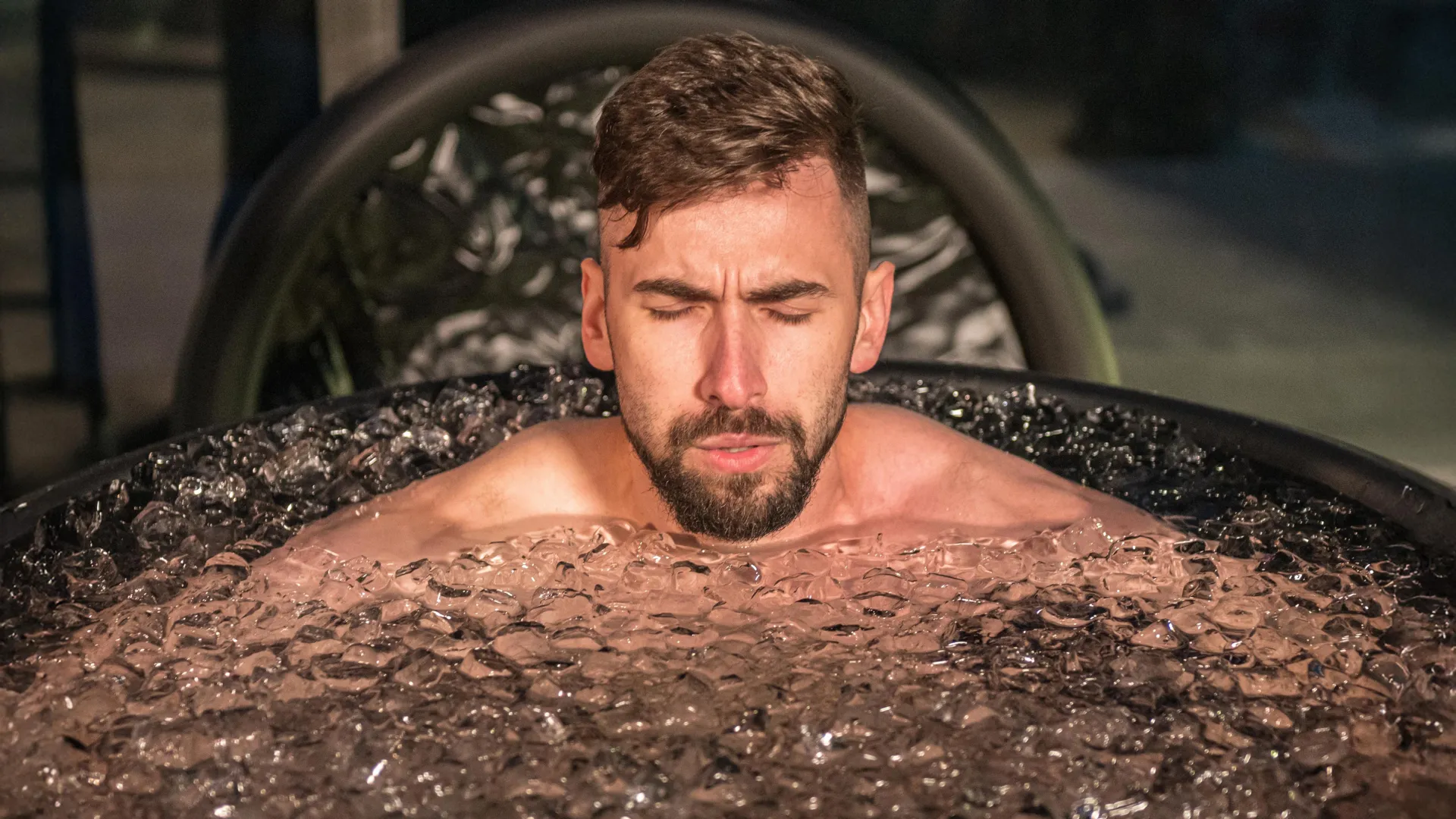
Regular ice baths may limit the muscle gains that training is meant to build
Ice baths below 15C can cut soreness within a day but may limit long-term muscle gains with regular use, a Conversation article says. Its summary names sleep, eating well and time as the most effective recovery methods.
The Scientist · Science desk
Evidence map. Contested: regular ice baths may limit long-term training benefits; compression garments may mainly make people feel recovered. Supported: massage reduces soreness; whey protein has small-to-moderate recovery benefits; sleep, eating well and time are most effective.
- Contested Inflammation causes soreness but also triggers adaptations that build muscle; dampening it with ice baths may limit some of the long-term benefits of training, particularly if they are used regularly., claim 9
- Contested Whether the circulation changes from compression garments meaningfully improve performance is less clear; the garments are unlikely to directly restore muscle function and may mainly help because they make people feel better recovered. Evidence that they improve muscle recovery is generally less convincing., claim 11
- Supported Massage has relatively consistent scientific support for reducing soreness and improving perceived recovery, but objective measures of performance and muscle function are modest and inconsistent., claim 3
- Supported Whey protein is shown to have small-to-moderate benefits for muscle recovery, but evidence that it can alleviate soreness is inconsistent., claim 4
- Supported The article, from The Conversation, was published on ScienceDaily on October 14, 2026; its summary says the most effective recovery methods are simpler and cheaper: getting enough sleep, eating well and giving muscles time to rebuild., claim 5
| Claim | State | Claim number |
|---|---|---|
| Inflammation causes soreness but also triggers adaptations that build muscle; dampening it with ice baths may limit some of the long-term benefits of training, particularly if they are used regularly. | Contested | 9 |
| Whether the circulation changes from compression garments meaningfully improve performance is less clear; the garments are unlikely to directly restore muscle function and may mainly help because they make people feel better recovered. Evidence that they improve muscle recovery is generally less convincing. | Contested | 11 |
| Massage has relatively consistent scientific support for reducing soreness and improving perceived recovery, but objective measures of performance and muscle function are modest and inconsistent. | Supported | 3 |
| Whey protein is shown to have small-to-moderate benefits for muscle recovery, but evidence that it can alleviate soreness is inconsistent. | Supported | 4 |
| The article, from The Conversation, was published on ScienceDaily on October 14, 2026; its summary says the most effective recovery methods are simpler and cheaper: getting enough sleep, eating well and giving muscles time to rebuild. | Supported | 5 |
What happened
- Whether that blood-flow change improves performance is less clear, and the article says garments may mainly help by making people feel better recovered.
- Massage has relatively consistent support for lowering soreness and improving perceived recovery, but objective measures of performance and muscle function are modest and inconsistent.
- Whey protein shows small-to-moderate benefits for muscle recovery, while the evidence that it eases soreness is inconsistent.
Why it matters
- decision Anyone using cold immersion after every session is weighing a day-scale soreness gain against an adaptation cost the article hedges with 'may'. The article's own answer is to save ice baths for when rapid recovery is vital.
- constraint Massage and compression do best on soreness and perceived recovery, the outcomes least tied to measured performance, so a user's own sense of recovery will overrate them.
- cost Buyers of garments and supplements pay for effects the article describes as mostly perceived or small, while the methods it ranks first are the cheaper ones.
The ice-bath case runs on two clocks. The benefit is measured within 24 hours: less inflammation, less soreness, better recovery of muscle function [8]. The cost, if there is one, would build over weeks. According to the article, inflammation causes soreness but also triggers adaptations that build muscle, so dampening it may limit some long-term benefits of training, particularly with regular use [9].
A 24-hour outcome cannot see a loss that accumulates over weeks. The text does not report an effect size for that loss or a sample size for any study it describes. The word it uses is "may", and we think that is the honest strength of the evidence: a plausible pathway and a sensible caution. Its advice is conditional: use ice baths only when rapid recovery is vital [10].
Compression garments have the best-designed test in the piece. In a 2022 study, one group wore garments and the other took a placebo tablet described as equally effective [1]. The garments improved circulation and muscle blood flow, and the tablet did not [1]. That control matters because soreness ratings move with expectation and blood flow is harder to move that way. The article concludes the effects are physiological and not simply expectation [2].
The thing this doesn't tell you is whether better blood flow means stronger muscle. The article says that is less clear, and that garments are unlikely to directly restore muscle function, so they may mainly help by making people feel better recovered [11].
Massage and whey follow a similar pattern. Massage has relatively consistent support for reducing soreness and improving perceived recovery, yet objective measures of performance and muscle function are modest and inconsistent [3]. Whey protein shows small-to-moderate benefits for muscle recovery, with inconsistent evidence on soreness [4].
The ranking of sleep, food and time above all of these comes from the summary of the Conversation article, which ScienceDaily carried on October 14, 2026 [5]. The text available to us ends in the middle of the supplements section, before any evidence for that ranking appears. The summary also says the benefits of recovery products are often overstated and that some techniques may undermine long-term gains [6]. The first half is supported item by item. The second half attaches to ice baths alone, with a "may" on it [9].
What to watch
- A controlled trial that measures muscle growth or strength after weeks of regular ice baths against a no-ice group would test the long-term claim directly.
- Whether the 2022 compression finding on blood flow is followed by studies that measure strength or muscle function after exercise.
- The evidence behind the sleep, food and time ranking, which the summary states but the available text does not reach.
Clarity's read
What the record supports and how the coverage leans. The claims behind it follow.
Reality
- Evidence45
- Adoption
- Insufficient
- Hype gap−10
- Incentives
- Insufficient
- Confidence50
Claim ledger
Ranked by verification strength, evidence, and original report placement.
- [1]
A 2022 study gave one group compression garments and the other a placebo tablet described as equally effective as compression; the garments improved circulation and muscle blood flow, while the placebo had no effect on these measures.
- [2]
The article concludes from the 2022 study that the effects of compression garments on recovery are physiological and not simply due to expectation or perception.
- [3]
Massage has relatively consistent scientific support for reducing soreness and improving perceived recovery, but objective measures of performance and muscle function are modest and inconsistent.
- [4]
Whey protein is shown to have small-to-moderate benefits for muscle recovery, but evidence that it can alleviate soreness is inconsistent.
- [5]
The article, from The Conversation, was published on ScienceDaily on October 14, 2026; its summary says the most effective recovery methods are simpler and cheaper: getting enough sleep, eating well and giving muscles time to rebuild.
- [6]
The summary says the benefits of ice baths, massages, compression garments and recovery supplements are often overstated, and some techniques may even undermine long-term gains.
- [7]
Ice baths involve immersing oneself in water below 15 degrees C to boost recovery, and the evidence for the benefit is mixed.
- [8]
Ice baths help ease inflammation, which research suggests can reduce muscle soreness and help athletes recover muscle function more effectively in a 24-hour period.
- [9]
Inflammation causes soreness but also triggers adaptations that build muscle; dampening it with ice baths may limit some of the long-term benefits of training, particularly if they are used regularly.
- [10]
The article advises using ice baths only when rapid recovery is vital.
- [11]
Whether the circulation changes from compression garments meaningfully improve performance is less clear; the garments are unlikely to directly restore muscle function and may mainly help because they make people feel better recovered. Evidence that they improve muscle recovery is generally less convincing.
Get this ledger inside ChatGPT. Ask about any of our stories and the answer brings its figure, each claim’s verdict and the sources. Free, no account.
Sources
1 independent publisher whose own reporting we read for this story.
- sciencedaily.comScientists reveal why some workout recovery tricks can backfire
1 article · October 14, 2026
Topics and entities
Follow any of these and your For You feed starts watching them — no settings page required.