ProductNot yet confirmed elsewhere1 publisher2 min readPublished
Raytheon wins a five-year SM-3 Block IB contract with a $6.3 billion ceiling
Raytheon has won a multiyear contract worth up to $6.3 billion to build and sustain SM-3 Block IB interceptors as the US restocks after combat use. The figure is a ceiling spread over as many as seven years, so how much the plants build depends on orders and factory output.
The Product Desk
What happened
- Most of the production will take place at Raytheon facilities in Tucson, Arizona, and Huntsville, Alabama.
- Raytheon said the SM-3 IB first saw combat in 2024, when US naval forces fired SM-3 interceptors in the response to Iran's attack on Israel.
- Reuters reported that recent conflicts in the Middle East have depleted missile-defense stockpiles and raised demand for interceptors and other air-defense weapons.
- Raytheon President Phil Jasper said the contract would help replenish inventories and maintain capabilities the US Navy, the Missile Defense Agency and their partners require.
Compiled by The Product DeskSomething wrong?How this is made
Why it matters
- exposure Because production is concentrated at two Raytheon sites, a delay at either Tucson or Huntsville would slow most of the SM-3 IB restock.
- decision Suppliers to those lines have to choose whether to add capacity against the $6.3 billion ceiling or against orders as they are actually placed.
- precedent Because the award is part of a wider push to expand US munitions output, later interceptor contracts are likely to arrive the same way: multiyear, with an upper limit as the headline figure.
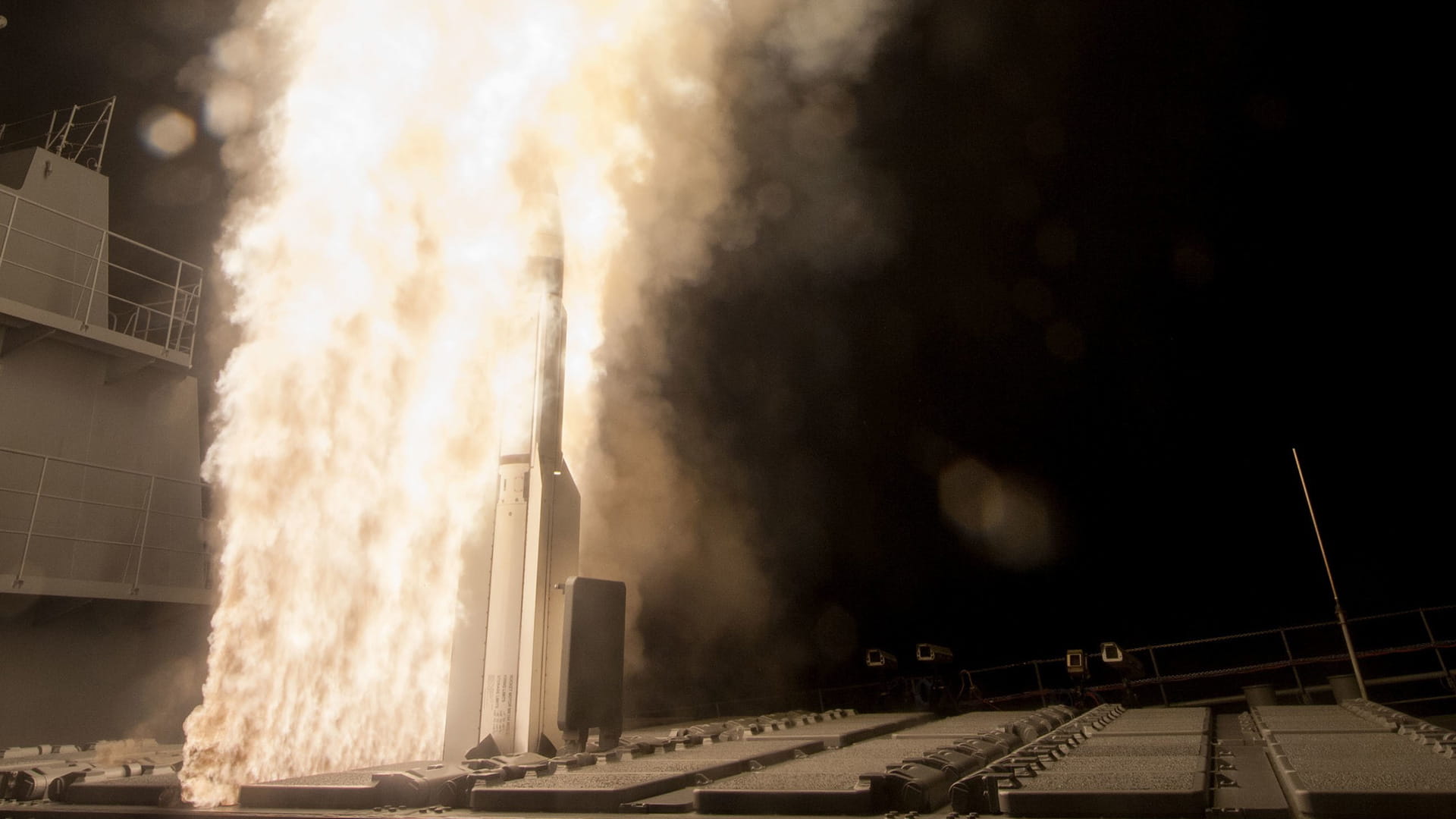
When a US Navy ship launches an SM-3 Block IB [15], its kill vehicle is supposed to hit a ballistic missile's warhead outside Earth's atmosphere and destroy it by collision [5][6]. After that, the interceptor is gone. Raytheon's new contract pays to put missiles like that back into inventory after combat use [1].
The pitch is $6.3 billion. What is being bought is a ceiling, and the source says it should not be read as guaranteed spending [11]. The ceiling covers a five-year base and two option years [2], and it pays for sustainment as well as production [1]. If the whole amount were spent in the base period, it would come to about $1.26 billion a year [16]. Spread over all seven years, it averages about $900 million a year [17].
So the two plants get a planning horizon of at least five years [2]. How much they build in that time is a separate matter. According to the source, the pace of replenishment depends on contract execution and manufacturing capacity [12]. The reported terms do not include a missile count, a unit price, the amount funded at award, or any detail on the subcontractors who supply those plants.
The SM-3 IB deal is small next to the other recent interceptor awards. Raytheon's SM-6 contract, which the source dates to October 2026, is worth up to $24.4 billion [8], about 3.9 times this ceiling [18]. Lockheed Martin received a $58.6 billion Patriot contract in July [9]. Together the three come to $89.3 billion, and the SM-3 IB is about 7 percent of that [19][20]. The missiles do different jobs. The SM-3 specializes in ballistic missile interception outside the atmosphere, while the SM-6 covers a wider set of missions, including air defense and some terminal-phase ballistic engagements [10].
Take a supplier weighing a second shift, or a program office forecasting when stocks recover. Two tests sort their risk: whether the demand has actually been ordered or is only allowed under the ceiling, and whether existing lines can meet it or new capacity has to be built. Ordered work on existing lines is the safe case. Ordered work that needs new capacity is a build that already has a customer. If the demand is only allowed and the lines already exist, the job is keeping staff on until orders arrive. The risky case is allowed demand that needs new capacity. A $6.3 billion headline encourages investment ahead of orders, and the contract does not guarantee those orders [1][11].
What to watch
- Whether the first orders under the contract disclose missile quantities and annual delivery rates for the Tucson and Huntsville lines.
- Any announced hiring or capacity additions at Raytheon's Tucson or Huntsville facilities tied to SM-3 IB work.
- Whether the two option years are exercised, extending the work past the five-year base.
Clarity's read
What the record supports and how the coverage leans. The claims behind it follow.
Reality
- Evidence45
- Adoption60
- Hype gap+10
- Incentives55
- Confidence50
Claim ledger
Ranked by verification strength, evidence, and original report placement.
- [1]
RTX's Raytheon secured a multiyear contract worth up to $6.3 billion to produce and sustain Standard Missile-3 Block IB interceptors as the US replenishes missile defense inventories after combat use.
- [2]
The agreement, announced on October 8, covers five years of work, with two additional option years.
- [3]
Production will primarily take place at Raytheon facilities in Tucson, Arizona, and Huntsville, Alabama.
- [4]
Reuters reported that recent conflicts in the Middle East have depleted missile-defense stockpiles, increasing demand for interceptors and other air-defense weapons.
- [5]
The SM-3 IB is designed to destroy short- to intermediate-range ballistic missiles during the midcourse phase of flight and engages targets outside Earth's atmosphere.
- [6]
The SM-3 uses hit-to-kill technology: rather than a conventional explosive warhead, its kill vehicle is designed to collide directly with an incoming missile's warhead.
- [7]
Raytheon said the SM-3 IB was first used in combat in 2024, when US naval forces employed SM-3 interceptors during the response to Iran's attack on Israel; USNI News reported it was the first combat use of the SM-3 family.
- [8]
In October 2026, Raytheon secured a contract worth up to $24.4 billion for Standard Missile-6 production.
- [9]
Lockheed Martin received a $58.6 billion Patriot missile contract in July.
- [10]
The SM-3 specializes in exo-atmospheric ballistic missile interception, while the SM-6 supports a wider range of missions, including air defense and certain terminal ballistic missile engagements.
- [11]
The agreement is valued at up to $6.3 billion, meaning the announced ceiling should not be interpreted as guaranteed spending.
- [12]
The actual pace of replenishment will depend on contract execution and manufacturing capacity.
- [13]
The contract is part of the push to increase US weapons manufacturing capacity and replenish critical munitions.
- [14]
Raytheon President Phil Jasper said the SM-3 IB contract would help replenish inventories and maintain the defensive capabilities required by the US Navy, the Missile Defense Agency, and their partners.
- [15]
The SM-3 is part of the Aegis Ballistic Missile Defense system, with interceptors launched from naval vessels; it can also operate from land-based Aegis Ashore installations.
- [16]
If the full $6.3 billion ceiling were spent over the five-year base period, it would average about $1.26 billion a year.
- [17]
Spread over the five base years plus two option years, the $6.3 billion ceiling averages about $900 million a year.
- [18]
The SM-6 contract ceiling of $24.4 billion is about 3.9 times the SM-3 IB ceiling of $6.3 billion.
- [19]
The SM-3 IB, SM-6 and Patriot contract values together total $89.3 billion.
- [20]
The SM-3 IB ceiling is about 7 percent of the combined $89.3 billion across the three contracts.
Sources
1 independent publisher whose own reporting we read for this story.
- interestingengineering.comUS: Raytheon to build more missile interceptors that can destroy threats in space
1 article · October 9, 2026
Topics and entities
Follow any of these and your For You feed starts watching them — no settings page required.