Build2 publishersReports disagree2 min readPublished
A missed DSV email put F-35 stealth parts on an ITAR-barred route through Hong Kong
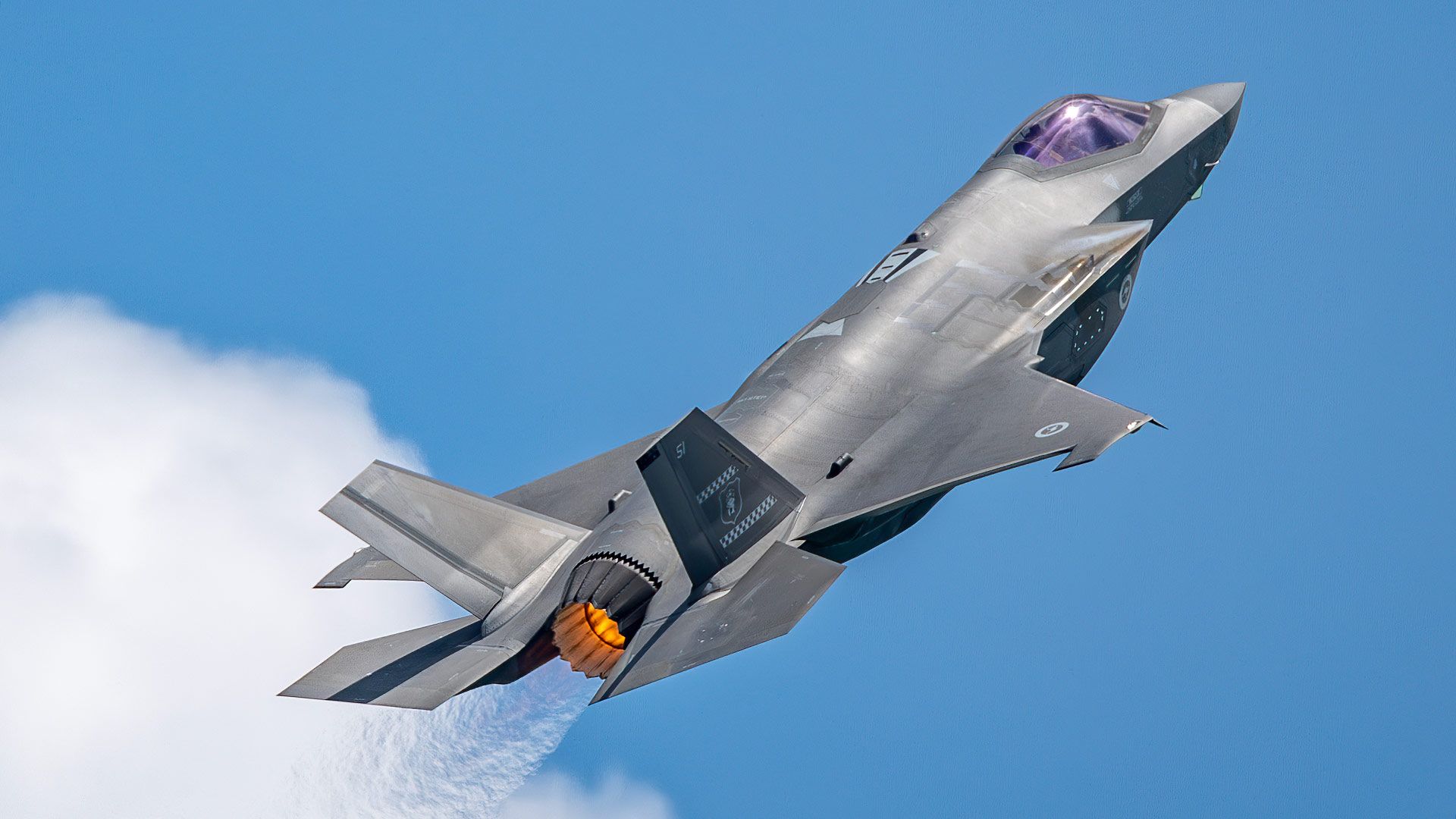
UPS routed Australian F-35 stealth parts through ITAR-barred Hong Kong after an agent missed an email warning, according to two reports. A ban that simple can be enforced by the routing system, provided the export flag travels with the booking.
The Engineer · Build desk
What happened
- The parts were a Royal Australian Air Force F-35 cockpit canopy and weapons-bay door with radar-absorbing coating, on their way to San Francisco for inspection.
- DSV, the Danish forwarder that organised the move, had emailed UPS that the canopy and door had to ship under ITAR rules.
- Bloomberg's unnamed sources say that email may have gone through a different IT system from the one the UPS agent used.
- The planned route ran via South Korea and Taiwan, but the agent switched to Hong Kong to speed up a shipment that had left late.
- Pentagon officials briefed staff of the House Foreign Affairs and Armed Services committees, and Congress is now investigating the case.
Compiled by The EngineerSomething wrong?How this is made
Why it matters
- contradiction Tom's Hardware says China took possession of the parts, while mezha.net says that is unconfirmed and Beijing says it knows nothing of them, so it is still unclear whether the coating has been exposed.
- exposure If the coating is the sensitive part, as Tom's Hardware argues, the parts' condition as flight hardware says little about what their loss exposes.
- decision The F-35 program office has promised safeguards. Retraining staff would leave the next late ITAR shipment depending on someone reading an email. A booking field that the router enforces would not.
ITAR's transit rule is short enough to write as data. Certain countries and territories must be avoided when shipping controlled equipment, and Hong Kong, as a special administrative region of China, is on that list [3]. A routing tool that holds the list can compare each proposed transit point against it before it accepts a leg. Run on this consignment, that check would have rejected Hong Kong whether or not anyone had read the DSV email [3][4].
In my view this is the right place for the rule. The list is short and the answer is yes or no. When the check errs, the cost is a slower shipment. The agent picked Hong Kong to avoid exactly that [1]. When the person errs, a stealth canopy and weapons-bay door end up in Hong Kong [2][14].
Putting the rule in the router moves the weak point to the handoff. A blocklist fires only on consignments tagged as ITAR-controlled. The tag has to come from whoever booked the move. Here it would have had to cross from DSV, a separate Danish company, into UPS [8]. For a routing check to hold, the ITAR marking has to sit in the booking record the forwarder hands the carrier. That is the same record the routing tool reads before it picks a transit point.
The accounts describe the email and the agent's choice [1][4]. They do not say how UPS's routing tools treat export-control flags, or whether this booking carried any ITAR marking beyond the email. So the case for a hard check is a design argument. It does not show that any carrier's software failed. Bloomberg asked DSV and UPS for comment, and neither gave one [11].
The Pentagon has called the parts "unserviceable F-35 components" [9]. A Government Accountability Office representative quoted by Bloomberg called the loss "a big deal" [12].
What to watch
- Whether the congressional investigation or the F-35 program office's safeguards require ITAR status to travel as booking data that carriers' routing tools check.
- Whether UPS or DSV explain how the ITAR warning moved between their systems, and whether the booking itself carried any export-control marking.
- Whether China confirms it holds the canopy and weapons-bay door, or returns them.
Clarity's read
What the record supports and how the coverage leans. The claims behind it follow.
Reality
- Evidence45
- Adoption
- Insufficient
- Hype gap+30
- Incentives40
- Confidence50
Claim ledger
Ranked by verification strength, evidence, and original report placement.
- [1]
According to insiders speaking to Bloomberg, a UPS worker missed an important email about securely routing the F-35 parts and opted for a Hong Kong transit to hasten the shipping time.
ReportedSupportedSource: Bloomberg's unnamed sources, via Tom's Hardware2 sources— create a free account to open themView cited source - [2]
The parts were a Royal Australian Air Force F-35 cockpit canopy and weapons-bay door, coated with radar-absorbing material that enhances their stealth capabilities, sent from Australia to San Francisco for inspection.
- [3]
Under the US International Traffic in Arms Regulations (ITAR), certain countries and territories must be avoided when shipping such equipment; Hong Kong, as a special administrative region of China, is on the list.
- [4]
DSV sent UPS an email making clear that the cockpit canopy and weapons-bay door should be shipped according to ITAR rules.
- [5]
"The DSV email may have been sent through a different IT system than the one used by the UPS agent," according to Bloomberg's unnamed sources.
ReportedSupportedSource: Bloomberg's unnamed sources, via Tom's Hardware2 sources— create a free account to open themView cited source - [6]
The shipment was originally to travel from Australia to San Francisco via South Korea and Taiwan, both US defence partners, but because of a delay it was redirected through Hong Kong to speed up delivery.
ReportedSupportedSource: mezha.net, citing hromadske.ua2 sources— create a free account to open themView cited source - [7]
The F-35 Joint Program Office said it is aware of a problem transporting unserviceable F-35 components and is working with US authorities and industry to recover them, investigate the incident and put safeguards in place to prevent similar cases.
ReportedSupportedSource: F-35 Joint Program Office, as reported by mezha.net2 sources— create a free account to open themView cited source - [8]
Danish company DSV A/S organised the shipment.
- [9]
The Pentagon has characterized the parts as "unserviceable F-35 components".
- [10]
Pentagon representatives described the incident at a meeting with staff of the US House Foreign Affairs and Armed Services committees, and the case is the subject of a congressional investigation.
- [11]
Bloomberg contacted DSV and UPS spokespersons, and neither provided comments.
- [12]
A representative of the Government Accountability Office quoted by Bloomberg called the loss "a big deal".
ReportedSupportedSource: GAO representative, quoted by Bloomberg via Tom's HardwareView cited source - [13]
Tom's Hardware reported that the Chinese government took possession of the parts in Hong Kong and has not returned or released them.
ReportedContestedSource: Tom's Hardware3 sources— create a free account to open themView cited source - [14]
Mezha.net reported that the parts were delivered to Hong Kong but that it has not been confirmed whether Chinese authorities obtained access to them.
ReportedContestedSource: mezha.net, citing hromadske.ua3 sources— create a free account to open themView cited source - [15]
The Chinese Foreign Ministry in Beijing said it is unaware of the missing parts.
- [16]
Tom's Hardware wrote that the stealth coating's secret recipe may have been more sensitive than the actual airplane parts.
Sources
2 independent publishers whose own reporting we read for this story.
- mezha.netДеталі F-35 опинилися в Гонконгу після помилки UPS
1 article · October 8, 2026
- tomshardware.comChina allegedly intercepted UPS-shipped F-35 parts after employee missed email warning
1 article · October 8, 2026
Topics and entities
Follow any of these and your For You feed starts watching them — no settings page required.
Topics
- Defense LogisticsFollow
- Export Controls and Technology AccessFollow