ScienceNot yet confirmed elsewhere1 publisher2 min readPublished
Pottery model finds Neolithic complexity pushed decoration styles in opposite directions in Germany and Ukraine
Diachenko and Gronenborn's model of thousands of Neolithic sherds finds rising complexity first diversified pottery in Germany but standardised it in Ukraine. The split means style diversity only signals complexity once you know how production was organised.
The Scientist · Science desk
What happened
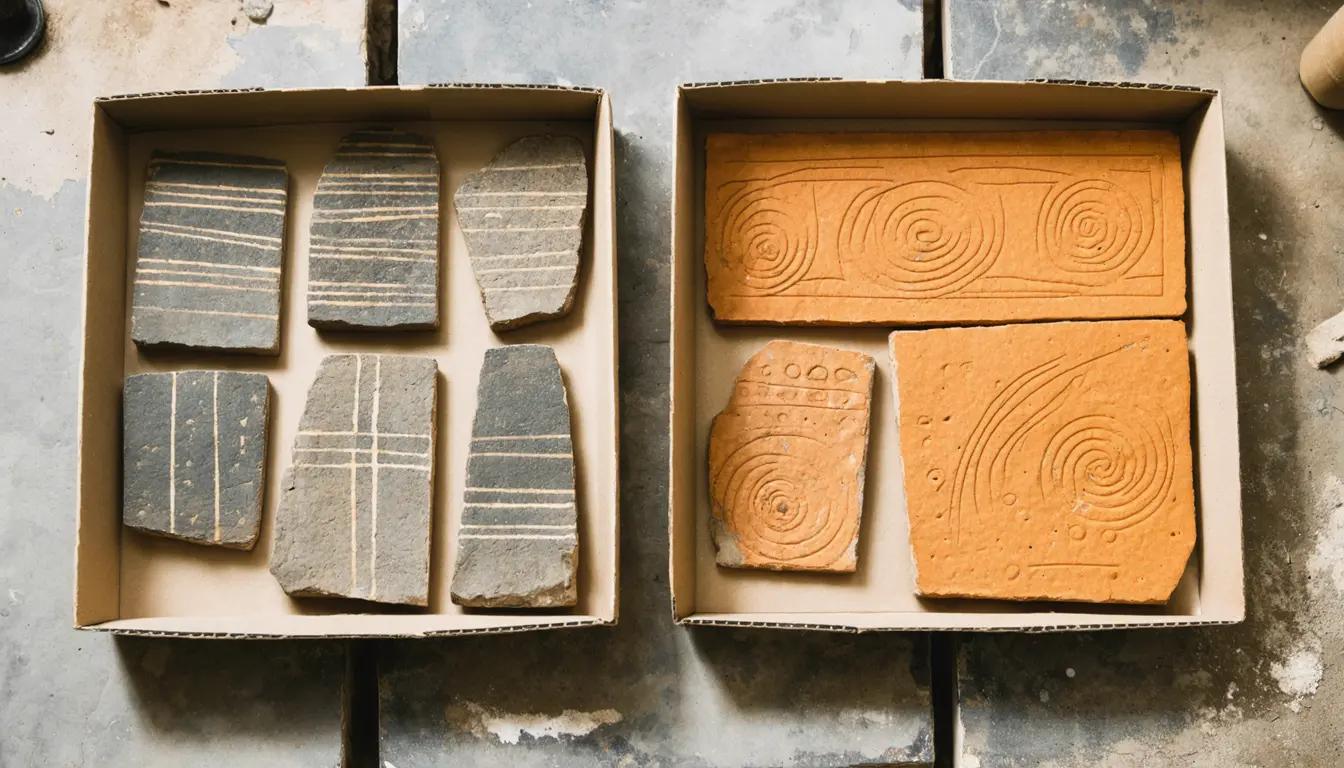
- The two test cases are the Linear Pottery Culture of southwestern Germany, about 7,000 years ago, and the Western Trypillia Culture of central Ukraine, about 6,000 years ago.
- Both regions show the population curve typical of early farming in Neolithic Europe, with a phase of rapid growth followed by decline.
- In southwestern Germany the extra decorative variety that arrived with rising complexity did not last, and diversity later diminished.
- The authors attribute the convergence of pottery styles in central Ukraine to craft specialization.
Compiled by The ScientistSomething wrong?How this is made
Why it matters
- decision Using the method at another site means building a population time series alongside the pottery sequence, because the model works on population, production and exchange together.
- capability Pottery usually survives in large quantities over long periods, so many other Neolithic assemblages could in principle be put through the same analysis.
- constraint Gronenborn's claim that the results show how populations generally respond to change rests on two regional cases, and it remains a hypothesis for other cultures until the model is run on them.
Neolithic Europe, roughly 8,000 to 4,000 years ago, went through recurring phases of rising and falling complexity, known as social cycles [11]. Aleksandr Diachenko, a senior researcher at the Institute of Archaeology of the National Academy of Sciences of Ukraine, and Detlef Gronenborn, deputy head of the Prehistory Department at LEIZA in Germany, tried to read those cycles from pottery [1]. In their model, population size, production capacity and information exchange act together on the variety of styles [1]. The paper appears in PLOS One [2]. "We developed a mathematical model to describe how the organization and intensity of pottery production can influence the number of decoration styles," Diachenko said [8].
The thing this doesn't tell you is how complexity was gauged in its own right. The sample is described as thousands of pottery shards from Germany and Ukraine [3], and the release does not say whether social complexity was measured independently of those shards or inferred from them. An independent measure is the control a reader needs. If the complexity curve and the diversity curve came from the same pots, part of the contrast between the two regions would follow from how the curves were defined.
Diachenko describes the work as early. "We are only beginning to unravel the complexity of past social behavior. Linking pottery and population time series is proving to be highly insightful. However, before drawing robust conclusions, we need to thoroughly understand the underlying mechanisms. Our study is a step toward that goal," he said [9].
Gronenborn goes further. "Early farming societies of the Neolithic exhibit patterns of social behavior that help us understand how populations generally respond to changes in size, labor organization and information exchange," he said [15]. He also said: "In the long term, our results will provide valuable information for contemporary societies in a globalized world" [16]. The two case studies behind those statements are about 1,000 years apart [4][14]. The public account of the study is a release provided by LEIZA, Gronenborn's own institute [10].
What to watch
- Whether the PLOS One paper measures social complexity from evidence independent of the pottery it uses to track diversity.
- Runs of the model on other Neolithic cultures, to see whether the German and Ukrainian routes recur or are local.
- Whether the later fall in German decorative diversity gets a production explanation comparable to craft specialization in Ukraine.
Clarity's read
What the record supports and how the coverage leans. The claims behind it follow.
Reality
- Evidence45
- Adoption
- Insufficient
- Hype gap+15
- Incentives30
- Confidence50
Claim ledger
Ranked by verification strength, evidence, and original report placement.
- [1]
Aleksandr Diachenko, senior researcher at the Institute of Archaeology of the National Academy of Sciences of Ukraine, and Detlef Gronenborn, deputy head of the Prehistory Department at LEIZA and adjunct professor at Johannes Gutenberg University Mainz, used a mathematical model to analyse the interplay between population size, production capacity and information exchange.
- [2]
The study, 'Social dynamics signals in archaeological time-series: How cultural transmission and production biases shape assemblage diversity', is published in PLOS One.
- [3]
The researchers tested their algorithm on thousands of pottery shards from Germany and Ukraine.
- [4]
Two empirical case studies: pottery from southwestern Germany associated with the Linear Pottery Culture about 7,000 years ago, and finds from central Ukraine from the Western Trypillia Culture around 6,000 years ago.
- [5]
In both regions, phases of rapid population growth were followed by decline, a typical pattern in early farming societies of Neolithic Europe.
- [6]
In southwestern Germany, increased societal complexity was initially accompanied by greater diversity in pottery decorations, which later diminished.
- [7]
In central Ukraine, as social complexity increased, pottery styles became more uniform due to craft specialization.
- [8]
"We developed a mathematical model to describe how the organization and intensity of pottery production can influence the number of decoration styles. Additionally, the model reveals how pottery styles evolve through human information exchange and population growth."
- [9]
"We are only beginning to unravel the complexity of past social behavior. Linking pottery and population time series is proving to be highly insightful. However, before drawing robust conclusions, we need to thoroughly understand the underlying mechanisms. Our study is a step toward that goal."
- [10]
The release describing the study was provided by the Leibniz-Zentrum fur Archaologie (LEIZA).
- [11]
Neolithic Europe spans approximately 8,000 to 4,000 years ago; recurring phases of increasing and decreasing complexity are known as social cycles.
- [12]
Pottery is usually preserved in large quantities and over extended periods, and variations in shape and decoration can provide clues about changes in the societies that produced it.
- [13]
Because rising complexity came with more decorative diversity in southwestern Germany and with more uniform styles in central Ukraine, the direction of change in style diversity cannot by itself indicate the direction of change in complexity without knowing how production was organised.
- [14]
The German and Ukrainian case studies are about 1,000 years apart.
- [15]
"Early farming societies of the Neolithic exhibit patterns of social behavior that help us understand how populations generally respond to changes in size, labor organization and information exchange."
- [16]
"In the long term, our results will provide valuable information for contemporary societies in a globalized world."
Sources
1 independent publisher whose own reporting we read for this story.
- phys.orgPottery styles reveal contrasting paths to social complexity in Neolithic Europe
1 article · October 8, 2026
Topics and entities
Follow any of these and your For You feed starts watching them — no settings page required.