Science1 publisher3 min readPublished
Migrant craftspeople from the Mississippian heartland likely made Tampa Bay's decorated pottery
Florida Museum researchers trace a century-old Tampa Bay pottery puzzle to migrant craftspeople from the Mississippian heartland. The finding puts resident Mississippian people in peninsular Florida, a region that maps of that culture have generally left out.
The Scientist · Science desk
Drafted by a language model from the sources cited here and checked against its claim ledger before publication. How we use AISend a correction
What happened
- Compared with the plain molded pottery common around Tampa Bay, the decorated vessels were made with different clay, tempering materials and production methods.
- The work began as Trevor Duke's doctoral dissertation at the University of Florida and was later expanded to a larger collection of samples.
- Tampa Bay's regional Safety Harbor culture formed smaller chiefdoms with flat-topped mounds, the Tocobaga at the largest settlement and the Mocoso, Pohoy and Uzita nearby.
Compiled by The ScientistSomething wrong?How this is made
Why it matters
- capability Production evidence answers a question decoration left open, so sherds shelved for decades for lack of the right technology now yield evidence about who lived where.
- precedent Other Mississippian-style pottery found outside the culture's core can be run through the same three-way test of trade, local copying or resident migrant makers.
- constraint A migrant workshop shows contact and residence, but it cannot place Tampa Bay inside the Mississippian economy, since extensive maize farming and northern-scale power never arrived.
According to the Florida Museum of Natural History, decorative similarity alone could not show where the Tampa Bay vessels had been made, so curators kept the fragments in storage while competing explanations stood [8]. The decorations had looked northern since archaeologists first dug up the sherds about a century ago [3]. A traded pot, a local copy and a pot made by a newcomer can all carry the same motifs [8]. Trevor Duke set out those three possibilities. "We were curious to find out if these vessels were imported from the heartland by trade, if they were local imitations of Mississippian motifs, or, as we ultimately found, if they were made by migrants who had made their way into communities in Tampa Bay to take up shop and residency there," he said [1].
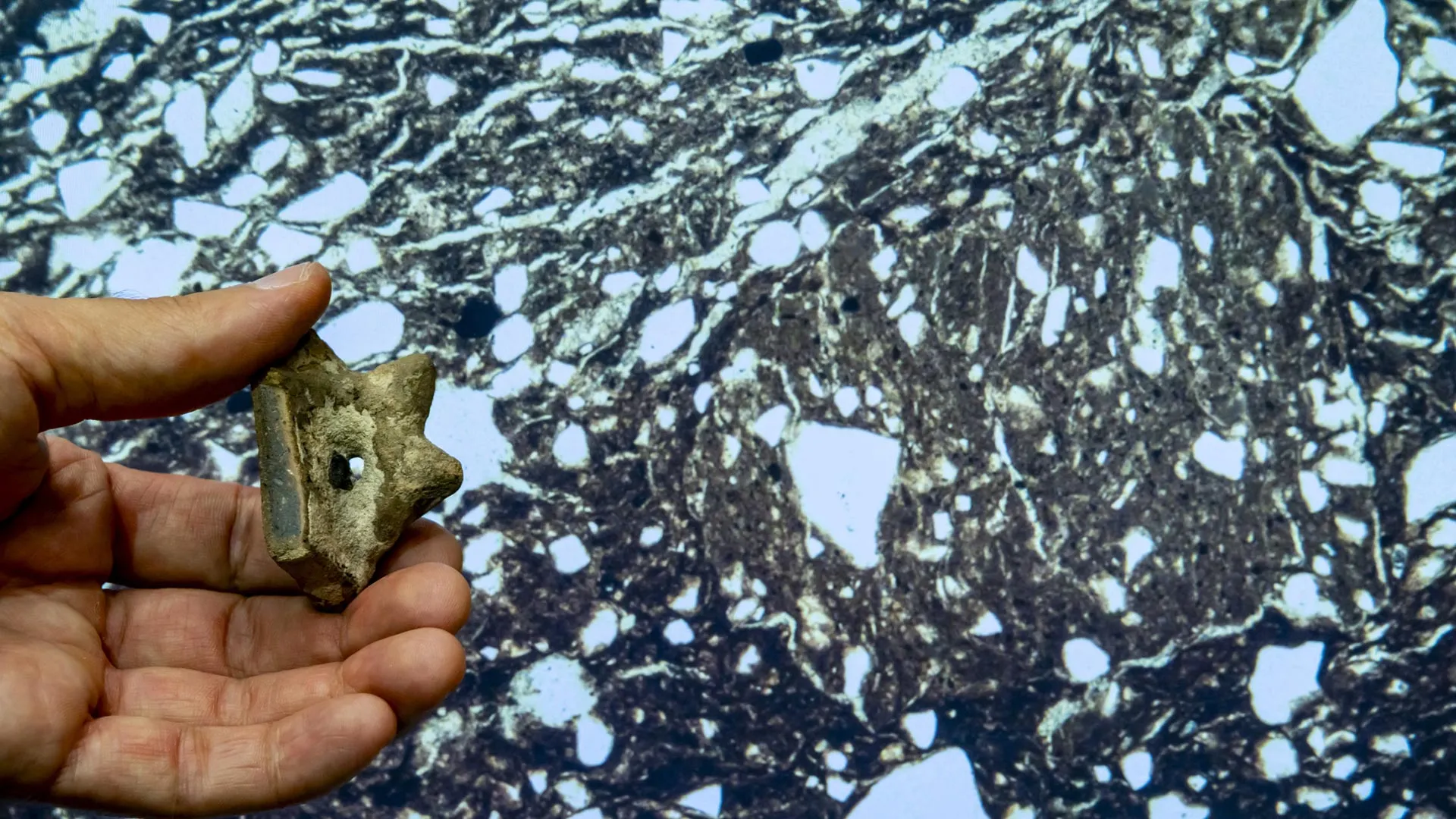
To tell them apart, the team examined details of pottery production that the release describes as almost invisible from the surface [2]. The differences in clay, temper and method from the local plain ware count against imitation [10]. A local potter copying a northern design would most simply keep local materials and habits, and these makers did not [10]. The museum takes the differences as a sign of specialized expertise and of access to resources that many local residents lacked [11].
The museum's summary carries the most specific detail. The potters mixed crushed fragments of older homeland pottery into their new vessels, which the museum describes as preserving a physical link to their past across generations [16]. It is also the claim that most needs the study's data behind it. Showing that a crushed inclusion came from heartland pottery is a sourcing problem of its own, and "across generations" is a statement about elapsed time that requires dates. The museum's account of the method goes no further than those production details, so the number of sherds sampled and the techniques used are the first things to check in the study itself [2].
The museum's confidence varies from sentence to sentence. Its headline says archaeologists "may have" solved the mystery, and the release says the craftspeople "likely" traveled hundreds of miles from the heartland [15][2]. Duke's phrase is "as we ultimately found" [1]. I think the evidence as described supports the narrow version: a small community of skilled potters from the north, living and working in Tampa Bay [2].
Neill Wallis is curator of Florida archaeology, bioarchaeology and the Ceramic Technology Laboratory at the museum [7]. "It's been this open debate for a century," he said [5]. "Tampa Bay sites had some Mississippian-like traits such as platform mound-village complexes and iconography, but lacked others, like maize agriculture and shell-tempered pottery." [6] None of the Safety Harbor chiefdoms reached the political power of the major northern centers, and none adopted extensive maize agriculture [14]. In the Mississippian core, from around 1000 A.D., powerful chiefdoms held sway over surrounding settlements, large areas were planted with maize, and earthen mounds carried temples and leaders' residences [12].
What to watch
- The peer-reviewed paper's sample counts and analytical methods, and how it shows the crushed inclusions came from heartland pottery.
- Dates for the decorated vessels, which would test the museum's claim that the homeland link was kept across generations.
- Whether the same fabric analysis at other Safety Harbor sites finds more migrant-made ware or only this one community.