Science1 publisher3 min readPublished
In a forgotten Victorian forest trial, heavily thinned mountain ash stored as much carbon as unlogged stands
Researchers revisiting a 1980s Victorian trial found heavily thinned mountain ash stored as much wood carbon as unlogged forest, or more, after 30 years. That gives the protect-or-clearfell argument a tested middle option, on evidence from one site that counts only carbon in wood.
The Scientist · Science desk
Drafted by a language model from the sources cited here and checked against its claim ledger before publication. How we use AISend a correction
What happened
- Victoria set up the Silvicultural Systems Project between 1987 and 1989 at Tanjil Bren in the Central Highlands and Cabbage Tree Creek in East Gippsland.
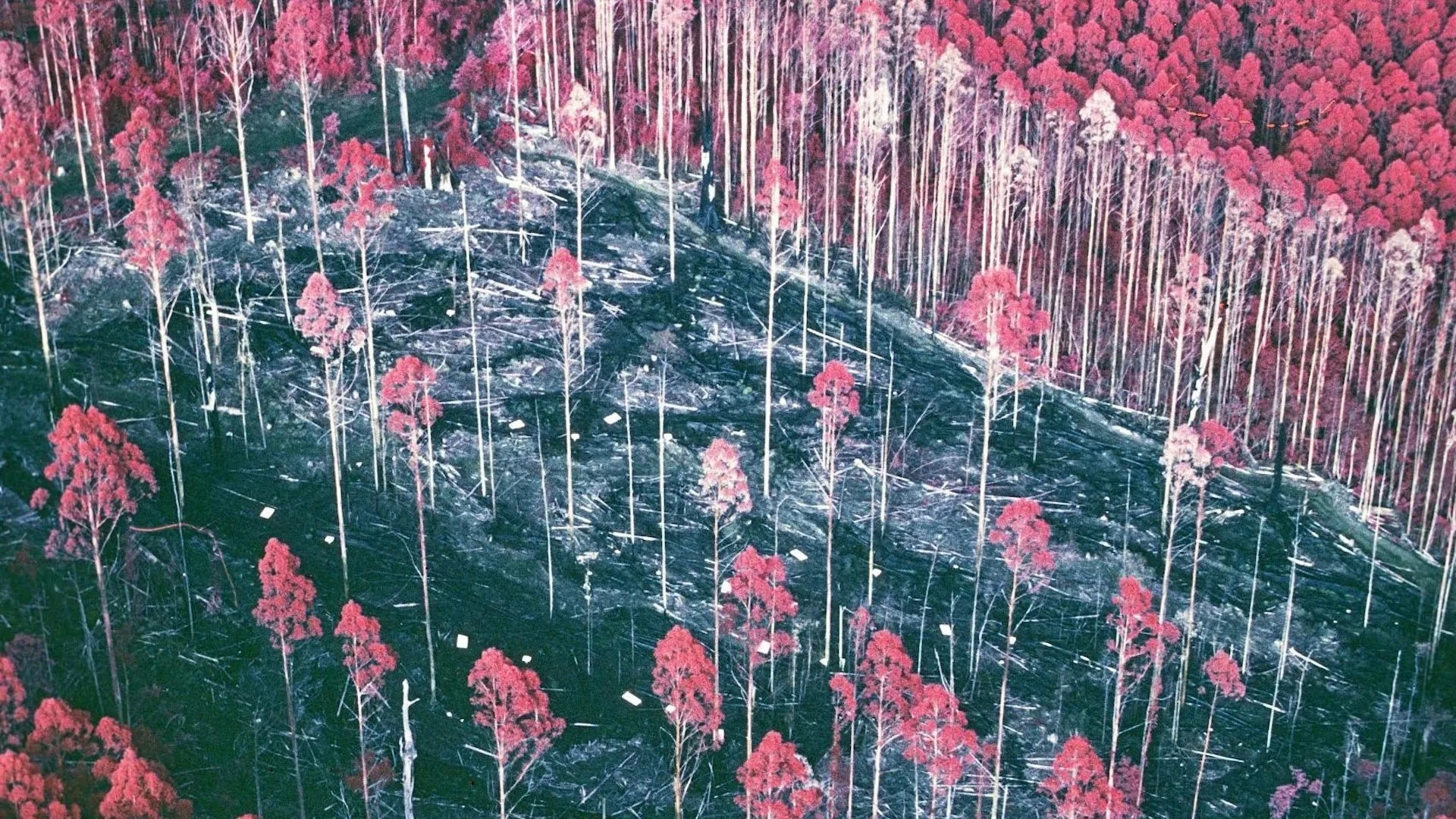
- The trial compared clearfells 250 to 350 metres wide, patch clearfells 50 to 140 metres wide, and heavy thinnings removing 50 to 70 percent of trees against unharvested forest.
- In 2014 a University of Melbourne silviculture class revisited the long-neglected Tanjil Bren site at the suggestion of Simon Murphy, who had helped establish it.
Compiled by The ScientistSomething wrong?How this is made
Why it matters
- decision Managers choosing between clearfelling and full protection in mountain ash now have trial evidence that cutting most of a stand's trees can leave no wood-carbon deficit within 30 years.
- constraint Anyone counting on thinning for a future ash timber crop has to solve regeneration separately, since acacia dominated wherever tall trees were retained.
- capability If big trees form hollows sooner, as the authors argue, thinning shortens the wait for hollows that greater gliders and Leadbeater's possums need, a habitat the authors call declining.
The carbon comparison counts what is in the trees. According to the researchers, writing in The Conversation [15], the thinned stands at Tanjil Bren stored as much carbon in their wood as the unharvested controls, or more [11]. In 30 years they regrew all the carbon taken out at harvest, then added enough to equal what the untouched forest gained over the same period [12]. They did it while keeping only 30 to 50 percent of their trees [1].
I trust this result more than most forest-carbon claims because of the design. Every treatment at Tanjil Bren was cut into the same dense regrowth from the 1939 fires, and hundreds of survey plots tracked what came back [4]. Thinned and unthinned stands started from one fire and one age class. A regional survey of logged against unlogged forest struggles to separate the effect of logging from the effect of where loggers chose to work. A planned side-by-side trial narrows that doubt a great deal. Victoria paid the equivalent of A$26 million in today's money for it in the mid-1980s [2].
The size gain is measured on the largest trees. At about 80 years old, the biggest retained trees averaged well over a metre in diameter at chest height, and some passed 1.5 metres [9]. The authors attribute this to the extra space and resources thinning gave them [17]. Largest-tree size fits their argument that big trees survive fire better and are more likely to form hollows used by the greater glider and Leadbeater's possum [13]. Average stem size and sawlog volume are separate questions.
The trial's earlier result points the other way for timber. By the early 2000s mountain ash had regenerated best on the clearfells; where tall trees were kept or the cleared patches were small, acacia and other common understorey species dominated [5]. Three decades on, ash in the large clearings was still vigorous and abundant [8]. Acacia has its own value, because Leadbeater's possums forage in it [14]. Still, a manager who thins heavily gets big ash now and acacia-dominated regrowth beneath it [5]. The summary's suggestion that careful thinning could serve timber, habitat and carbon at once [16] depends on what that manager needs from the next rotation.
I think the evidence is strong enough to put heavy thinning back into an argument that had split into two camps: conservationists who said clearfelling destroys habitat, and foresters who called it the forestry equivalent of the bushfires mountain ash is adapted to [18]. It comes from one site. The account reports measurements from Tanjil Bren, counts carbon held in wood, and does not cover soil carbon, the fate of the logs removed, or results from the project's second site at Cabbage Tree Creek [1].
What to watch
- Whether results from Cabbage Tree Creek in East Gippsland, the project's second site, show the same carbon and tree-size pattern as Tanjil Bren.
- A peer-reviewed paper giving plot numbers and carbon methods, and stating whether soil carbon and the carbon in harvested logs were counted.
- Whether the thinned Tanjil Bren stands actually develop hollows faster than the controls, which would test the habitat claim directly.