Science1 publisher2 min readPublished
Tapeworm drug on a targeted carrier shrank endometriosis lesions in treated mice
Researchers linked the tapeworm drug niclosamide to a carrier that cleared detectable endometriosis lesions in up to five of eight treated mice after one dose. It points to a non-hormonal option for a disease with no cure, though the test used eight mice per group over two weeks.
The Scientist · Science desk
Drafted by a language model from the sources cited here and checked against its claim ledger before publication. How we use AISend a correction
What happened
- A filament pressure test on the mice's abdomens and hind paws found that both doses of the drug eased the heightened pain sensitivity the lesions had caused.
- The carrier is a branching molecule called a dendrimer, tagged with folic acid to find a receptor on the target cells and built to release the drug only once inside them.
- To settle on that cell target, the team mined 10 published human cell datasets and fresh cells drawn from abdominal-cavity fluid in four endometriosis patients.
- The lesions were endometriosis-like growths seeded in mice by injecting uterine tissue from donor animals into the abdominal cavity.
Compiled by The ScientistSomething wrong?How this is made
Why it matters
- capability A treatment that works outside the hormone system is new ground for endometriosis, where the standard options are hormonal therapy and surgery and symptoms often return.
- constraint Because the study did not test long-term benefit, the safety of repeat dosing, or any effect in humans, the result is a lead for further work, not evidence a treatment is coming.
- exposure The disease it targets is common, affecting about one in 10 women of reproductive age, so even an early lead reaches a large patient group if it survives human testing.
The target is a subset of immune cells. A group of macrophages carrying a surface protein called folate receptor beta, or FRbeta, is elevated in endometriosis lesions in both humans and mice [8]. Earlier research in Communications Biology found these cells release inflammatory signals and growth factors that help sustain the abnormal tissue growths [7].
Niclosamide, better known as a treatment for tapeworm infections, barely dissolves in water, and little of it reaches the bloodstream when swallowed [2][11]. The carrier was built to make the drug more soluble and steer it to the right cells [10]. "Endometriosis is a chronic disease," Kanako Hayashi, a reproductive biologist at Washington State University, told ScienceAlert [5]. "Patients suffer from the symptoms (such as chronic pelvic pain) for multiple decades," she said [6]. A daily pill is hard to sustain over that span and raises side-effect worries, Hayashi said, so the carrier aims to deliver the drug to the macrophages while limiting effects elsewhere [12].
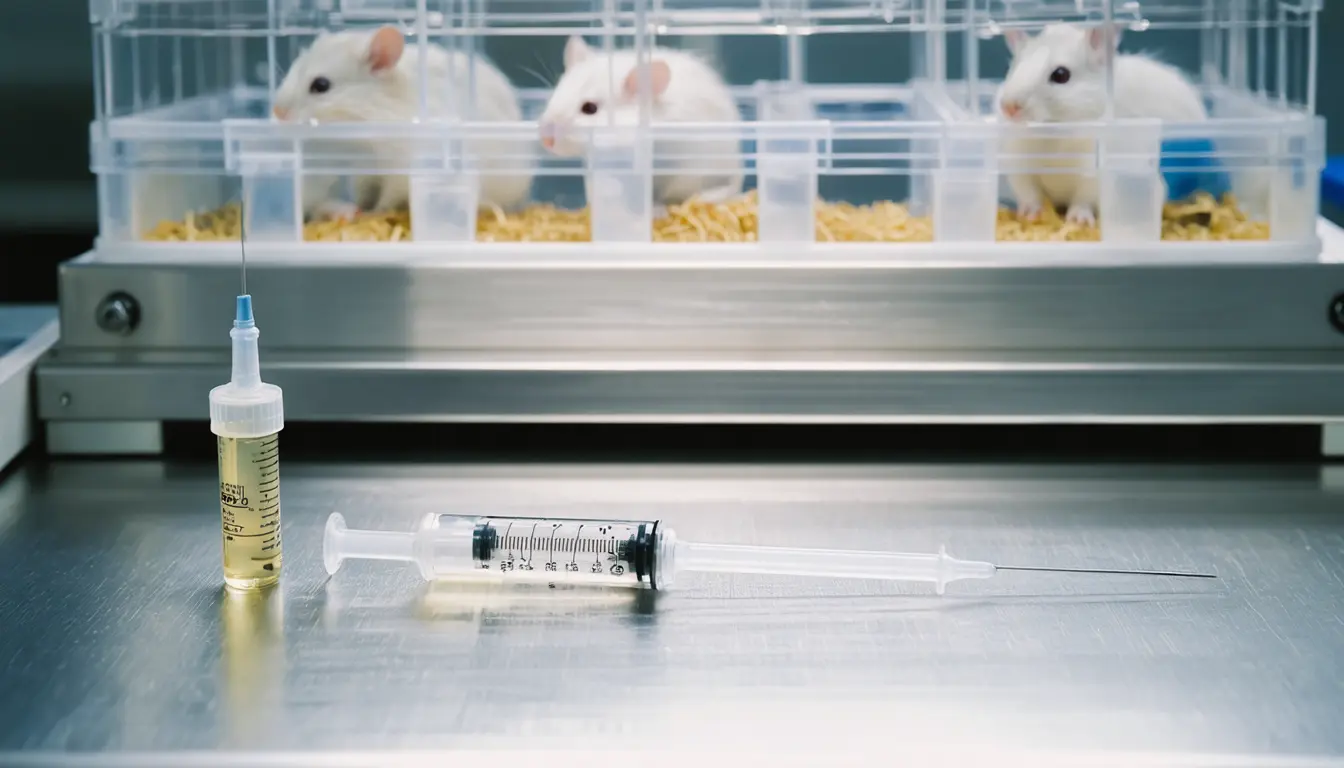
Seven days after the lesions were seeded, each mouse got a single injection: the empty carrier for controls, the carrier loaded with niclosamide at two doses for the rest [15]. Two weeks later, treated mice had fewer and smaller lesions than controls [16]. Four of eight at the lower dose had none the researchers could detect, and across both dose groups nine of 16 treated mice were clear [17][1]. Washington State led the work with the University of Michigan and the University of Florida, and the study was published in Advanced Healthcare Materials [1][9].
The mouse test does not measure human pain. The authors say the withdrawal responses track sensitivity in the animals and cannot show how much a person with endometriosis would hurt less [19]. The treatment groups were small as well, eight mice each, and the mice were followed for only two weeks after one dose [20].
What to watch
- A longer, repeat-dose study showing whether cleared lesions stay gone and the carrier is safe over time.
- Any move to test the niclosamide carrier in people, after only mouse data so far.
- Whether the FRbeta-macrophage target, drawn from four patients and 10 datasets, holds in larger human samples.