ScienceReports disagree4 publishers2 min readPublished
Magnitude 7.7 quake on a shallow inland fault shakes about 4.6 million people in Panama
Panama was struck on Friday by a magnitude 7.7 earthquake near the village of Pitaloza Arriba, the USGS said. A USGS seismologist says the tsunami threat from the shallow, inland rupture has largely receded; shaking and aftershocks are the hazard that remains.
The Scientist · Science desk
What happened
- Several large aftershocks followed the main shock, including one of magnitude 6, AFP reported.
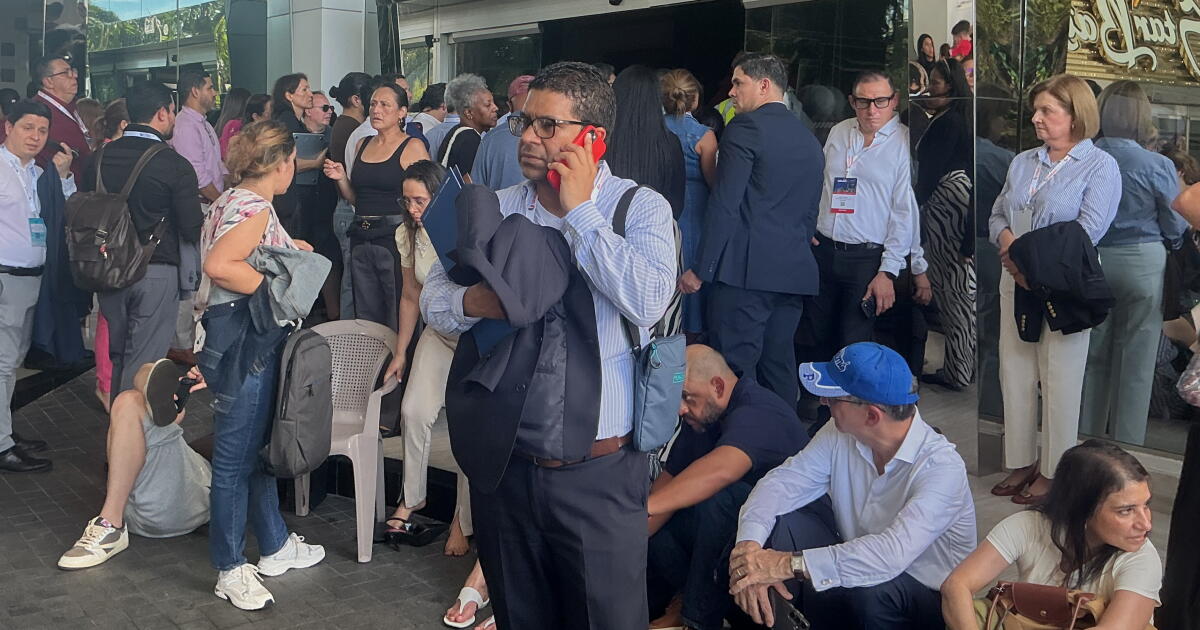
- AFP saw many people evacuated from buildings in Panama City, about 200 km from the epicentre.
- President Jose Raul Mulino said on social media that he had ordered personnel, resources and aid mobilised to the affected area.
- The USGS and the US embassy warned of a possible tsunami threat to Panama and eight other countries, among them Costa Rica, Colombia, Ecuador and Mexico.
Why it matters
- contradiction Coastal residents get opposite signals from the two reports: AFP quotes the US Tsunami Warning System projecting waves up to 3 m for Panama's coast, while Scientific American says NOAA's system issued no alert of any kind.
- cost If the USGS model holds, Panama faces dozens to hundreds of deaths and damage in the hundreds of millions of dollars, and officials had released no injury or death figures to check it against.
- exposure Buildings in central Panama, where AFP says damage should be heaviest, now face the potentially strong aftershocks the USGS says could still follow.
Susan Hough, a seismologist at the USGS, traced the tsunami question to where the ground moved. "Because this was on land and shallow, you're not on the seafloor, so it didn't move the seafloor underneath the water column and that's what you need to generate a tsunami," she said [12]. She described the rupture as "a shallow lateral fault, what we call strike slip, so similar to the San Andreas" [21].
The shallow depth Hough cited against a tsunami also means more shaking at the surface, Scientific American noted [13]. AFP gave the depth as 12 km [7].
The USGS count of 4.6 million people in moderate to severe shaking [4] is roughly Panama's whole population, which AFP, also citing the USGS, put at about 4.5 million [6][24]. The thing this figure doesn't tell you is how many of those people felt severe shaking and how many felt moderate shaking. Near the epicentre, the population is relatively sparse [10]. The two reports place that epicentre slightly differently: about 14 km southwest of Pitaloza Arriba in Herrera Province, according to Scientific American [3], and 10 km from the town, according to AFP [2].
On the tsunami, we think Hough's physical argument is the better guide for now [11], on one condition: it holds only as long as later analysis keeps the rupture on land. The US embassy still told its citizens to keep away from the coast and to monitor local emergency broadcasts [23].
Panama sits near the meeting point of several plates, with the Cocos and Nazca plates to the south, the Caribbean plate to the north and the South American plate to the east [14]. Hough said the subduction zones near the country do not meet, and that this is why Panama usually has less powerful quakes [15]. When quakes do strike, they usually hit western Chiriqui province, AFP reported [16]. This one struck in Herrera Province instead [3]. The USGS first measured it at 8.0 before revising it to 7.7 [1].
"There's a complicated zone of faulting that's at that juncture, and so this earthquake was on one of those faults," Hough said. "It was quite large compared to other earthquakes that have been seen in that area." [22]
What to watch
- Whether later US Tsunami Warning System bulletins confirm or withdraw the 3 m wave projection AFP reported for Panama's coast.
- Official casualty and damage counts from Panama, measured against the USGS model's range of dozens to hundreds of deaths.
- The size and timing of further aftershocks after the magnitude 6 already recorded.
Clarity's read
What the record supports and how the coverage leans. The claims behind it follow.
Reality
- Evidence58
- Adoption
- Insufficient
- Hype gap+12
- Incentives
- Insufficient
- Confidence55
Claim ledger
Ranked by verification strength, evidence, and original report placement.
- [1]
The quake struck at 12:56 local time on Friday and was initially measured as magnitude 8.0 by the U.S. Geological Survey, later downgraded to 7.7.
ReportedSupportedSource: Scientific American, citing USGS2 sources— create a free account to open themView cited source - [2]
USGS said the quake was detected at 5:56 p.m. GMT with an epicenter 10 kilometers from the small town of Pitaloza Arriba in south-central Panama.
ReportedSupportedSource: AFP via phys.org, citing USGS2 sources— create a free account to open themView cited source - [3]
The quake struck around 9 miles (14 kilometers) southwest of Pitaloza Arriba, a small village in Panama's Herrera Province.
ReportedSupportedSource: Scientific American2 sources— create a free account to open themView cited source - [4]
Around 4.6 million people experienced moderate to severe shaking, according to the USGS.
ReportedSupportedSource: Scientific American, citing USGS2 sources— create a free account to open themView cited source - [5]
Potentially strong aftershocks could follow, according to the USGS.
ReportedSupportedSource: Scientific American, citing USGS2 sources— create a free account to open themView cited source - [6]
The quake was felt across the country of around 4.5 million people, according to the USGS.
ReportedSupportedSource: AFP via phys.org, citing USGS2 sources— create a free account to open themView cited source - [7]
The quake was recorded at a shallow depth of 12 kilometers.
ReportedSupportedSource: AFP via phys.org2 sources— create a free account to open themView cited source - [8]
Several large aftershocks, including a magnitude 6 tremor, were recorded.
ReportedSupportedSource: AFP via phys.org2 sources— create a free account to open themView cited source - [9]
No statistics on injuries or deaths had yet been released.
ReportedSupportedSource: Scientific American2 sources— create a free account to open themView cited source - [10]
The affected area has a relatively low population density.
ReportedSupportedSource: Scientific American2 sources— create a free account to open themView cited source - [11]
USGS seismologist Susan Hough said the tsunami threat has likely largely receded because the quake occurred on land at a relatively shallow depth.
ReportedSupportedSource: Susan Hough, USGS, to Scientific American2 sources— create a free account to open themView cited source - [12]
"Because this was on land and shallow, you're not on the seafloor, so it didn't move the seafloor underneath the water column and that's what you need to generate a tsunami,"
ReportedSupportedSource: Susan Hough, USGS seismologist, to Scientific American2 sources— create a free account to open themView cited source - [13]
Shallow earthquakes lead to more shaking being felt at the surface.
ReportedSupportedSource: Scientific American2 sources— create a free account to open themView cited source - [14]
Panama is near the intersection of several major tectonic plates: the Cocos and Nazca plates to the south, the Caribbean plate to the north and the South American plate to the east.
ReportedSupportedSource: Scientific American, citing USGS2 sources— create a free account to open themView cited source - [15]
Hough said the subduction zones near Panama don't meet, which is why the country usually experiences less powerful quakes.
ReportedSupportedSource: Susan Hough, USGS, to Scientific American2 sources— create a free account to open themView cited source - [16]
Earthquakes are rare in Panama, and when they do occur, they usually strike in western Chiriqui province.
ReportedSupportedSource: AFP via phys.org2 sources— create a free account to open themView cited source - [17]
There were no reports yet of casualties, but extensive damage was expected, particularly in the center of the country.
ReportedSupportedSource: AFP via phys.org2 sources— create a free account to open themView cited source - [18]
AFP witnessed many people being evacuated from buildings in Panama City, about 200 kilometers from the epicenter.
- [19]
Panamanian President Jose Raul Mulino said on social media he had given instructions to mobilize personnel, resources and aid to the area.
- [20]
USGS modeling put the likely casualties in the range of dozens to hundreds of fatalities and damages in the hundreds of millions of dollars.
- [21]
"It was a shallow lateral fault, what we call strike slip, so similar to the San Andreas,"
- [22]
"There's a complicated zone of faulting that's at that juncture, and so this earthquake was on one of those faults," ... "It was quite large compared to other earthquakes that have been seen in that area."
- [23]
The U.S. embassy warned U.S. citizens in the area to avoid damaged structures and the coast, and to monitor local emergency broadcasts for updates.
- [24]
The USGS figure of 4.6 million people in moderate to severe shaking is about 102 percent of the roughly 4.5 million national population AFP cited, i.e. roughly the whole country.
- [25]
The USGS and the U.S. embassy in Panama warned the quake could pose a tsunami threat in Costa Rica, El Salvador, Peru, Mexico, Guatemala, Nicaragua, Colombia and Ecuador, as well as Panama.
ReportedContestedSource: Scientific American2 sources— create a free account to open themView cited source - [26]
NOAA's Tsunami Warning System had not issued a tsunami warning, advisory, watch or threat alert.
ReportedContestedSource: Scientific American2 sources— create a free account to open themView cited source - [27]
Tsunami waves up to three meters high could hit the Panama coastline in the coming hours, the U.S. Tsunami Warning System said.
ReportedContestedSource: AFP via phys.org2 sources— create a free account to open themView cited source
Sources
4 independent publishers whose own reporting we read for this story.
- mezha.netЗемлетрус магнітудою 7.7 стався в Панамі
2 articles · October 10, 2026
- phys.orgTsunami alert after major earthquake rocks Panama
1 article · October 10, 2026
- scientificamerican.comMajor earthquake strikes Panama—damage and injuries are expected
1 article · October 9, 2026
- scmp.comPanama rocked by 2 powerful earthquakes, multiple aftershocks
1 article · October 9, 2026
Topics and entities
Follow any of these and your For You feed starts watching them — no settings page required.
Topics
- Tsunami warningsFollow
- EarthquakesFollow
- Plate TectonicsFollow