Most ancient dog bones from Chukotka match the short-limbed build of modern sled dogs
Sled dogs have radius, ulna and tibia bones about 6% shorter than other canids after size adjustment, University of Haifa researchers report. The authors say the proportions could identify possible sled dogs where no sled equipment survives.
The Scientist · Science desk
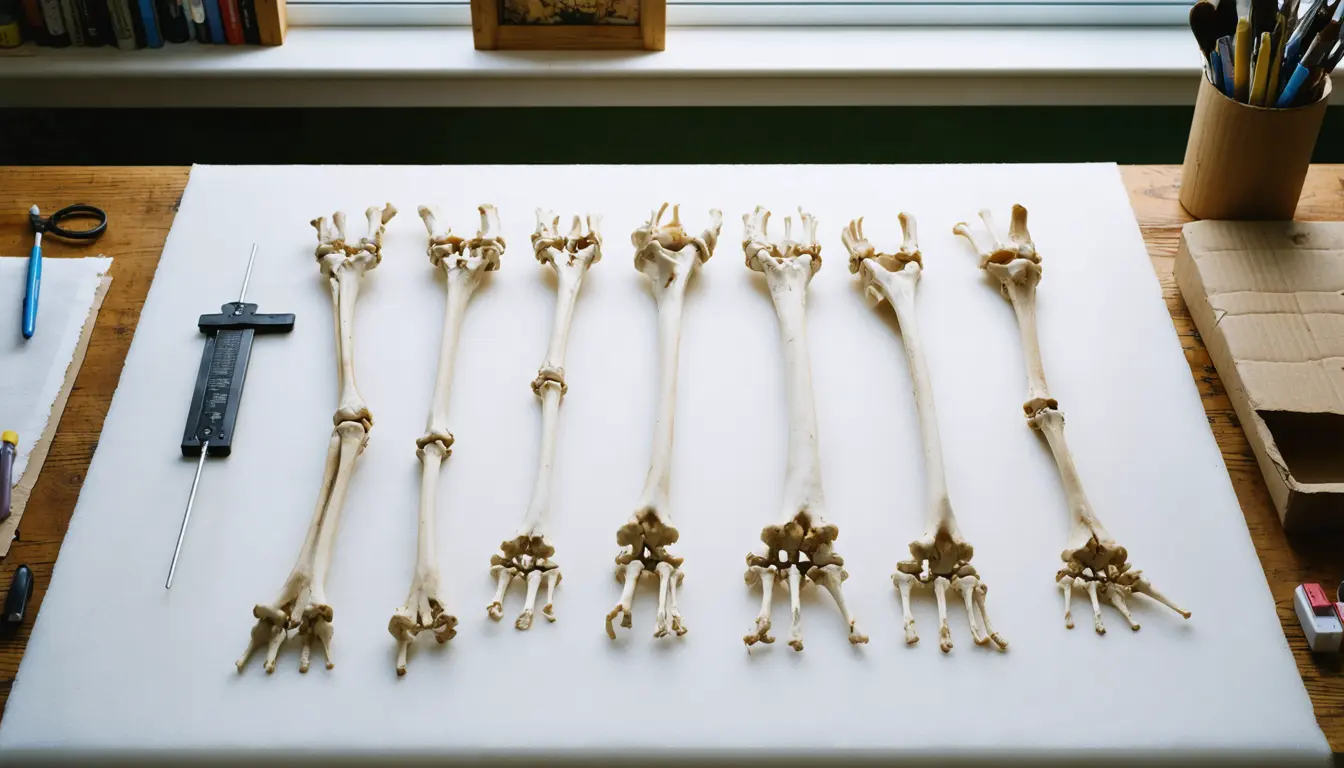
Key figures: about 89% of ancient Chukotka dog bones were consistent with the modern sled-dog pattern of shorter leg bones; 82 ancient dog bones were examined; sled dogs' radius, ulna and tibia were about 6% shorter on average after accounting for skeletal size.
| Figure | Value | Note | Claim |
|---|---|---|---|
| Ancient bones consistent with sled-dog pattern, about | 89% | 6 | |
| Ancient bones examined | 82 bones | 5 | |
| Sled dogs' radius, ulna and tibia, about | 6% shorter | Average, adjusted for skeletal size | 1 |
What happened
- The team measured five long bones, the humerus, radius, ulna, femur and tibia, in 60 canids that included sled dogs, wolves, mongrels and spitzes.
- Of 82 ancient dog bones from three Chukotka sites dated 2,000 to 500 years ago, about 89% matched the sled-dog pattern, as did all three ritually buried dogs.
- The earliest archaeological evidence tied to dog sledding is about 9,000 years old, sled parts found beside dog remains on Zhokhov Island.
Why it matters
- capability Sleds seldom survive in the archaeological record, but dog bones do, so limb proportions could flag likely sled dogs at sites with no equipment.
- contradiction phys.org's headline credits stubby legs with helping people for 9,000 years, but the oldest bones measured are about 7,000 years younger than the Zhokhov sled parts.
- constraint A 6% group average does not settle whether a single incomplete bone came from a sled dog, because that depends on how much sled and non-sled dogs overlap.
The comparison adjusts for overall skeletal size before it compares bones [1]. The control matters here: a small dog would otherwise show short bones without being built for pulling. The idea has a precedent in reindeer, where animals used for racing, carrying loads and pulling have limb bone differences compared with those that do not [11].
The model came first, and the bones were tested against it. The team's biomechanical model said that lowering the center of gravity raises the pulling force a dog can generate [3]. "When people or animals pull a load, it tends to tip them backward. A lower or more forward position of the center of mass counteracts this effect, allowing greater pulling force," Mitya Kletzerman of the University of Haifa said [4][12].
Applied to the Chukotka material, the same yardstick passed roughly 73 of the 82 bones [14] and failed about nine [15]. The sites are associated with ancestral Inuit populations [5]. The thing this doesn't tell you is how selective the yardstick is: the coverage does not report how often non-sled dogs would pass it, how the 60 modern canids divide by group, or what independent evidence shows the Chukotka dogs pulled sleds.
The study pairs a model that predicts an advantage with a measured link between build and use. It leaves the causal step open. "It's unclear how this trait developed, but selective pressure may have preserved it, because it gave sled dogs an advantage over other dogs," Kletzerman said [10].
In our view that makes the pattern a reasonable screen for candidate sled dogs in remains from Chukotka. It becomes a tool for tracing where sledding began only if the missing baseline shows that dogs which did not pull sleds rarely match.
What to watch
- Measurements of the same five bones in dogs from sites older than 2,000 years, including near Zhokhov Island, would test whether the pattern reaches toward the 9,000-year record.
- A published match rate for non-sled dogs under the same classification, which would give the 89% figure a baseline.
- Whether other archaeologists apply the classification to dog remains from Arctic regions outside Chukotka.
Clarity's read
What the record supports and how the coverage leans. The claims behind it follow.
Reality
- Evidence60
- Adoption
- Insufficient
- Hype gap+20
- Incentives
- Insufficient
- Confidence60
Claim ledger
Ranked by verification strength, evidence, and original report placement.
- [1]
After accounting for overall skeletal size, sled dogs had relatively shorter radius, ulna and tibia bones than non-sled canids, with these bones measuring about 6% shorter on average.
- [2]
The researchers analyzed bones in 60 canids, including sled dogs, wolves, mongrels and spitzes, and compared the lengths of five long bones: the humerus, radius and ulna in the forelegs and the femur and tibia in the hind legs.
- [3]
The team's biomechanical model showed that one effective way to pull a loaded sled is for a dog to lower its center of gravity, which increases its ability to generate pulling force.
- [4]
"When people or animals pull a load, it tends to tip them backward. A lower or more forward position of the center of mass counteracts this effect, allowing greater pulling force," Kletzerman said.
- [5]
The team examined 82 ancient dog bones and three skeletons of ritually buried dogs from three archaeological sites associated with ancestral Inuit populations in present-day Chukotka, Russia, dating from about 2,000 to 500 years ago.
- [6]
About 89% of the ancient bones were classified as consistent with the modern sled-dog pattern of shorter leg bones, as were all three ritually buried dogs.
- [7]
The earliest archaeological evidence associated with dog sledding dates to about 9,000 years ago on Zhokhov Island in modern-day Russia, where researchers found sled parts alongside dog remains.
- [8]
Sledding equipment is rarely found in the archaeological record, so it has remained difficult to determine when and where dog sledding first emerged or spread.
- [9]
The findings suggest the skeletal pattern could be an effective way to identify possible sled dogs even when archaeological remains are incomplete or lack direct evidence of sled equipment.
- [10]
"It's unclear how this trait developed, but selective pressure may have preserved it, because it gave sled dogs an advantage over other dogs," Kletzerman said.
- [11]
Previous research found that reindeer used for racing, carrying loads and pulling have limb bone differences compared with nonworking reindeer.
- [12]
The study was published Oct. 14 in the journal iScience; quoted researcher Mitya Kletzerman is at the University of Haifa in Israel.
- [13]
phys.org headlined its report "The stubby legs of ancient sled dogs helped people traverse the Arctic for the past 9,000 years".
- [14]
About 73 of the 82 ancient dog bones matched the modern sled-dog pattern.
- [15]
About 9 of the 82 ancient dog bones did not match the modern sled-dog pattern.
- [16]
The oldest ancient bones measured, at about 2,000 years old, are roughly 7,000 years younger than the Zhokhov Island sled parts.
Get this ledger inside ChatGPT. Ask about any of our stories and the answer brings its figure, each claim’s verdict and the sources. Free, no account.
Sources
2 independent publishers whose own reporting we read for this story.
- phys.orgThe stubby legs of ancient sled dogs helped people traverse the Arctic for the past 9,000 years
1 article · October 14, 2026
- popsci.comSled dogs have stubby legs for a reason
1 article · October 14, 2026
Topics and entities
Follow any of these and your For You feed starts watching them — no settings page required.
Topics
- ZooarchaeologyFollow
- Arctic ArchaeologyFollow
- Dog domestication and evolutionFollow