Science1 publisher2 min readPublished
Otago screen finds estrogenic activity in some rivers and taps while other supplies test clean
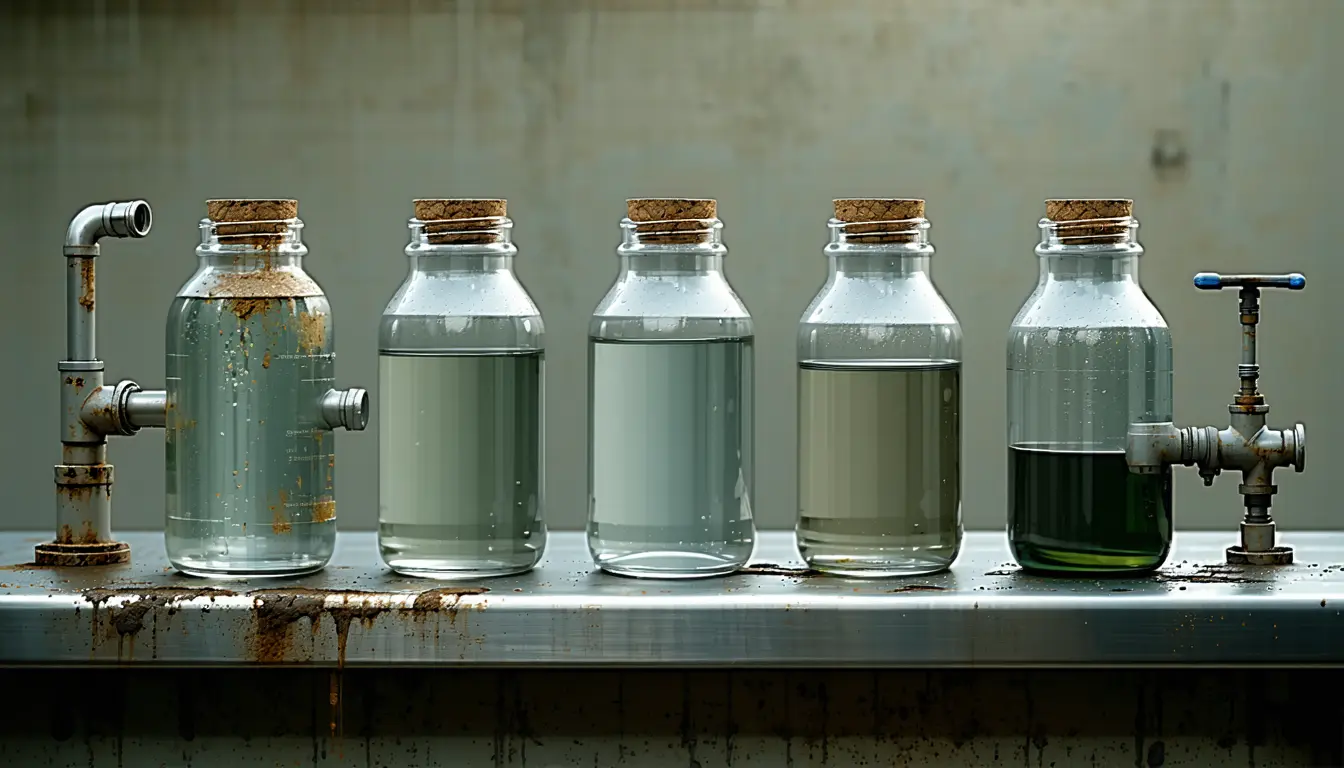
A University of Otago team screened rivers, tap, bottled, tank and rainwater with a bioassay for the combined effect of estrogenic chemicals. Some samples showed strong activity and three showed none at all.
The Scientist · Science desk
What happened
- A University of Otago team sampled natural waterways, tap water, bottled water, tank water and rainwater, and reported estrogenic endocrine-disrupting chemicals in many of the samples.
- Strong estrogenic activity appeared in some rivers, household tap water, certain tanks and one brand of bottled water, while a spring, a filtered fountain and another bottled product showed none detectable.
- The team built a bioassay that measures the combined concentration of estrogenic contaminants, where routine monitoring tests for only a handful of named chemicals one at a time.
- Heather wants endocrine bioactivity testing added to routine water-quality monitoring, and supplies including bottled water benchmarked against no detectable estrogenic activity.
Compiled by The ScientistSomething wrong?How this is made
Why it matters
- capability A single combined-activity reading gives a supplier a cheap screening step, narrowing which intake, tank or pipe is worth a full analytical workup.
- constraint Because the assay sums everything binding like estrogen, it cannot tell an operator which compound to remove; remediation still waits on a second, costlier analysis.
- decision Adopting a no-detectable-activity benchmark would force regulators to set a numeric pass mark for a quantity no routine monitoring schedule currently collects.
- exposure One bottled brand showed strong activity and another showed none, and the proposed remedy reaches packaging choices as well as catchment protection.
The bioassay returns one number, the concentration of estrogenic contaminants acting together in a sample [3]. "Environmental samples typically contain complex mixtures of natural hormones, pharmaceutical estrogens, pesticides, plasticizers and other industrial chemicals, but it is the combined biological effect of these mixtures that ultimately matters," Heather said [5]. A summed reading tells a supplier that something in the water is binding like estrogen, without identifying which chemical. Heather's proposal is to run the assay alongside high-resolution mass spectrometry to identify specific contributors such as plasticizers, pesticides or steroid hormones, and to use that to guide source protection, treatment and packaging choices [6].
The paper, by Gihani Manodara and colleagues, is published in iScience [15]. The phys.org account does not report how many samples were collected or what concentrations were measured [21]. Five categories of water were sampled [19], and the results as described sort samples into strong activity and no detectable activity without stated values [2].
The samples that came back with nothing detectable matter for the method. An assay that found estrogenic activity everywhere would be hard to separate from background introduced in collection, in handling, or in the assay itself. A working negative rules that out, and three of the reported samples delivered one [20]. "This doesn't mean all water is unsafe to drink, but it does show that detectable estrogen-like signals are present in many common water sources, while other sources are essentially free of such activity," Heather said [16].
The study did not directly measure health outcomes [7]. Heather is careful about the wider trend she invokes: "While these trends cannot be attributed to endocrine-disrupting chemicals alone, they are consistent with broader concerns that chronic low-dose exposure to mixtures of such chemicals may be one of multiple contributors to impaired reproductive health," she said [9]. The trends she refers to are total fertility rates falling well below replacement level in many high-income countries [10] and reported declines in sperm concentration and total sperm count among men in Western countries over the last 40 to 50 years [11].
Heather is a professor in Otago's Department of Physiology and chief scientific officer of the biotech startup InsituGen [12], and the tool she wants added to routine monitoring is the one her team built [3][13]. Her benchmarking proposal would need a regulator to fix a threshold for a quantity that no routine schedule currently reports [14]. On the evidence here, at least three samples already sit at zero [20].
What to watch
- Whether the iScience paper itself reports per-sample concentrations, detection limits and sampling locations.
- Whether any water regulator adds endocrine bioactivity to routine monitoring, and what activity level it sets as a pass.
- Whether a follow-up pairs the bioassay with high-resolution mass spectrometry on the same samples and names the contributing chemicals.