Science1 publisherNot yet confirmed elsewhere2 min readPublished
Elephant molar records a well-watered valley where toolmakers worked in Israel 700,000 years ago
Hannah Farrell's team used a 700,000-year-old elephant molar from Israel's Gesher Benot Ya'aqov to reconstruct woodland and wetland around early toolmakers. The idea that the wet valley eased travel along the Africa-Eurasia land bridge is the authors' inference from one site and one elephant.
The Scientist · Science desk
What happened
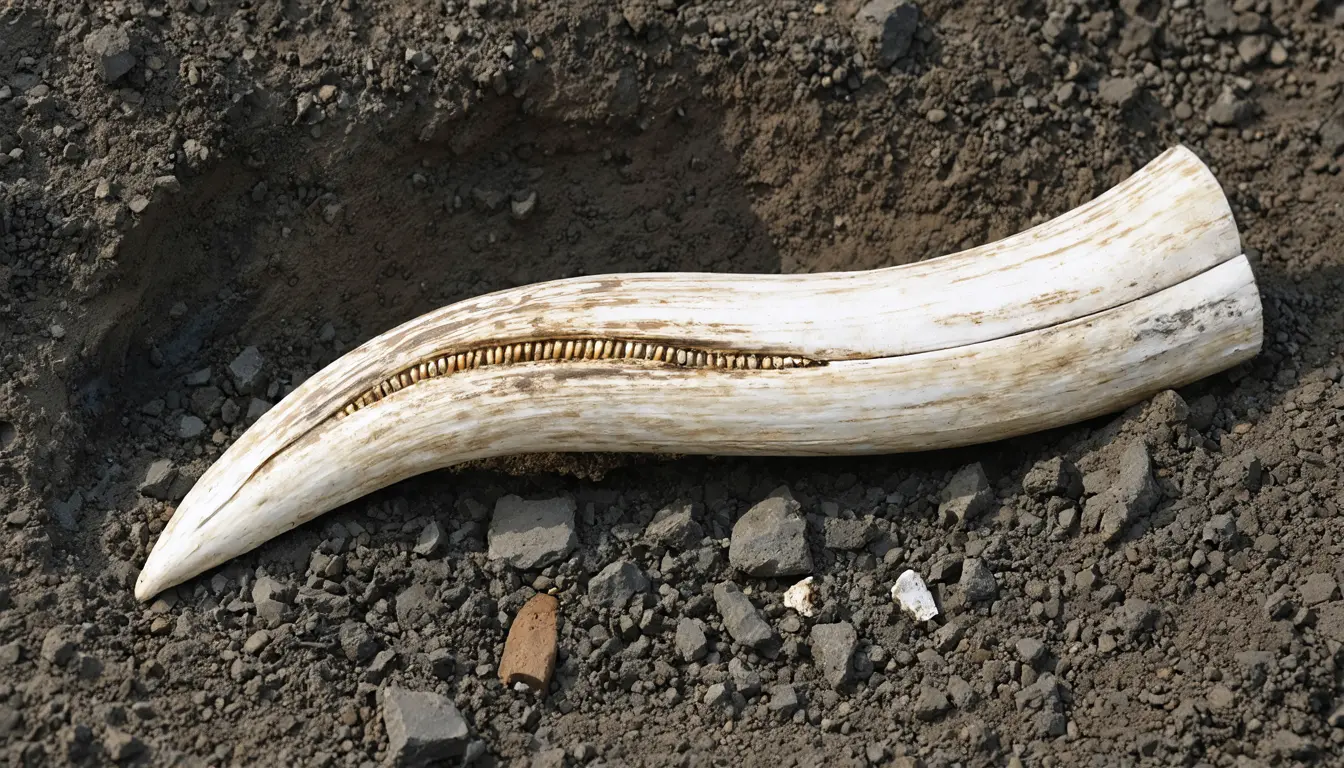
- The molar and tusk fragments came from a straight-tusked elephant, Palaeoloxodon antiquus, one of the largest land mammals of the Pleistocene.
- The team combined CT scanning, 3D reconstruction, microscopic wear analysis, isotope geochemistry and pollen studies to describe the habitat.
- Carbon isotope values from the tooth suggest the elephant lived in a consistently well-watered environment.
- Pollen from the site's sediments showed abundant wetland plants, including reeds, sedges, willow, tamarisk and aquatic species.
- The authors conclude the Hula Valley region was part of a stable ecological refuge within the Levantine Corridor linking Africa and Eurasia.
Compiled by The ScientistSomething wrong?How this is made
Why it matters
- constraint Because the tooth chemistry comes from one elephant, it describes the conditions that animal lived in; how typical they were of the valley over time is left open by a sample of one.
- capability The tooth had been recovered in earlier digging, so large-mammal teeth already held from other Acheulian sites could be re-read for habitat in the same way.
- decision Anyone citing this study for movement along the Africa-Eurasia land bridge is citing the authors' interpretation; the measured result is habitat at one site.
The study's strongest design choice is reading the landscape from two separate materials. The team used the tooth as an archive of the wider ecosystem [12], then set its chemistry beside pollen from the site's sediments [8][9]. One record comes from an animal's body and the other from the ground around it. Both point to a wet landscape.
The sample behind that picture is small: one straight-tusked elephant, known from a molar and some tusk fragments [5], from one excavation in the Jordan Rift Valley, south of today's Hula Valley [16]. The paper's title lists hominin behavior among its implications [14], but the release does not say whether the elephant remains carry marks from the basalt handaxes and cleavers found beside them [4], or how many years of the animal's life the isotope samples span.
From the local picture, the authors step outward. Such environments "likely provided reliable water and biological resources for wildlife and human groups moving through the region," according to the release [2]. "The availability of water, vegetation and animal resources shaped where humans and wildlife could survive," said Gonen Sharon of Tel-Hai University, who led the excavations that produced the tooth [10][6].
I'd accept the refuge reading for this valley. A well-watered place where early humans made stone tools [3] fits the idea that wet patches along the land bridge supported people passing through. It does not show that the environment caused anyone to move. Nor does it show that the rest of the corridor looked like this valley at the same time, and answering that takes habitat records from other sites of similar age. Sharon goes further than the sample. The Hula Valley's wetlands, rivers and woodlands "helped sustain life along one of the world's earliest migration corridors," he said [11].
The account of the work comes from a release provided by Tel-Hai University [15], Sharon's institution [6]. The analysis drew on three universities. Farrell, with Cheryl A. Makarewicz on isotopes and Nimrod Marom on archaeozoology, is at the University of Haifa, and Minji Jin and Dafna Langgut handled the pollen at Tel Aviv University [6][13]. The study appears in Quaternary Science Reviews [6].
What to watch
- Dated habitat reconstructions from other Levantine Corridor sites of similar age, which would show whether the Hula Valley was typical of the corridor or an isolated wet patch.
- Whether the full paper reports cut marks or other evidence tying the Acheulian handaxes and cleavers to the elephant itself.
- Sequential isotope data showing how many seasons or years the 'consistently well-watered' signal actually covers.
Clarity's read
What the record supports and how the coverage leans. The claims behind it follow.
Reality
- Evidence45
- Adoption
- Insufficient
- Hype gap+20
- Incentives40
- Confidence50
Claim ledger
Ranked by verification strength, evidence, and original report placement.
- [1]
The findings indicate that the Hula Valley region formed part of a stable ecological refuge within the Levantine Corridor, the land bridge connecting Africa and Eurasia.
- [2]
Such environments "likely provided reliable water and biological resources for wildlife and human groups moving through the region during the Pleistocene."
- [3]
The elephant tooth was previously recovered from Gesher Benot Ya'aqov (GBY-NBA), a prehistoric site in northern Israel where early humans made stone tools some 700,000 years ago, and it enabled researchers to reconstruct a landscape of woodlands, wetlands and waterways.
- [4]
The elephant remains were discovered alongside basalt handaxes and cleavers, hallmark tools of the Acheulian tradition, one of the earliest and most widespread stone-tool technologies.
- [5]
The research examines a giant elephant molar and tusk fragments belonging to Palaeoloxodon antiquus, the straight-tusked elephant, one of the largest land mammals of the Pleistocene.
- [6]
The study, published in Quaternary Science Reviews, was led by Hannah Farrell, a Ph.D. candidate at the University of Haifa, and focuses on findings from GBY-NBA excavations conducted by professor Gonen Sharon of Tel-Hai University of Kiryat Shmona in the Galilee and colleagues.
- [7]
Using CT scanning, 3D reconstruction, microscopic wear analysis, isotope geochemistry and pollen studies, the team found evidence for a long-lasting landscape of woodlands, grasslands, marshes, rivers and shallow-water habitats.
- [8]
Carbon isotope values suggest the elephant lived in a consistently well-watered environment.
- [9]
Pollen recovered from sediments revealed abundant wetland vegetation, including reeds, sedges, willow, tamarisk and aquatic plants.
- [10]
"The availability of water, vegetation and animal resources shaped where humans and wildlife could survive."
- [11]
"The wetlands, rivers and woodlands of the Hula Valley helped sustain life along one of the world's earliest migration corridors, offering a rare opportunity to understand the ecological conditions that supported both animals and human populations nearly 700,000 years ago."
- [12]
Researchers used the tooth as a biological archive to reconstruct the broader ecosystem shared by large mammals and early human toolmakers.
- [13]
Collaborators were Cheryl A. Makarewicz (isotope studies) and Nimrod Marom (archaeozoology) of the University of Haifa, and Minji Jin and Dafna Langgut (pollen studies) of Tel Aviv University.
- [14]
The paper is titled 'Elephant dental remains from the Acheulian site at North Bridge Acheulian-Gesher Benot Ya'aqov: hominin behavior and environmental implications'.
- [15]
The article was provided by Tel-Hai University of Kiryat Shmona in the Galilee.
- [16]
Gesher Benot Ya'aqov (Daughters of Jacob Bridge) is located in the Jordan Rift Valley, south of today's Hula Valley in northern Israel.
Sources
1 independent publisher whose own reporting we read for this story.
- phys.org700,000-year-old elephant tooth reveals a lost ecosystem shared by early humans in the Levant
1 article · October 8, 2026
Topics and entities
Follow any of these and your For You feed starts watching them — no settings page required.
Topics
- Human EvolutionFollow
- Pleistocene paleoecologyFollow
- Acheulian stone toolsFollow