Double-blind fMRI test at Yale links hydrocortisone to stronger emotional memories
Yale researchers report that cortisol strengthens emotional memories by changing how brain networks communicate, measured in five-second fMRI trials. Each participant was scanned once on hydrocortisone and once on placebo.
The Scientist · Science desk
What happened
- Earlier work in humans and rodents had shown that stress and cortisol improve memory for emotional events, with the amygdala playing an essential role, but how that happens was unclear.
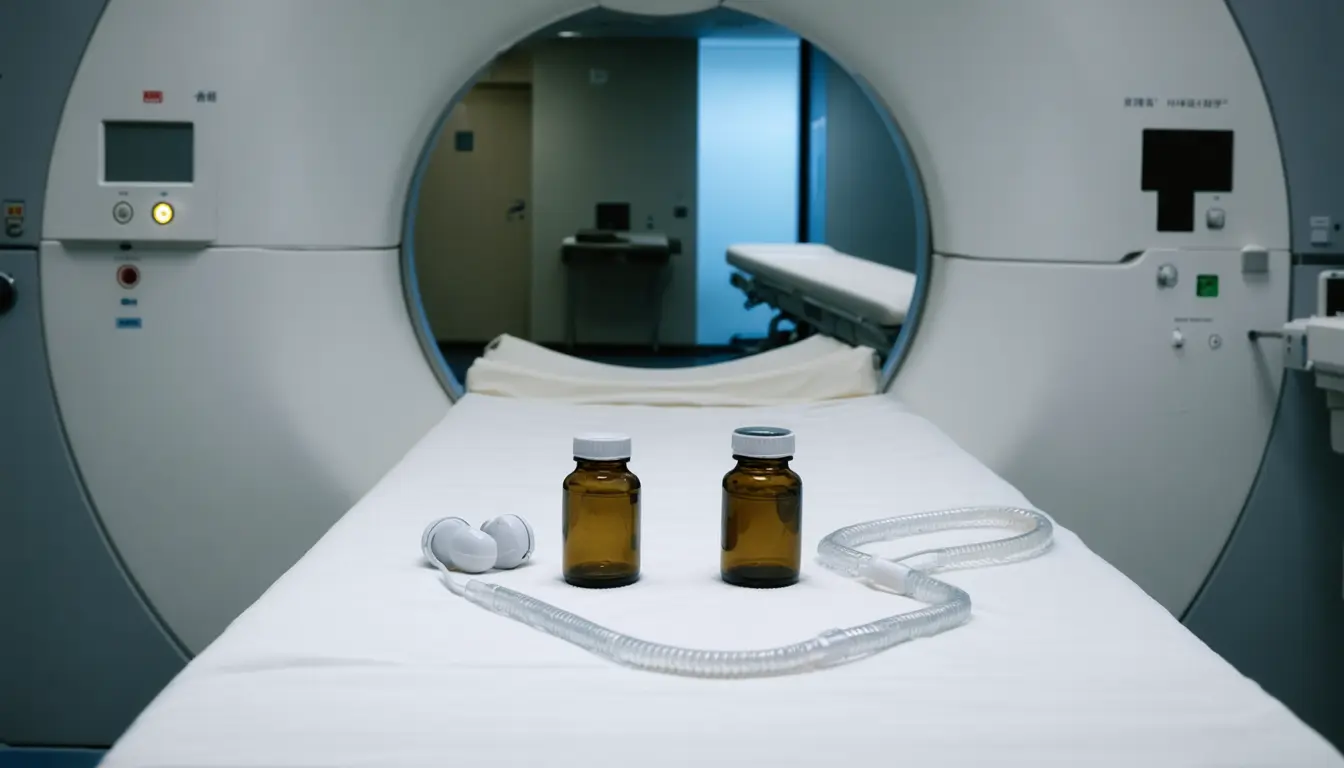
- Participants took a pill containing either hydrocortisone, a form of cortisol, or an inactive placebo, then viewed a series of pictures during fMRI scanning.
- They reported their emotional reaction to each image, and the next day were tested on how well they remembered what they had seen.
- The paper appeared in Science Advances; the corresponding author is Elizabeth Goldfarb, an assistant professor of psychiatry and of psychology at Yale.
Why it matters
- What it limits constraint The manipulation was a hydrocortisone pill, so the result bears on added cortisol. Whether a naturally occurring stress response produces the same network changes is a separate question this design leaves open.
- What doesn't add up contradiction Yale's summary says the networks communicate, but connectivity here means activity that fluctuates together in blood-flow signals. That shows related processing; it does not show which region drives which.
- What's now possible capability Connectivity from a single five-second trial can be compared with the rating and next-day memory for that picture. An estimate built from several minutes of scanning spans many pictures at once.
Many brain regions serve several functions. That makes it hard to tell whether cortisol alters the emotional response, memory formation or both [9]. Corresponding author Elizabeth Goldfarb described the two stages the team wanted to pull apart. "Forming memories for emotional experiences involves different processes in the brain: first, perceiving an experience as emotional or intense, and second, encoding that experience into long-term memory," said Goldfarb [8].
In our view the two outcome measures map onto those stages. The picture ratings capture how emotional an image felt, and the next-day test captures whether it was retained [5][13].
The controls matter as much as the scanner. Every participant completed both sessions, once on hydrocortisone and once on placebo, so differences between people cannot explain a difference between sessions [3]. Neither the participants nor the experimenter knew which substance was given in a session [4]. That removes expectation as an explanation on both sides of the experiment.
The ScienceDaily account breaks off as it reaches the results. It does not report how many people took part, the hydrocortisone dose, which networks changed, how large the change in memory was, or the order in which sessions were run. Until the paper's methods and results are in hand, the finding rests on Yale University's summary that cortisol strengthens emotional memories by changing how emotion and memory networks function and communicate [1].
What to watch
- The Science Advances paper's methods and results: sample size, hydrocortisone dose, which networks changed and by how much.
- Whether single-trial connectivity predicts next-day memory for the same picture, which is the test the five-second design makes possible.
- A replication that induces stress without a pill, to see whether natural cortisol release changes the same networks.
Clarity's read
What the record supports and how the coverage leans. The claims behind it follow.
Reality
- Evidence50
- Adoption
- Not scored
- Hype gap+25
- Incentives
- Not scored
- Confidence45
Claim ledger
Ranked by verification strength, evidence, and original report placement.
- [1]
Yale researchers report that cortisol strengthens emotional memories by changing how brain networks involved in emotion and memory function and communicate with one another.
- [2]
Participants took a pill containing either hydrocortisone, a form of cortisol, or an inactive placebo, then viewed a series of pictures while undergoing functional MRI scanning.
- [3]
Each person completed the experiment twice, once after receiving hydrocortisone and once after receiving the placebo, allowing comparison of the same person's brain with and without additional cortisol.
- [4]
The study used a double blind design: neither the participants nor the experimenter knew which substance had been administered during a particular session.
- [5]
Participants reported their emotional reactions to each image, and the following day researchers tested how well they remembered what they had seen.
- [6]
Functional connectivity analysis traditionally requires several minutes of brain imaging data; the Yale team instead analyzed functional connectivity during individual trials lasting only around five seconds.
- [7]
The findings were published in the journal Science Advances; corresponding author Elizabeth Goldfarb is an assistant professor of psychiatry at Yale School of Medicine and of psychology in the Faculty of Arts and Sciences.
- [8]
"Forming memories for emotional experiences involves different processes in the brain: first, perceiving an experience as emotional or intense, and second, encoding that experience into long-term memory," said Goldfarb.
- [9]
Many brain regions participate in several mental functions, making it difficult to determine whether cortisol is influencing emotional responses, memory formation, or both.
- [10]
Previous research in humans and rodents has shown that stress and cortisol can improve memory for emotional events, and the amygdala plays an essential role in this process, but how cortisol strengthens memories precisely has been challenging to understand.
- [11]
Functional connectivity describes how closely activity in different parts of the brain fluctuates together; synchronized activity can indicate that regions are participating in related processes.
- [12]
Functional MRI measures changes in blood flow and oxygen levels associated with brain activity.
- [13]
The researchers wanted to examine the perception of emotional significance and the preservation of an experience as a lasting memory separately.
Get this ledger inside ChatGPT. Ask about any of our stories and the answer brings its figure, each claim’s verdict and the sources. Free, no account.
Sources
1 independent publisher whose own reporting we read for this story.
- sciencedaily.comYale scientists discover how stress changes the brain to make memories stronger
1 article · October 16, 2026
Topics and entities
Follow any of these and your For You feed starts watching them — no settings page required.
Topics
- Stress and memoryFollow
- Functional MRIFollow
- NeuroscienceFollow
Entities
- CortisolFollow
- Science AdvancesFollow
- Yale UniversityFollow
- Elizabeth GoldfarbFollow