ScienceIndependently confirmed2 publishers3 min readPublished
Karahantepe's new leopard rider inverts the site's older human-carries-animal stacking
The 70-centimetre figure sat on a bench in a round room barely three metres across, and because it is so far the only one of its kind, a reversed composition cannot yet settle how these carvers ranked people against animals.
The Scientist · Science desk
What happened
- Archaeologists at Karahan Tepe in southern Turkey recovered a stone statue about 70 centimetres tall showing a person seated on the back of a leopard, described as roughly 11,000 years old.
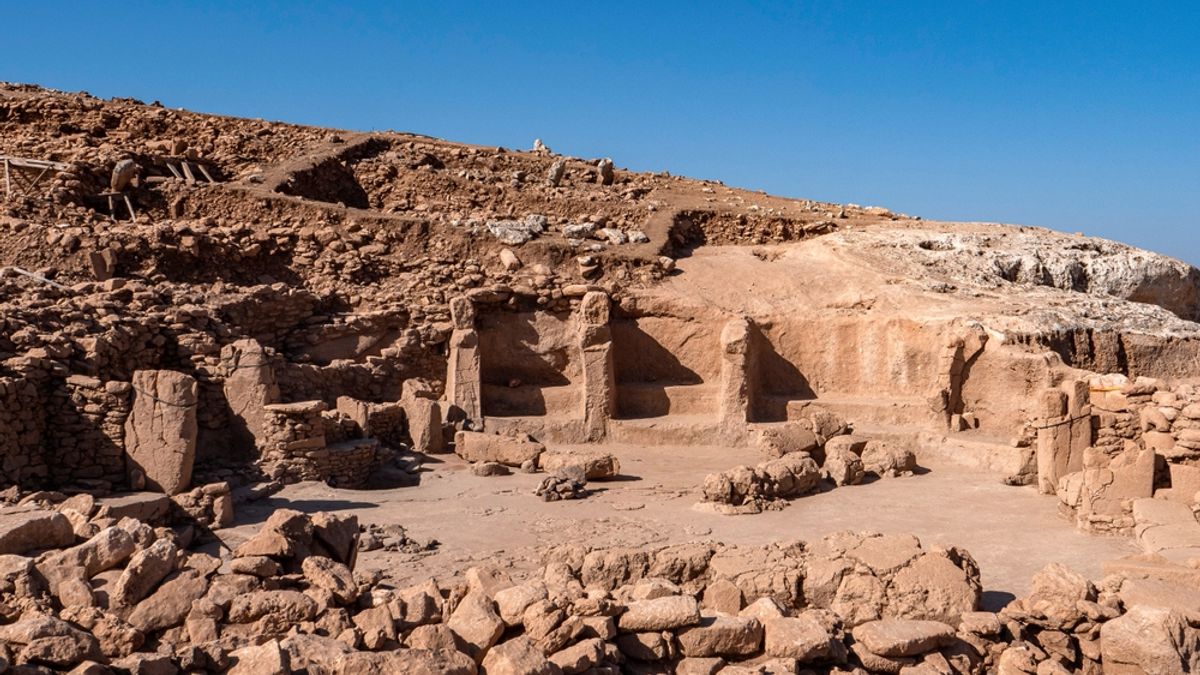
- The figure was found on a platform running along the wall of a round structure about three metres in diameter, its floor covered with flat stones.
- Turkey's Ministry of Culture and Tourism announced the find in an August 25 statement, with minister Mehmet Nuri Ersoy calling the statue's style unlike anything seen before.
- Earlier sculptures from the same site run the other way, with human figures carrying animals on their backs, including one human with a leopard now held by the Sanliurfa Museum.
- Jens Notroff of the German Archaeological Institute, who was not part of the excavation, told Live Science the piece seems to be a mirrored version of that known animal-on-human type.
Why it matters
- constraint The reversal rests on a single object while the older carried-animal arrangement is known from several, so any claim about who ranked above whom in this iconography stays a hypothesis rather than a result.
- decision Whether the excavators publish fill and sealing data for this structure decides if the bench position can be treated as deliberate deposition, which is the difference between context-based interpretation and guessing at find spots.
- contradiction Discover assigns the find to the 2026 excavation season while Live Science dates the ministry statement to August 25 and puts the discovery in the summer, so anyone chasing the primary excavation record should not assume one label is settled.
- precedent With three compositional arrangements now on the table, the next figural find in the region gets sorted into a typology instead of being read against a single rule about humans bearing beasts.
The mirror language describes geometry, not intent [8]. Two bodies, the vertical order swapped: that is a statement about the carving, and it is the safest thing anyone can say right now. Against it sits the older Karahantepe type, human figures bearing animals on their backs, known from more than one sculpture [6], including the human with a leopard on its back now held by the Sanliurfa Museum [7]. One reversed piece set against a group of the conventional kind is not much of a denominator, and it will not tell you which arrangement was normal, still less what either meant to the people who paid for it.
Where the find could earn interpretive weight is its position. A circle three metres across encloses about seven square metres of floor [23], so the platform held the figure in a room for a few people at a time, not an audience. Whether it was left there deliberately is an answerable question, because excavation director Necmi Karul reported in 2021 that every structure dug at the site to that point had been filled and sealed once it went out of use [18]. If this building was closed the same way, the bench position becomes deposition rather than abandonment. That is not yet known [19].
The age deserves the same care. Live Science puts the settlement's founding around 9750 B.C. [13], which is roughly 11,775 years before now, so the 11,000-year label attached to the statue sits about 775 years later than the founding date [24]. Neither account reports a radiocarbon measurement or a stratigraphic phase for the object itself [25]; the age travels with the site, not with the leopard. Neither says whether this piece and the carried-animal sculptures come from the same phase [27], and that matters, because a motif that flipped over centuries is a different finding from two motifs held at the same time.
The competing readings are worth naming as readings. Notroff suggested the human-and-leopard motif could point to courage or strength, an individual apparently mastering a dangerous animal, while saying plainly that the exact meaning is unknown [10]; leopards, he noted, were vigorous and dangerous, probably difficult game for skilled hunters [9]. Live Science frames the piece through a regional fascination with virility and masculinity [11], which fits a corpus that includes the 2023 Karahan Tepe statue of a man clutching his penis [20] and the Sayburc scene of two leopards, a bull and a man in the same posture [21]. The Antiquity team read Sayburc differently, as figures placed beside one another to hold a shared story [17]. Those are different kinds of explanation, one about status and one about memory, and a single new object does not adjudicate between them.
The corpus that could is young. Karahantepe has been under excavation since 2019 [15], where Gobeklitepe drew archaeological attention in the 1960s and sustained excavation from the 1990s [22], about 24 years of head start [26]. Small corpora produce singletons, and the Tas Tepeler group has more than a dozen sites in it [14].
What to watch
- Fill and sealing data for this structure: if it was closed like the ones Karul recorded, the bench position can be argued as deliberate placement.
- A radiocarbon date or stratigraphic phase for the statue, which would say whether it is contemporary with the carried-animal sculptures.
- A second reversed composition anywhere in Tas Tepeler, which would turn this object from a singleton into a type.
Clarity's read
What the record supports and how the coverage leans. The claims behind it follow.
Reality
- Evidence55
- Adoption
- Insufficient
- Hype gap+28
- Incentives65
- Confidence60
Claim ledger
Ranked by verification strength, evidence, and original report placement.
- [1]
A statue about 28 inches (70 centimetres) tall showing a person sitting on the back of a leopard was discovered at Karahan Tepe (Karahantepe), a Neolithic site in southern Turkey, and is described as 11,000 years old.
- [2]
Excavators found the statue on a platform that ran along the wall of a round structure about 10 feet (3 metres) in diameter.
- [3]
The building the sculpture came from was approximately 3 metres across, with flat stones covering the floor.
- [4]
The statue was unearthed in the summer, according to an Aug. 25 translated statement from the Turkish Ministry of Culture and Tourism.
- [5]
Mehmet Nuri Ersoy, Turkey's minister of culture and tourism, said in the statement that the statue was made in "a style unlike anything seen before."
ReportedSupportedSource: Turkish Ministry of Culture and Tourism statement2 sources— create a free account to open themView cited source - [6]
In earlier sculptures from Karahantepe, human figures carved in stone carry animals on their backs, with the animals positioned above the people.
- [7]
A statue of a human with a leopard on their back was previously discovered at Karahan Tepe and is now in the collection of the Sanliurfa Museum.
- [8]
Jens Notroff, a Neolithic archaeologist at the German Archaeological Institute who was not involved in the project, said the newly discovered sculpture "seems to be a mirrored version of the known type of 'animal mounting on top of a human'."
ReportedSupportedSource: Jens Notroff, German Archaeological Institute, to Live Science2 sources— create a free account to open themView cited source - [9]
Notroff thinks the Sayburc leopard scene and the new statue may be linked, and said leopards were common feline predators in the region, vigorous and dangerous animals and probably challenging game for skilled hunters, which might have added to their symbolic meaning.
ReportedSupportedSource: Jens Notroff to Live Science2 sources— create a free account to open themView cited source - [10]
Notroff said the exact meaning of the human-and-leopard motif is unknown but could relate to courage or strength, and that an individual apparently mastering such an animal could be read as a symbol of power and of control over vigour and danger.
ReportedSupportedSource: Jens Notroff to Live Science2 sources— create a free account to open themView cited source - [11]
Live Science reported that the statue may reflect the culture's fascination with virility and masculinity, according to experts.
- [12]
The new discovery gives archaeologists a third arrangement to consider alongside scenes of figures beside one another and animals carried by humans.
- [13]
Karahan Tepe is one of the oldest known villages in the world and was built around 9750 B.C. in Turkey's Urfa (Sanliurfa) province.
- [14]
Karahantepe sits approximately 30 kilometres (19 miles) from Gobeklitepe, and both belong to Tas Tepeler, a group of more than a dozen Neolithic sites in the region, according to Anadolu Agency.
- [15]
Excavations at Karahantepe began in 2019 and have uncovered structures and artwork from approximately the same period as Gobeklitepe.
- [16]
Discover reported that the excavation team uncovered the sculpture during Karahantepe's 2026 excavation season, part of Turkiye's Heritage to the Future project.
ReportedSupportedSource: Discover magazine2 sources— create a free account to open themView cited source - [17]
A 2022 paper in Antiquity compared Karahantepe's stacked figures with a relief at Sayburc, where human and animal figures appear beside one another rather than one body carrying the other, and argued the linked figures may depict connected events or stories that helped communities preserve shared memories.
- [18]
In a 2021 study in the Turkish Journal of Archaeology and Ethnography, excavation director Necmi Karul reported that every structure uncovered at Karahantepe by that point had been filled and sealed after people stopped using it.
- [19]
Archaeologists do not yet know whether the building holding the new sculpture was closed in the same way, though earlier examples raise the possibility that the sculpture was left in place deliberately.
- [20]
In 2023, archaeologists at Karahan Tepe unearthed an 11,000-year-old statue of a man clutching his penis, which possibly represents an important ancestor.
- [21]
In 2022, archaeologists at Sayburc in the Urfa region found a carved scene depicting two leopards, a bull and a man grasping his penis.
- [22]
Gobeklitepe first drew archaeological attention in the 1960s, with extensive excavations beginning in the 1990s.
- [23]
A round room 3 metres in diameter encloses about 7 square metres of floor.
- [24]
A founding date of about 9750 B.C. is roughly 11,775 years before the present, so the 11,000-year age given for the statue falls about 775 years later than the site's reported founding.
- [25]
Neither published account reports a radiocarbon measurement or a stratigraphic phase for the statue itself; the 11,000-year figure is carried by the site's period attribution.
- [26]
Sustained excavation at Gobeklitepe began about 24 years before excavation at Karahantepe started.
- [27]
Neither account states whether the new statue and the earlier human-carries-animal sculptures come from the same building or the same occupation phase.
Sources
2 independent publishers whose own reporting we read for this story.
- discovermagazine.comAn 11,000-Year-Old Sculpture of a Person Riding a Leopard Offers a New Glimpse Into Neolithic Türkiye
1 article · August 27, 2026
- livescience.com'Unlike anything seen before': Archaeologists unearth a unique, 11,000-year-old statue of a person riding a leopard from one of the world's earliest settlements
1 article · August 26, 2026
Topics and entities
Follow any of these and your For You feed starts watching them — no settings page required.
Topics
Entities
- Turkish Ministry of Culture and TourismFollow
- KarahantepeFollow
- Turkish Journal of Archaeology and EthnographyFollow
- GobeklitepeFollow
- Tas TepelerFollow
- Heritage to the FutureFollow
- Necmi KarulFollow
- AntiquityFollow
- Mehmet Nuri ErsoyFollow
- German Archaeological InstituteFollow
- Jens NotroffFollow
- Anadolu AgencyFollow
- SayburcFollow
- Sanliurfa MuseumFollow