ScienceIndependently confirmed2 publishers2 min readPublished
Children's tooth enamel dates the restart of Peak District lead mining to the mid-seventh century
University of Nottingham archaeologists dated the restart of Peak District lead mining to the mid-seventh century from lead in childhood tooth enamel. Centuries of re-smelting had erased the usual industrial traces, so the evidence is teeth from three cemeteries.
The Scientist · Science desk
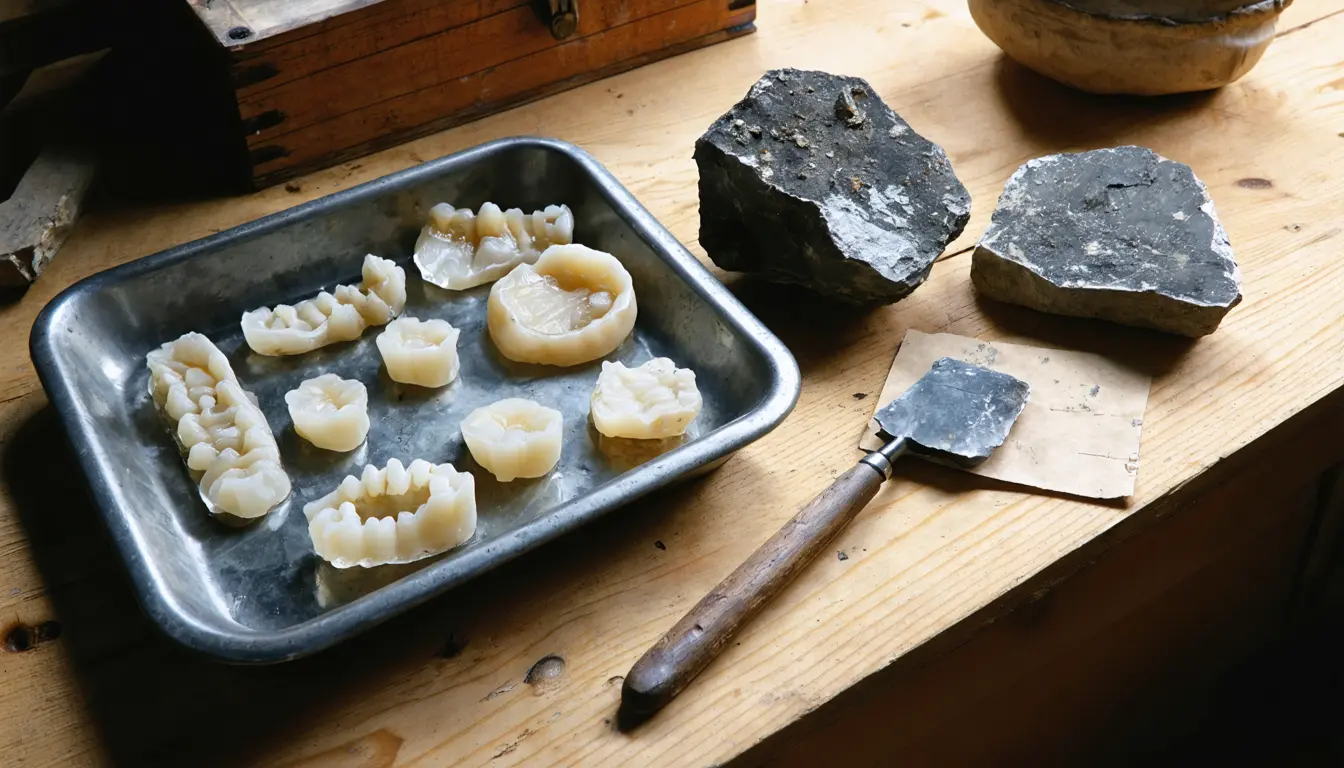
Key figures: the enamel series spans roughly 850 years of childhood lead exposure; lead levels came from three Peak District cemeteries; three women who died aged around 17 to 25 had elevated childhood lead exposure.
| Figure | Value | Note | Claim |
|---|---|---|---|
| Childhood lead exposure series, roughly | 850 years | 13 | |
| Peak District cemeteries | 3 cemeteries | 3 | |
| Women who died aged around 17 to 25 | 3 women | elevated childhood lead exposure | 9 |
What happened
- The work appeared in Antiquity and was led by the University of Nottingham with the British Geological Survey, the University of Sheffield, York Archaeology and Castleton Historical Society.
- Enamel forms in childhood and does not remodel, so lead measured in it records early exposure; the team reconstructed exposure from about 650 to 1500.
- Compared with populations across Britain from the Neolithic onward, seventh-century children from Derbyshire mining communities had lead levels equal to or above those of industrial cities in 1750-1850.
- By the mid-eighth century, large-scale production had contaminated the wider environment around mining centers such as Castleton.
- People buried with high-status grave goods, including weapons, generally had much lower enamel lead than those in less richly furnished graves.
Why it matters
- capability Re-smelting destroyed much of the furnace record, yet enamel gives a dated exposure series of about 850 years, so the approach is open to other sites with recycled waste if burials with datable teeth survive.
- constraint The case for special risk to women rests on three women who died at roughly 17 to 25, and Bloxam said every person in the sample survived into adulthood, so these teeth cannot show what lead did to children who died young.
- exposure Children in lower-status households took in the most lead, according to the authors, but the elite-control reading is their inference from grave goods paired with enamel levels.
The date is a "by" date. Christopher Loveluck, the lead author, said the team had "finally confirmed definitively the date by which the early medieval lead industry was established in the Peak District, by the mid-seventh century A.D." [6]. The enamel series starts at about 650 [11]. The children at that end already carried lead at levels matching industrial cities of 1750 to 1850 [3], a benchmark about 1,100 years later [12].
A record that opens with the industry already running shows that it was running. It cannot say how long before 650 the furnaces restarted. We would treat the mid-seventh century as a firm upper bound on the restart. The findings are worded the same way: production was established by the middle of the seventh century [4].
Neither account says how many individuals were sampled or mentions isotope ratios. The stated method is the concentration of lead in enamel [11].
The later part of the curve has an outside check. Exposure peaked in the late 12th and early 13th centuries, and Popular Science reports that this agrees with previous historical and environmental data [7].
On who was exposed, Anna Bloxam, co-director of the Castleton excavations, said: "Our results indicate that in these mining communities, girls and boys alike were raised in dangerously polluted home environments" [8]. Enamel records childhood exposure only, so it speaks to the households children grew up in [11].
What to watch
- Whether the Antiquity paper's methods and data tables give the number of individuals sampled and the enamel values for each of the three cemeteries.
- Whether any Peak District burials from before 650 turn up with enamel data; lower lead there would pin the restart closer to the seventh century, and high lead would push it earlier.
Clarity's read
What the record supports and how the coverage leans. The claims behind it follow.
Reality
- Evidence68
- Adoption
- Insufficient
- Hype gap+15
- Incentives
- Insufficient
- Confidence62
Claim ledger
Ranked by verification strength, evidence, and original report placement.
- [1]
The study was published in Antiquity and led by the University of Nottingham in collaboration with the British Geological Survey, the University of Sheffield, York Archaeology and Castleton Historical Society.
- [2]
Roman and medieval lead waste was repeatedly re-smelted from the 16th to 19th centuries, so many of the industrial traces archaeologists would normally rely on had disappeared.
- [3]
The study compared lead levels from three Peak District cemeteries with populations from across Britain from the Neolithic to the Industrial Revolution; even in the seventh century, lead levels in children from the Derbyshire mining communities were the same as or greater than those from industrialized cities from about 1750-1850.
- [4]
The findings are described as the first absolute evidence that post-Roman lead production in the Derbyshire Peak District was established by the middle of the seventh century A.D.
- [5]
By the mid-eighth century, large-scale production had contaminated the wider environment around mining centers such as Castleton in the Peak District.
- [6]
Lead author Christopher Loveluck said: "The team is delighted to have finally confirmed definitively the date by which the early medieval lead industry was established in the Peak District, by the mid-seventh century A.D., through evidence provided by the people themselves."
ReportedSupportedSource: Christopher Loveluck, professor of medieval European archaeology, University of Nottingham2 sources— create a free account to open themView cited source - [7]
Teeth samples showed lead exposure reached its highest levels during the late 12th and early 13th centuries, which Popular Science says aligns with previous historical and environmental data.
- [8]
Anna Bloxam, co-director of the Castleton excavations, said: "Our results indicate that in these mining communities, girls and boys alike were raised in dangerously polluted home environments."
ReportedSupportedSource: Dr. Anna Bloxam, co-director of the Castleton excavations and study co-author2 sources— create a free account to open themView cited source - [9]
Three women analyzed in the study died between the ages of around 17 and 25 and had elevated childhood lead exposure; the relationship between childhood lead exposure and premature death remains complex, and the results suggest a possible association.
- [10]
Bloxam said all the individuals included in the study survived into adulthood.
ReportedSupportedSource: Dr. Anna Bloxam2 sources— create a free account to open themView cited source - [11]
Tooth enamel forms in childhood and does not remodel, so it preserves the lead absorbed in childhood; by measuring lead concentrations in enamel the researchers reconstructed childhood exposure to pollution between about 650 and 1500.
- [12]
The industrial-city benchmark (about 1750) falls roughly 1,100 years after the start of the enamel series (about 650).
- [13]
The enamel series spans roughly 850 years of childhood exposure.
- [14]
Individuals buried with high-status grave goods, including weapons, generally had much lower lead concentrations than those from less richly furnished burials.
- [15]
The authors suggest elites may have controlled or benefited from lead production, while lower-status households were more directly involved in processing ore and smelting, exposing children in those communities to much higher levels of pollution.
Sources
2 independent publishers whose own reporting we read for this story.
- phys.orgNew research traces the origins and human impact of Britain's largest medieval lead industry through ancient teeth
1 article · October 12, 2026
- popsci.comHuman teeth pinpoint when lead began poisoning medieval town
1 article · October 12, 2026
Topics and entities
Follow any of these and your For You feed starts watching them — no settings page required.
Topics
- Medieval historyFollow
- Lead pollutionFollow
- ArchaeologyFollow