Science1 publisher3 min readPublished
Hattusha yields new cuneiform fragment bearing part of Kadesh treaty's refugee clause
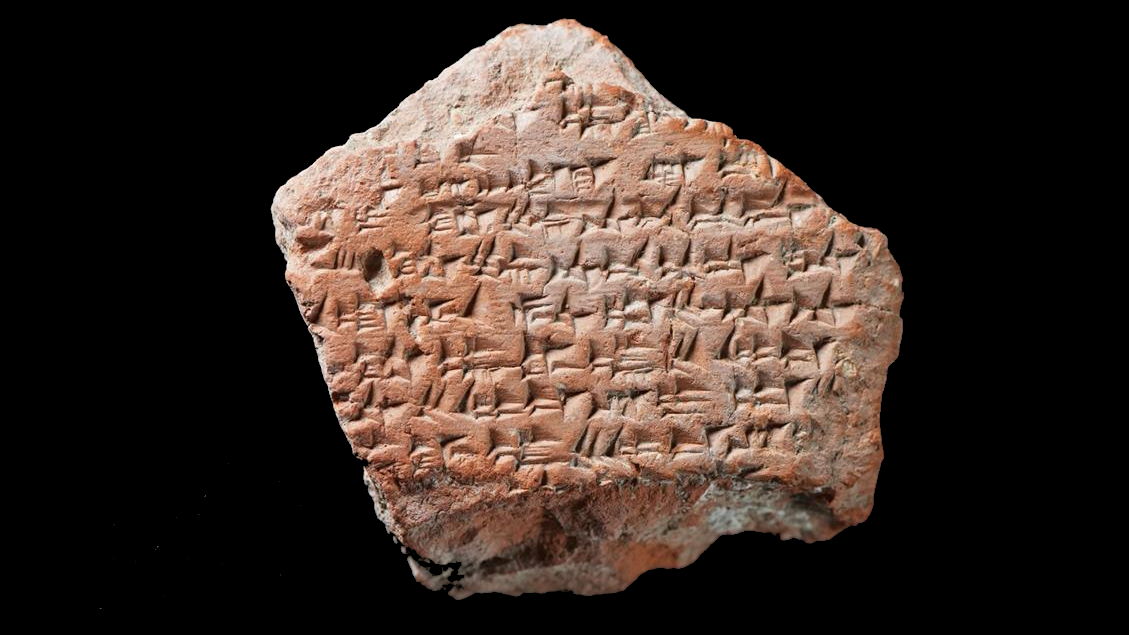
Turkey's culture ministry says excavators found a fragment carrying part of the 1269 B.C. Egyptian-Hittite treaty's rules on returned escapees, a passage already published in translation from other copies.
The Scientist · Science desk
What happened
- Turkey's Ministry of Culture and Tourism says excavators at Hattusha, in north-central Turkey, recovered a cuneiform tablet fragment from a building in the old Hittite capital.
- The ministry identifies the text on the fragment as coming from the section of the treaty dealing with the treatment of refugees.
- The treaty was signed around 1269 B.C. by the Egyptian pharaoh Ramesses II and the Hittite king Hattusili III, and is regarded as the oldest known peace treaty.
- The statement says excavations are continuing and may recover the remaining parts of the treaty text.
Compiled by The ScientistSomething wrong?How this is made
Why it matters
- capability Another excavated copy of the same clause lets the Hattusha reconstruction be checked against a second Akkadian witness instead of against the Egyptian temple version alone.
- constraint Until a photograph or transliteration is published, scholars outside the excavation have to take the section identification on the ministry's word, and cannot collate the fragment themselves.
- contradiction The ministry presents the find as a reminder about human dignity, while the clause it comes from orders escapees handed back across the border because flight was treated as a crime.
The passage the ministry points to is one scholars can already read in translation. The treaty forbids punishing people sent back across the border: "Their tongue and their eyes are not to be pulled out; their ears and their feet are not to be cut off; their houses with their wives and their children are not to be destroyed" [16]. Part of that text is what appears on the new fragment, according to the ministry's statement [17]. So what has come out of the ground is another copy of wording already published. Whether unread lines sit on the same piece is not stated.
That still does work. A text surviving in pieces is read by matching overlapping copies, and the Akkadian version has been assembled at Hattusha since fragments were first identified there in the early 20th century [12]. The Egyptian version was read earlier, from hieroglyphs on the walls of a temple to Ramesses II at Thebes, modern Luxor, found in the early 19th century [11]. Roughly a century separated the two readings [23].
The age in the announcement and the treaty's own date do not quite line up. A document signed around 1269 B.C. [3] is about 3,294 years old this year [21], while the ministry describes the fragment as 3,400 years old [1], roughly a century older than the signing date implies [22].
The clause is an extradition rule with a limit on what may be done afterwards. Any refugee from Egypt to Hattusha was to be returned to Egypt, and any from Hattusha to Egypt returned to Hattusha, because fleeing was treated as a crime [15]. The United Nations displays a copper replica of the treaty in its Conference Building in New York [19], and according to the U.N. "the treaty pledges eternal friendship, lasting peace, territorial integrity, nonaggression, extradition, and mutual help. The pledges in this treaty are similar to the United Nations ideals" [20].
"We have found traces of peace, thousands of years old, in the soil of Anatolia," Mehmet Nuri Ersoy, Turkey's minister of culture and tourism, said in a translated statement on Sept. 21 [5]. He also said, "It reminds us of our responsibility to protect human life and dignity" [7].
The document is also called the Egyptian-Hittite peace treaty, the Eternal Treaty and the Silver Treaty, and it does not mention the Battle of Kadesh, which had happened several years earlier [10]. It closed a two-century war over lands in the eastern Mediterranean [13], and it carries provisions on coming to the other country's aid in case of invasion [24]. Hittite control of central Anatolia ended around 1200 B.C. [8], about 69 years after the signing [25].
What to watch
- A photograph, transliteration or excavation report showing how many lines survive on the fragment and whether any run beyond the known passage.
- Publication of the fragment's exact findspot inside the Hattusha building, which would indicate a tablet archive or a secondary deposit.
- Whether further digging recovers parts of the treaty not yet attested in the Akkadian version at all.