ScienceIndependently confirmed2 publishers2 min readPublished
Columbia team finds bacterial antiviral enzyme that adds repeat DNA the way telomerase does
Columbia researchers report DRT10, a bacterial antiviral system whose reverse transcriptase writes repeat DNA by a route that parallels human telomerase. The Nature abstract reports bacterial biochemistry, structures and phylogenetics, and Sternberg calls the editing and telomere-repair uses early days.
The Scientist · Science desk
What happened
- Stephen Tang, a graduate student in Samuel Sternberg's lab, found DRT10 in the "Unknown Group", a set of dozens of bacterial reverse transcriptases whose functions were unknown.
- DRT10 pairs with a noncoding RNA to make long tandem-repeat DNA in a synthesis the protein primes itself.
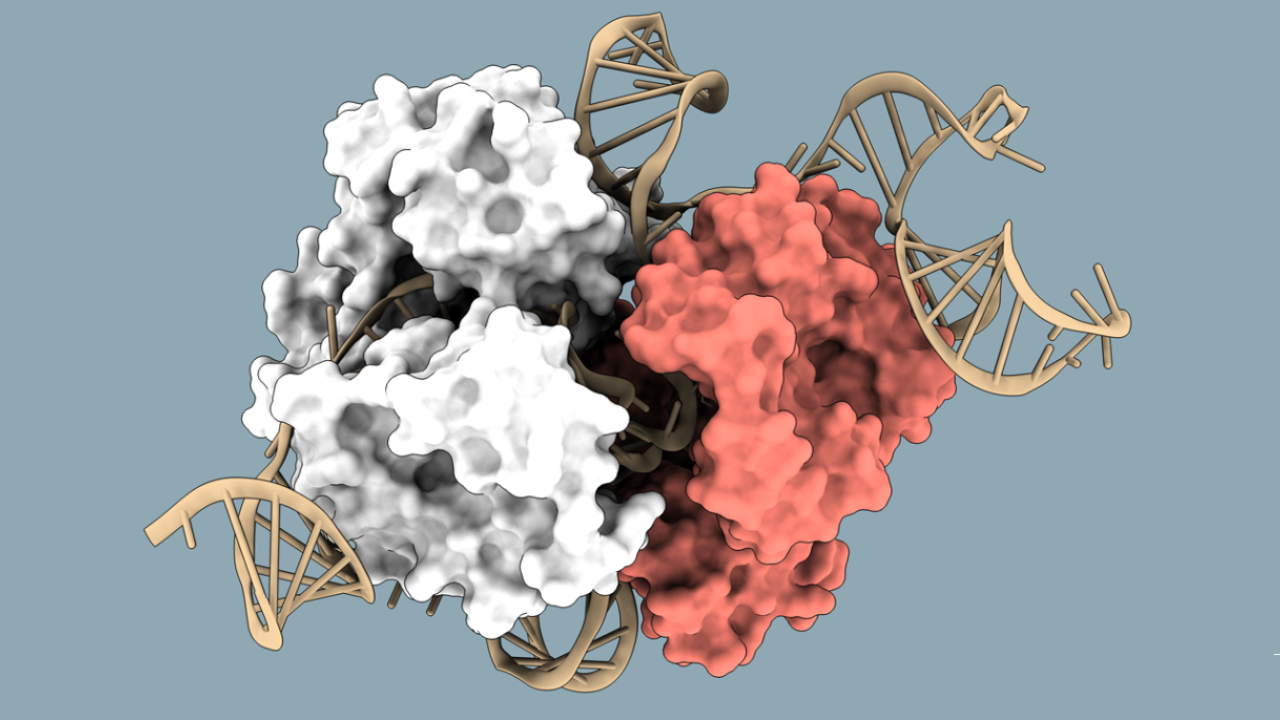
- Cryo-EM structures show two reverse transcriptase monomers bound on opposite sides of a pseudo-symmetric RNA, a 2:1 layout the authors call unanticipated.
- Phylogenetic analyses put telomerase in a single clade with the DRT family, which the authors say suggests a common origin for their DNA polymerization activities.
- Sternberg's lab hopes to test whether DRT10 could be adapted to treat telomeropathies, diseases caused by defects in telomere maintenance.
Why it matters
- constraint The abstract describes cryo-EM, biochemistry and phylogenetics and does not mention human cells. Telomeropathy treatment and genome editing with DRT10 are hypotheses until someone shows repeat addition in eukaryotic cells.
- contradiction Phys.org leads with a gene editor that slows aging and improves cancer therapies. Sternberg's own aim is narrower, and he opens it with "It's early days, but we're excited by the possibility of turning a bacterial defense enzyme into a tool to rebuild protective DNA at chromosome ends."
- precedent DRT10 joins DRT2, DRT3 and DRT9 as a system adding RNA-templated DNA repeats by different architectures. With dozens of Unknown Group enzymes still uncharacterized, we'd expect more repeat-writing defense systems to turn up.
The parallel to telomerase is specific. In DRT10, reverse transcription is templated by a defined region of the noncoding RNA, and the authors report that its characteristic sequence pattern and its template boundary elements are both conserved and essential for adding DNA repeats [4]. Of the two reverse transcriptase monomers on the RNA, each copies the template on its own side. Only one makes the long repetitive product, and the length of its template is set by the distance between two flanking stem-loop anchors [10]. The abstract calls this iterative, boundary-delimited synthesis and says it directly parallels how eukaryotic telomerase adds telomeric repeats [5].
Telomerase builds the DNA caps that protect the ends of linear chromosomes in humans and most other eukaryotes [12]. Tang noticed the resemblance while working out how the DRT10 enzyme operates [3].
The sequence tree is the abstract's evidence for shared ancestry, and it supports a narrower statement than the Phys.org account makes. That account calls the telomerase relationship "likely and surprising" and says the work sheds light on an ancient event that may have helped set the stage for higher organisms [8]. The abstract says "suggesting" and confines the common origin to the DNA polymerization activities [2]. In our view, a shared ancestor for the polymerase does not date when chromosome-end protection arose.
On tools, Sternberg, the study's senior author, was direct about what the system offers. "Instead of cutting DNA like CRISPR, or swapping one letter of genetic code like base editors, this system uses RNA as a template to write new sequences of DNA. That gives us a different starting point for building tools to engineer cells," he said [15].
The aim for this enzyme group, as the account puts it, is gene-editing tools that write therapeutic sequences into the genome [14]. DRT10 as described adds tandem repeats from its own RNA template [1]. The thing this doesn't tell you is whether that template can be swapped for a sequence of someone's choosing.
The case for slowing aging runs through senescence. Telomere shortening makes aging cells senesce, and the build-up of senescent cells is linked to several age-related diseases. The account says this raises "the possibility that restoring telomeres could help preserve healthy cell function" [13].
What to watch
- Whether the Sternberg lab shows DRT10, or a redesigned version, adding DNA repeats in eukaryotic cells, which is the test the telomeropathy idea depends on.
- Whether anyone shows the RNA template can be swapped so the enzyme writes a non-repeat sequence, which a general editing tool would need.
- Independent re-analysis of the tree that places telomerase with the DRT family, using the alignment and structure data the paper releases.
Clarity's read
What the record supports and how the coverage leans. The claims behind it follow.
Reality
- Evidence68
- Adoption
- Insufficient
- Hype gap+25
- Incentives
- Insufficient
- Confidence70
Claim ledger
Ranked by verification strength, evidence, and original report placement.
- [1]
DRT10 associates with a noncoding RNA to catalyze processive, protein-primed synthesis of tandem-repeat DNA.
ReportedSupportedSource: Nature abstract, Tang et al.2 sources— create a free account to open themView cited source - [2]
Phylogenetic analyses of reverse transcriptases across domains of life place telomerase in a monophyletic clade with the DRT family, suggesting a common origin for their DNA polymerization activities.
ReportedSupportedSource: Nature abstract, Tang et al.2 sources— create a free account to open themView cited source - [3]
While digging into how the reverse transcriptase operates, Tang realized the enzyme works much like telomerase.
ReportedSupportedSource: Phys.org account of the Columbia work2 sources— create a free account to open themView cited source - [4]
Reverse transcription in DRT10 is templated by a defined ncRNA region with a characteristic sequence pattern and template boundary elements, both of which are conserved and essential for DNA repeat addition.
ReportedSupportedSource: Nature abstract, Tang et al.2 sources— create a free account to open themView cited source - [5]
This mode of iterative, boundary-delimited cDNA synthesis exhibits direct parallels to the mechanism of telomeric repeat addition by eukaryotic telomerase.
ReportedSupportedSource: Nature abstract, Tang et al.2 sources— create a free account to open themView cited source - [6]
The abstract reports cryo-EM reconstructions, biochemical experiments and phylogenetic analyses of reverse transcriptases across domains of life.
ReportedSupportedSource: Nature abstract, Tang et al.2 sources— create a free account to open themView cited source - [7]
Together with earlier studies of DRT2, DRT3 and DRT9, the findings identify a conserved mechanistic logic underlying RNA-templated DNA repeat addition across diverse DRTs, despite vastly different architectural solutions.
ReportedSupportedSource: Nature abstract, Tang et al.2 sources— create a free account to open themView cited source - [8]
The Phys.org account says the Nature paper reveals a "likely and surprising" relationship between the bacterial defense system and telomerase, and that the discovery sheds light on an ancient event in evolution that may have helped set the stage for the emergence of higher organisms.
- [9]
Cryo-EM reconstructions reveal an unanticipated 2:1 architecture in which two reverse transcriptase monomers bind opposite sides of a pseudo-symmetric noncoding RNA.
- [10]
Each RT monomer reverse transcribes the template encoded on its respective side of the ncRNA, but only one generates the long repetitive product, whose template is defined by the distance between two flanking stem-loop anchors.
- [11]
Stephen Tang, a graduate student in the Sternberg lab, found DRT10 in the "Unknown Group", a bacterial group named in 2008 that holds dozens of reverse transcriptases with still-unknown functions.
- [12]
In humans and most eukaryotes, telomerase creates DNA caps that protect the ends of linear chromosomes.
- [13]
Telomere shortening causes aging cells to senesce, and the accumulation of senescent cells is linked to several age-related diseases, raising the possibility that restoring telomeres could help preserve healthy cell function.
- [14]
Because reverse transcription creates new DNA from strands of RNA, the Unknown Group enzymes are considered promising starting points for creating new gene-editing tools to write new therapeutic sequences into the genome.
- [15]
"Instead of cutting DNA like CRISPR, or swapping one letter of genetic code like base editors, this system uses RNA as a template to write new sequences of DNA. That gives us a different starting point for building tools to engineer cells."
ReportedInsufficientSource: Samuel Sternberg, professor of biochemistry and molecular biophysics at Columbia and the study's senior author2 sources— create a free account to open themView cited source - [16]
"It's early days, but we're excited by the possibility of turning a bacterial defense enzyme into a tool to rebuild protective DNA at chromosome ends," said Sternberg.
ReportedInsufficientSource: Samuel Sternberg2 sources— create a free account to open themView cited source - [17]
Sternberg and his laboratory hope to explore whether DRT10 could eventually be adapted to address diseases caused by defects in telomere maintenance, known as telomeropathies.
ReportedInsufficientSource: Phys.org account of the Columbia work2 sources— create a free account to open themView cited source - [18]
The Phys.org account opens by saying DRT10 could be adapted in the future into a gene editor that slows down aging in our cells and improves cancer therapies.
Sources
2 independent publishers whose own reporting we read for this story.
- nature.comAntiviral immunity via telomerase-like reverse transcription in bacteria
1 article · October 11, 2026
- phys.orgBacterial antiviral defense suggests ancient link to human chromosome protection
1 article · October 12, 2026
Topics and entities
Follow any of these and your For You feed starts watching them — no settings page required.