InvestReports disagree2 publishers3 min readPublished
Trump weighs joining Saudi strikes on the Houthis after a missile kills 12 at Riyadh's airport
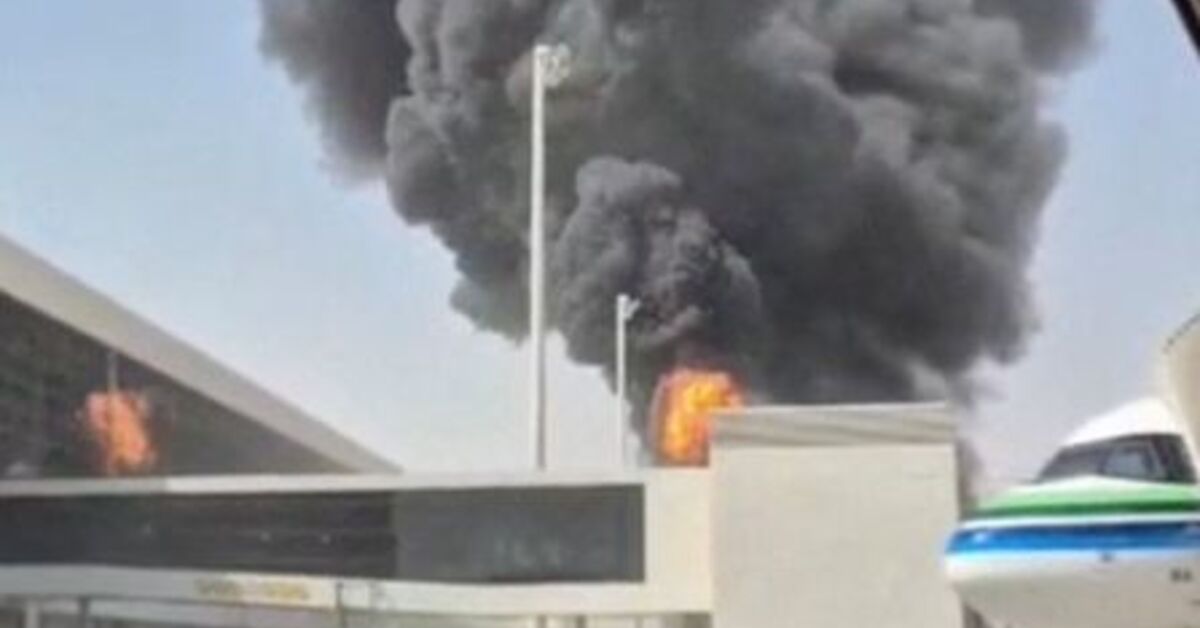
Riyadh's King Khalid International Airport shut after an attack killed 12 people on Saturday. Within hours President Trump said the US "may" join Saudi strikes on the Houthis, a step that would take Washington from backing the Saudi offensive to fighting in it.
The Investor · Invest desk
What happened
- The AP, in a report carried by Fortune, called it the deadliest strike on any Gulf Arab country since the Iran war began, with more than 300 people wounded.
- The dead included four Saudi citizens, two Bangladeshis and a US citizen, plus a Palestinian, an Egyptian, a Jordanian, a Syrian and a Sudanese.
- Attacks on Saudi airports, military facilities and oil infrastructure surged after a Saudi-led coalition opened a major offensive against the Houthis a week earlier.
- Houthi gains on Yemen's Red Sea coast give the rebels better surveillance of a shipping corridor that is an alternative to the Strait of Hormuz, where Iran has been attacking ships.
Why it matters
- contradiction Crypto Briefing attributed the missile to the Houthis, but the Saudi statement blamed no one and the rebels had made no claim, so a US strike decision would rest on attribution not yet on the public record.
- exposure Cargo rerouted to avoid Hormuz now meets Iran-backed forces on its alternative path, so the Red Sea offers less cover against a Gulf disruption than it did before the Houthi gains.
- precedent If the US joins, the test is whether it repeats the result of its earlier bombing campaign, the one that sharply limited Houthi attacks on ships after the Gaza war began.
Hours after the strike, the Saudi energy ministry was still promoting an international energy conference set to open in Riyadh on Sunday [12]. The airport was closed through midnight and flights were diverted [6], while the US, Britain, Germany, Australia and Canada told their citizens to avoid it [20]. The AP report carried by Fortune says the attacks on the world's top oil exporter have rattled markets [11]. It does not give prices.
Earlier strikes on the same airport during the past week killed four people [5], so Saturday's 12 deaths take the week's toll there to 16 [22]. A missile hit the complex that houses domestic terminals 3 and 4, a regional official told the AP on condition of anonymity [9]. The same day the Saudi-led coalition reported a projectile falling near King Fahd International Airport in Dammam and a Houthi ballistic missile intercepted in Al-Kharj governorate, southeast of Riyadh [21].
Interceptions cost missiles, and the kingdom is short of them. Regional officials told the AP last month that Saudi Arabia is running low on interceptors and has asked France, Britain, Pakistan and Egypt for air defense support [16]. One noted that the US has seen its own stock dwindle during the war with Iran [16]. We think the dwindling US stock explains why the request went to four other capitals. US help so far has been intelligence sharing, target identification and planning for the offensive [17], and the AP expects the airport deaths to raise Saudi pressure on allies for military support [19].
Trump left the door open on Saturday. "We may. We're going to look at it," Trump said. "We just found out about the recent attack. So we'll make a decision. We move very quickly." [8] Strikes on launch sites would be the offensive answer to a defensive shortage, in our view.
The paths diverge from here. US aircraft could join the coalition's air campaign [8]. Oman, which sits across the Strait of Hormuz from Iran and has mediated at times, is the other channel: Saudi Arabia said its foreign minister and his Omani counterpart discussed "supporting diplomatic solutions to de-escalate tensions" [18]. Or the Houthis could widen their targets. They told the AP they hit only Saudi shipping, as part of a blockade answering one imposed on them [14].
The only price in the material is a narrow one. A prediction market cited by Crypto Briefing put the chance of Houthi forces entering Aden at 7% by October 31 and 26% by December 31 [4]. If the two contracts are consistent, about 19 percentage points of that probability falls in November and December [23]. Traders rate a quick ground breakthrough as unlikely and a year-end one at roughly one in four [4].
We think the risk to Gulf energy and transport routes rose this week, and Trump's choice decides whether the US becomes a party to it. The view is wrong if the Houthis keep to Saudi targets while the Oman channel produces talks. In that case the strikes remain a Saudi air-defense problem, with the kingdom drawing on interceptor stocks officials already describe as low [16].
What to watch
- Trump's decision on joining Saudi strikes against the Houthis, which he said would come quickly.
- Whether the Houthis claim the Riyadh strike, or hit a non-Saudi ship in the Red Sea corridor.
- Whether France, Britain, Pakistan or Egypt actually deploy air defense units to Saudi Arabia.
Clarity's read
What the record supports and how the coverage leans. The claims behind it follow.
Reality
- Evidence55
- Adoption
- Insufficient
- Hype gap+15
- Incentives50
- Confidence58
Claim ledger
Ranked by verification strength, evidence, and original report placement.
- [1]
A Saturday attack on King Khalid International Airport in Riyadh killed 12 people and injured over 300 others, some in critical condition, Saudi civil aviation authorities said.
ReportedSupportedSource: Saudi civil aviation authorities, via AP/Fortune2 sources— create a free account to open themView cited source - [2]
Saudi Arabia evacuated and closed King Khalid International Airport after a missile attack that Crypto Briefing attributed to Yemen's Houthi movement, reporting at least 12 fatalities.
ReportedSupportedSource: Crypto Briefing2 sources— create a free account to open themView cited source - [3]
The civil aviation statement did not assign blame; it said the dead included four Saudi citizens, two Bangladeshi nationals, a Palestinian, a U.S. citizen, an Egyptian, a Jordanian, a Syrian and a Sudanese.
ReportedSupportedSource: Saudi civil aviation statement, via AP/Fortune2 sources— create a free account to open themView cited source - [4]
Market pricing put YES on Houthi forces entering Aden at 7% for October 31 and 26% for December 31.
ReportedSupportedSource: Crypto Briefing, citing prediction market pricing3 sources— create a free account to open themView cited source - [5]
Several earlier attacks in the past week on King Khalid International Airport killed four people.
- [6]
Riyadh airport operations were suspended through midnight according to an official notice to aviators, and flights diverted elsewhere according to Flightradar24.
ReportedSupportedSource: Saudi civil aviation notice; Flightradar24, via AP/Fortune2 sources— create a free account to open themView cited source - [7]
The attack, which killed 12 and injured more than 300, was the deadliest in any Gulf Arab country since the start of the Iran war.
- [8]
"We may. We're going to look at it," Trump said. "We just found out about the recent attack. So we'll make a decision. We move very quickly."
- [9]
A missile struck an airport complex housing terminals 3 and 4 for domestic flights, a regional official said on condition of anonymity.
- [10]
A surge in attacks on Saudi airports, military facilities and oil infrastructure has come in the week since a Saudi-led coalition launched a major military offensive against the Houthis.
- [11]
The attacks on Saudi Arabia, the world's top oil exporter, have rattled markets and the region.
- [12]
Hours after the latest attack, the Saudi energy ministry was still promoting a major international energy conference set to begin in Riyadh on Sunday.
- [13]
Recent Houthi gains along Yemen's Red Sea coast gave the rebels better surveillance of shipping on a corridor that is a crucial alternative to the Strait of Hormuz, where Iran has been attacking ships.
- [14]
The Houthis have told the AP and others they are only targeting Saudi shipping as part of a blockade in retaliation for one imposed on them.
- [15]
The Houthis previously attacked other ships after the war in Gaza began, and a U.S. bombing campaign sharply limited that.
- [16]
Saudi Arabia is running low on missile interceptors and has asked France, Britain, Pakistan and Egypt to deploy air defense support, regional officials told the AP last month, with one noting the U.S. has seen its own stock dwindle during the war with Iran.
- [17]
U.S. assistance has included intelligence sharing, target identification and planning for the latest offensive against the Houthis, officials have said.
- [18]
Saudi Arabia said its foreign minister and Omani counterpart spoke by phone about the importance of "supporting diplomatic solutions to de-escalate tensions"; Oman, across the Strait of Hormuz from Iran, has at times played a mediator role.
- [19]
The attack is expected to increase Saudi pressure on allies including the United States to provide military support for the kingdom.
- [20]
Countries including the United States, Britain, Germany, Australia and Canada warned citizens to avoid the airport.
- [21]
The Saudi-led coalition said a projectile had fallen near King Fahd International Airport in Dammam and a Houthi-launched ballistic missile had been intercepted in Al-Kharj governorate, southeast of Riyadh.
- [22]
Deaths from strikes on King Khalid International Airport over the past week total 16.
- [23]
The prediction market implies about 19 percentage points of probability that Houthi forces enter Aden between October 31 and December 31.
- [24]
There was no immediate statement from the Houthi rebels, who at times take days to claim responsibility.
Sources
2 independent publishers whose own reporting we read for this story.
- cryptobriefing.comYemen’s Houthis say they have launched two missile strikes against Riyadh’s King Khalid International Airport
3 articles · October 10, 2026
- fortune.comAttack on Saudi airport kills 12 people and wounds more than 300—the deadliest strike in any Gulf Arab country since the start of the Iran war
1 article · October 10, 2026
Topics and entities
Follow any of these and your For You feed starts watching them — no settings page required.
Topics
- Prediction MarketsFollow
- Houthi–Saudi conflictFollow
- Aviation securityFollow
Entities
- King Khalid International AirportFollow
- European Union Aviation Safety AgencyFollow
- Donald TrumpFollow
- Houthi MovementFollow
- Flightradar24Follow
- Rashad al-AlimiFollow
- Saudi-led coalitionFollow
- King Fahd International AirportFollow