ScienceNot yet confirmed elsewhere1 publisher3 min readPublished
Rescuers pull dozens of orangutans hurt by burns and smoke out of Indonesia's fires
Indonesian conservation groups and authorities have rescued dozens of orangutans suffering burns and smoke inhalation from fires in Sumatra and Borneo. An IUCN warning in CNA's version of the AFP report puts the exposure much wider, with fires burning in habitat that holds 52 per cent of Borneo's orangutans.
The Scientist · Science desk
What happened
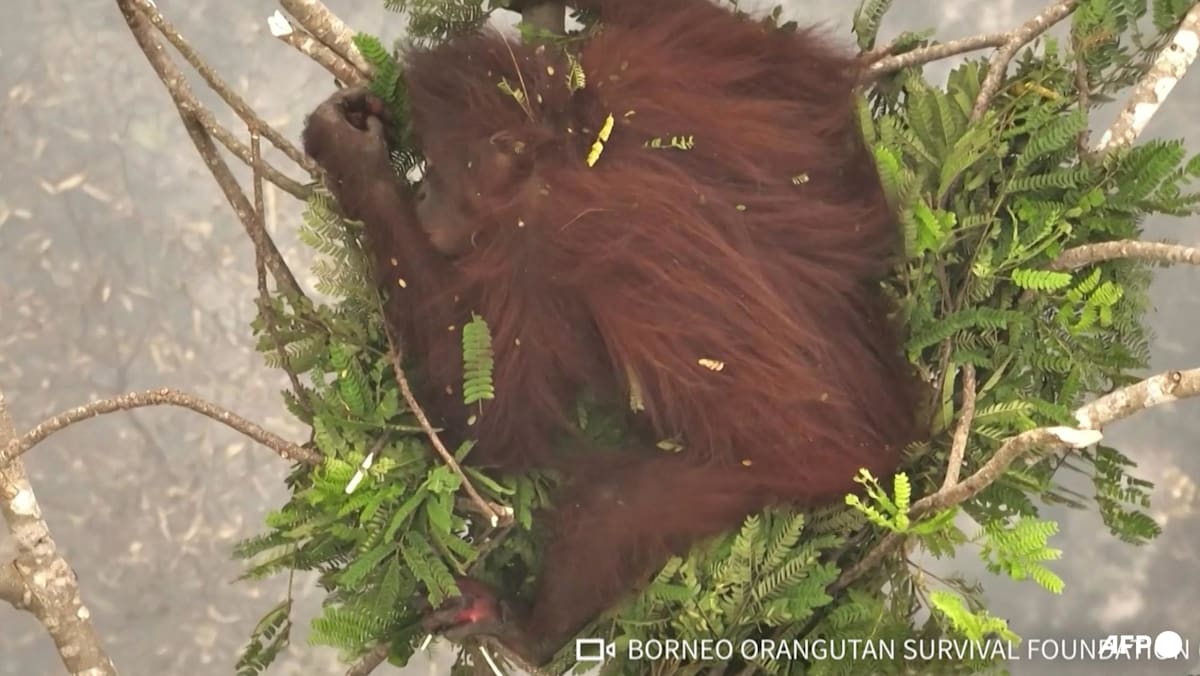
- Novita, a female of three to four years found clinging to a tree in late September, is still in intensive care at the Nyaru Menteng centre in Palangkaraya.
- Bara, a male pulled from thick haze in Central Kalimantan, has minor burns and will be moved to a nature reserve elsewhere in the region.
- WWF counts about 104,000 orangutans left in Borneo and Sumatra, down from more than 230,000 a century ago.
- This year's fires intensified partly because of an El Nino set to be one of the strongest since comparable records began four decades ago.
Compiled by The ScientistSomething wrong?How this is made
Why it matters
- constraint Rescue counts and habitat overlap are the only measures of harm in the reports, so any claim that fire is cutting orangutan numbers this year stays an inference until dead or missing apes are counted.
- contradiction The official burned-area series stops at July and the satellite estimate is several times higher, so there is no agreed size for the habitat lost this season to plan recovery against.
- precedent If drained peat and slash-and-burn clearing have made once-resistant forest fire-prone, future El Nino droughts are likely to send burned apes to rescue centres again.
Novita's burns came from the ground. "We rescued her from an area that was burning. Before we reached her, she had to walk through the fire to get to the tree and climb it, so the soles of her feet and her toes were burned," said Jamartin Sihite, chief executive of the Borneo Orangutan Survival Foundation [8]. His team tranquilised her, then gave her oxygen and intravenous fluids before moving her to the rehabilitation centre [7]. The foundation has taken in several apes caught up in the forest fires [16].
Some of that harm may last. "We've been told that the burns on her hands and feet are improving, although even after she recovers, she may not return 100 per cent to how she was before she suffered the burns," said Andi Muhammad Khadafi, head of the Central Kalimantan Natural Resources Conservation Agency [9]. The IUCN made the general case: "Fire and smoke exposure impose measurable physiological, behavioural and ecological costs on orangutans in peat forest habitats" [19].
That evidence shows fire directly injuring individual apes. It stops short of showing population loss. The CNA and Straits Times versions of the story are the same AFP report [17], and that report does not include a count of orangutans found dead. A rescue tally only includes animals that lived long enough, and were close enough to a team, to be found [1]. The IUCN's habitat figure measures where fire and orangutan range overlap [18]. That is exposure, which is a different thing from a count of animals hurt. I think the fair reading is direct harm to individuals, with the effect on the population still unmeasured. The species was already down by more than half over the past century [21].
How much habitat has burned is still unclear. Government figures put the area razed between January and July at more than 202,000ha, and they have not been updated since [14]. The Nusantara Atlas project, which uses satellite monitoring, estimated that nearly 896,000ha had burned by the end of August [15]. That is about 4.4 times the official figure [20]. The two series cover different periods, one extending a month further into the peak season, and they use different methods. Part of the gap comes from timing and part from measurement.
The AFP report puts this year's intensity partly down to El Nino [12]. It also says slash-and-burn clearing and the drying of peatland have made landscapes that used to resist fire increasingly fire-prone [13]. Rescues are continuing past the usual peak. Borneo's dry season typically peaks between July and September [11], but Bara was taken from a tree on razed land on October 8 [22]. "Seeing the condition of the recently burned lands ... we didn't dare to gamble and assume he'll survive," said Handi Nasoka, an official at the local natural resources conservation agency [5].
What to watch
- An updated Indonesian government burned-area figure to set against Nusantara Atlas's satellite estimate of nearly 896,000ha.
- Any count by the IUCN or rescue groups of orangutans found dead or missing in burned peat forest, which would test whether fire is reducing the population.
- Whether rescues keep coming as the El Nino drought runs past Borneo's usual July-to-September peak.
Clarity's read
What the record supports and how the coverage leans. The claims behind it follow.
Reality
- Evidence60
- Adoption
- Insufficient
- Hype gap+5
- Incentives
- Insufficient
- Confidence58
Claim ledger
Ranked by verification strength, evidence, and original report placement.
- [1]
Dozens of orangutans have been rescued from wildfires burning across parts of Sumatra and Borneo in recent months.
ReportedSupportedSource: AFP report as published by CNA; also carried by The Straits Times2 sources— create a free account to open themView cited source - [2]
Wildfires have forced local groups and authorities to carry out high-stakes rescues of orangutans suffering smoke inhalation and burns.
ReportedSupportedSource: AFP report as published by CNA2 sources— create a free account to open themView cited source - [3]
Bara, a male orangutan, was rescued from the haze on Thursday, October 8, in the Central Kalimantan region, authorities told AFP.
ReportedSupportedSource: Indonesian authorities, via AFP2 sources— create a free account to open themView cited source - [4]
Bara was "relatively healthy, with minor burn injuries," according to conservation official Handi Nasoka, and will be moved to a nature reserve elsewhere in Central Kalimantan, where he was rescued.
ReportedSupportedSource: Handi Nasoka, local natural resources conservation agency official2 sources— create a free account to open themView cited source - [5]
"Seeing the condition of the recently burned lands ... we didn't dare to gamble and assume he'll survive."
ReportedSupportedSource: Handi Nasoka, local natural resources conservation agency official2 sources— create a free account to open themView cited source - [6]
Novita, a female orangutan estimated to be three to four years old, was found clinging to a tree in late September and remains in intensive care at the Nyaru Menteng rehabilitation centre in Palangkaraya.
ReportedSupportedSource: AFP report as published by CNA2 sources— create a free account to open themView cited source - [7]
Novita was rescued by the Borneo Orangutan Survival Foundation; a rescue team tranquilised her and administered oxygen and intravenous fluids before moving her to the rehabilitation centre.
ReportedSupportedSource: AFP report as published by CNA2 sources— create a free account to open themView cited source - [8]
"We rescued her from an area that was burning. Before we reached her, she had to walk through the fire to get to the tree and climb it, so the soles of her feet and her toes were burned."
ReportedSupportedSource: Jamartin Sihite, CEO, Borneo Orangutan Survival Foundation2 sources— create a free account to open themView cited source - [9]
"We've been told that the burns on her hands and feet are improving, although even after she recovers, she may not return 100 per cent to how she was before she suffered the burns."
ReportedSupportedSource: Andi Muhammad Khadafi, head of the Central Kalimantan Natural Resources Conservation Agency2 sources— create a free account to open themView cited source - [10]
Orangutans are critically endangered; about 104,000 remain in Borneo and Sumatra, down from more than 230,000 a century ago.
ReportedSupportedSource: WWF, as cited in CNA's version of the AFP report2 sources— create a free account to open themView cited source - [11]
Indonesia's dry season in Borneo typically peaks between July and September.
ReportedSupportedSource: AFP report as published by CNA2 sources— create a free account to open themView cited source - [12]
The fires have intensified this year in part because of El Nino, set to be one of the strongest since comparable records began four decades ago.
ReportedSupportedSource: AFP report as published by CNA2 sources— create a free account to open themView cited source - [13]
Slash-and-burn practices and the drying of peatlands have made previously resistant landscapes increasingly fire-prone.
ReportedSupportedSource: AFP report, citing experts2 sources— create a free account to open themView cited source - [14]
More than 202,000ha were razed by fire between January and July, according to government figures that have not been updated since.
ReportedSupportedSource: Indonesian government figures, via AFP2 sources— create a free account to open themView cited source - [15]
The Nusantara Atlas project, using satellite monitoring, estimated nearly 896,000ha had burned by the end of August.
ReportedSupportedSource: Nusantara Atlas, via AFP2 sources— create a free account to open themView cited source - [16]
The Borneo Orangutan Survival Foundation has taken in several apes caught up in forest fires.
ReportedSupportedSource: AFP report as published by CNA2 sources— create a free account to open themView cited source - [17]
The Straits Times version of the report, carrying the same accounts of Novita and Bara, is credited to AFP.
ReportedSupportedSource: The Straits Times2 sources— create a free account to open themView cited source - [18]
Last month the International Union for Conservation of Nature warned that fires were burning in habitats containing 52 per cent of Borneo's orangutan population.
- [19]
"Fire and smoke exposure impose measurable physiological, behavioural and ecological costs on orangutans in peat forest habitats."
- [20]
The Nusantara Atlas satellite estimate of burned area is about 4.4 times the government figure.
- [21]
The orangutan population in Borneo and Sumatra has fallen by more than half in a century (about 55 per cent or more).
- [22]
Bara's October 8 rescue came after the July-to-September window in which Borneo's dry season typically peaks.
Sources
1 independent publisher whose own reporting we read for this story.
- channelnewsasia.comWalking through flames: Orangutans rescued in Indonesia fires
1 article · October 9, 2026
- straitstimes.comIndonesia orangutan rescued from wildfire 'walked through' flames
1 article · October 8, 2026
Topics and entities
Follow any of these and your For You feed starts watching them — no settings page required.
Entities
- Borneo Orangutan Survival FoundationFollow
- Nyaru Menteng rehabilitation centreFollow
- International Union for Conservation of NatureFollow
- WWFFollow
- Nusantara AtlasFollow
- Central Kalimantan Natural Resources Conservation AgencyFollow
- AFPFollow
- Jamartin SihiteFollow
- Andi Muhammad KhadafiFollow
- Handi NasokaFollow