Science1 publisherNot yet confirmed elsewhere2 min readPublished
One in three bee species on Colombia's first national checklist is a new country record
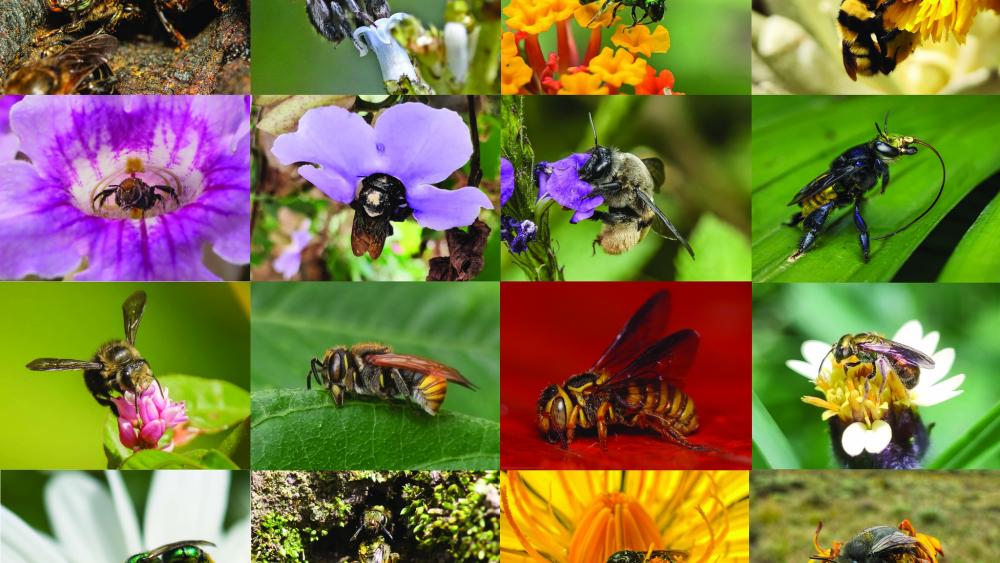
Penn State-led researchers list 738 bee species in Colombia's first national checklist, 246 of them new records for the country. Their estimate of roughly 1,400 species lends weight to the team's view that thin sampling explains part of the tropics' apparent bee shortfall.
The Scientist · Science desk
What happened
- Earlier tallies had put Colombia's bee fauna at between 466 and 604 species.
- About 40% of Colombia's bee species are social and most nest above ground, compared with 10% social and 70% ground-nesting in temperate regions.
- Bee diversity was highest in the Andean region, with its range of climates, while in temperate regions dry habitats usually hold the most species.
- Martín-Rojas and López-Uribe published the checklist in PeerJ, working with 44 partners from 31 institutions.
Compiled by The ScientistSomething wrong?How this is made
Why it matters
- exposure About 148 listed bee species live nowhere but Colombia, so whether they survive depends on what happens to habitat in that one country.
- constraint Habitat protections designed around temperate bees, most of them ground nesters, would miss the above-ground nest sites that most Colombian species use.
- decision Because the paper identifies data-deficient areas, collectors and funders know where the record is thinnest and where to start looking for the species the team estimates are missing.
- precedent As the first national bee checklist in the Western Hemisphere, it gives other tropical countries a model for testing whether their own low bee counts come from missing records.
The 246 are country records, meaning species documented in Colombia for the first time [3]. Subtract them and 492 species on the list were already known from the country [14]. That falls inside the 466-to-604 range of the earlier tallies [4].
The bee result stands out because Colombia has more species of birds, orchids, palms, freshwater fish and butterflies than any other country [6]. Bees usually run the other way, with the tropics generally holding fewer species than subtropical areas [7]. López-Uribe argues that this pattern may be partly driven by large gaps in tropical data [8]. "Bees are among the most important pollinators in both natural and agricultural ecosystems, but their patterns of diversity vary significantly between temperate regions, where they have been studied the most, and tropical regions, where we did our study," López-Uribe said [9].
The team's own estimate puts Colombia's true total closer to 1,400 species [17]. On that figure the checklist holds about 53% of the fauna, and some 662 species are still unrecorded or undescribed [18]. The press account puts the missing share at "about 25%" [17]. Those two numbers cannot both hold against the same total.
Whichever is right, the gap is wide. It supports the first half of López-Uribe's argument: a tropical bee count this incomplete says little about how many species actually live there. The second half, that a fully sampled tropics would close the gap with the subtropics, needs subtropical counts made with comparable effort, and the account reports none. I think the checklist makes the low tropical counts hard to rely on, but it does not yet overturn them.
The thing this doesn't tell you is how stable the lifestyle shares are. The social and above-ground nesting proportions describe the species recorded so far [10]. If the missing species lean toward solitary, ground-nesting bees, the social share will fall as the list grows. The Andean peak in diversity [11] depends in the same way on where collectors have looked, and the paper's title says it identifies areas with major data deficiencies [13].
Much of the list was assembled from existing specimens. "Insect collections are invaluable archives of biodiversity," Martín-Rojas said. "For this study, local collections contributed 70% of the records reported in the checklist." [12]
What to watch
- Whether the PeerJ paper squares the 1,400-species estimate with the 'about 25%' unreported share, and how the team arrived at the estimate.
- A subtropical national checklist compiled with similar effort, the comparison needed to test whether the tropical bee deficit survives better sampling.
- New collecting in the data-deficient regions the paper flags, and whether those records lower the roughly 40% social share.
Clarity's read
What the record supports and how the coverage leans. The claims behind it follow.
Reality
- Evidence58
- Adoption
- Insufficient
- Hype gap+5
- Incentives
- Insufficient
- Confidence60
Claim ledger
Ranked by verification strength, evidence, and original report placement.
- [1]
A team led by Penn State's Margarita M. López-Uribe and doctoral student Ruben D. Martín-Rojas compiled a checklist of Colombia's bee species, described as the first of its kind for any country in the Western Hemisphere.
- [2]
Martín-Rojas and López-Uribe published the work in PeerJ in collaboration with 44 partners representing 31 institutions.
- [3]
The checklist reports 738 bee species, including 246 newly recorded for Colombia.
- [4]
Previous counts reported between 466 and 604 bee species in Colombia.
- [6]
Colombia is home to the largest number of species of birds, orchids, palms, freshwater fish and butterflies in the world.
- [7]
Bee species do not follow the usual tropical biodiversity pattern; the tropics generally have fewer bee species than subtropical areas.
- [8]
According to López-Uribe, these patterns may be partially driven by huge gaps in data from tropical regions of the world.
- [9]
"Bees are among the most important pollinators in both natural and agricultural ecosystems, but their patterns of diversity vary significantly between temperate regions, where they have been studied the most, and tropical regions, where we did our study,"
- [10]
In temperate regions such as North America and Europe, only 10% of bees are social and 70% nest underground; in Colombia about 40% of bee species are social and most nest above ground.
- [11]
The greatest bee species diversity in Colombia was found in the Andean region, which has a range of different climates, rather than in the dry habitats that usually hold high bee diversity in temperate regions.
- [12]
"Insect collections are invaluable archives of biodiversity," Martín-Rojas said. "For this study, local collections contributed 70% of the records reported in the checklist."
- [13]
The paper is titled 'The first annotated checklist of the bees of Colombia reveals an overlooked diversity and areas with major data deficiencies', PeerJ (2026).
- [14]
492 species on the checklist were already recorded from Colombia before this list.
- [15]
About 148 of the listed bee species are found only in Colombia.
- [16]
About one in three species on the checklist is a new record for Colombia.
- [17]
The team estimated the true number of bee species in Colombia is closer to 1,400; the account states that about 25% of the species remain unreported or undescribed.
- [18]
If Colombia holds about 1,400 bee species, the 738 listed are about 53% of the fauna and about 662 species (about 47%) remain unrecorded or undescribed, which does not match the stated 'about 25%'.
Sources
1 independent publisher whose own reporting we read for this story.
- phys.orgColombia's new bee checklist documents 738 species, including 246 newly recorded
1 article · October 8, 2026
Topics and entities
Follow any of these and your For You feed starts watching them — no settings page required.
Entities
- Penn StateFollow
- Margarita M. López-UribeFollow
- Ruben D. Martín-RojasFollow
- PeerJFollow