Science2 publishersIndependently confirmed2 min readPublished
Relief crew for NASA's first medical evacuation splashes down after eight months on the station
The four astronauts of NASA's Crew-12 mission splashed down off California on Oct 8, a day after undocking from the space station. The Guardian reported that capsule repairs held up their replacements by three weeks, adding time to a hurried relief tour that lasted eight months.
The Scientist · Science desk
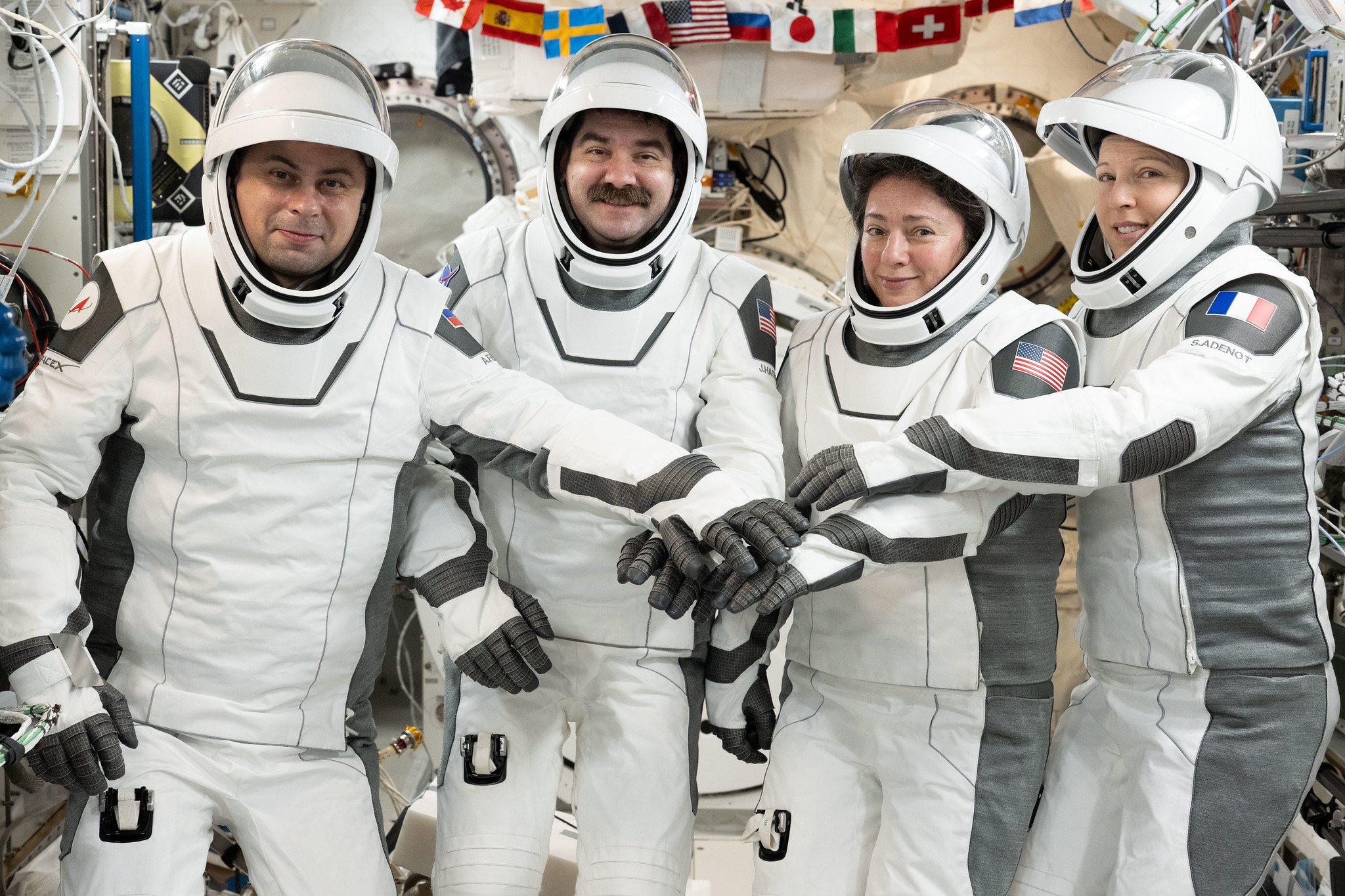
What happened
- Crew-12 had launched in February to replace four station occupants sent home early after NASA astronaut Mike Fincke, now retired, fell ill.
- During the tour Jessica Meir made four spacewalks and Sophie Adenot three, for maintenance and upgrades to the 28-year-old station.
- Seven astronauts from the US, Russia and Canada remain aboard the station after Crew-12's departure.
Compiled by The ScientistSomething wrong?How this is made
Why it matters
- constraint Because the crew's homecoming waited on its relief, a repair to one capsule set the return date for four people already in orbit.
- cost The crew bore the delay as extra time away from their families: three weeks, roughly 9 percent of a tour they had joined on short notice.
- precedent A medical early return commits a second crew to an improvised full tour, and that tour then absorbs any delay to the crew sent after it.
Two problems of different kinds set the length of the tour that Jessica Meir, Jack Hathaway, Sophie Adenot and Andrey Fedyaev have just finished [3][1]. The first was medical. Fincke's illness brought his crew home early and sent this one up in a hurry [6]. The second was mechanical: the capsule repairs that made their relief three weeks late [5]. The Guardian's report does not say which capsule needed the work, what was wrong with it, how long NASA had planned the tour to run, or whether the repair had anything to do with the evacuation.
Three weeks is about 9 percent of an eight-month stay, counting a month as roughly 30 days [17]. If the slip passed straight through to the return date, the tour would otherwise have run a little over seven months [18].
According to the Guardian, the late arrival stalled this crew's homecoming [5]. Four people already in orbit waited on a capsule repair. I think that supports a narrow version of the claim that crew rotation runs with little slack. The departing crew's exit was tied to the incoming crew, so a hardware delay turned into extra time in orbit for people who had flown up on short notice. One medical evacuation in 65 years of human spaceflight [7] is a rare event, and a capsule repair is a different kind of risk. The thing this doesn't tell you is how often the two coincide.
Once the relief crew had arrived, the return ran to the clock. NASA had scheduled hatch closing for 6:20 a.m. EDT on Oct 7 [13]. The hatch closed at 6:05 [4], 15 minutes early [16], ahead of an autonomous undocking at about 8:05 a.m. [4]. The agency had made the undock conditional on spacecraft readiness, recovery-team readiness, Pacific weather off California and other factors [14]. Splashdown was targeted for about 11:34 a.m. Eastern on Oct 8 [13], and SpaceX brought the capsule down off Los Angeles [2]. The post-splashdown briefing that afternoon was set to cover both the Crew-12 return and the SpaceX Commercial Resupply Services-35 launch [15].
By NASA's count, the station has hosted 298 visitors from 26 countries since 2000 [12]. Before leaving, Meir said the crew had "a lot of mixed, swirling emotions" and would miss the "extraordinary views of our home planet" [9]. Minutes after splashdown she said by radio: "We are so excited to be back on Planet Earth after an incredible mission on the International Space Station" [8].
What to watch
- Whether NASA or SpaceX names the capsule and the repair that held up the replacement crew, and whether the fix affects other vehicles in the rotation.
- A published planned length for the Crew-12 tour would settle how much of the eight months the capsule delay actually added.
- Whether the CRS-35 cargo launch, briefed alongside the Crew-12 return, holds its date.
Clarity's read
What the record supports and how the coverage leans. The claims behind it follow.
Reality
- Evidence66
- Adoption
- Insufficient
- Hype gap0
- Incentives
- Insufficient
- Confidence74
Claim ledger
Ranked by verification strength, evidence, and original report placement.
- [1]
Four astronauts returned to Earth from the International Space Station on Thursday after hurrying there eight months earlier to replace an ailing colleague and his crew.
- [2]
SpaceX brought the US, French and Russian crew back with a splashdown in the Pacific off the coast of Los Angeles.
- [3]
The crew was NASA's Jessica Meir and Jack Hathaway, France's Sophie Adenot and Russia's Andrey Fedyaev; they departed the station on Wednesday.
- [4]
At 6:05 a.m. EDT the hatch closed between the SpaceX Dragon and the ISS, starting Crew-12 return operations; the spacecraft was to undock autonomously at about 8:05 a.m.
- [5]
Their replacements arrived three weeks late because of capsule repairs, stalling this crew's homecoming.
- [6]
Meir and her crew left Earth in February to replace four station occupants who were sent home early after one of them, NASA's Mike Fincke, now retired, fell ill.
- [7]
It was NASA's first medical evacuation in 65 years of human spaceflight.
- [8]
"We are so excited to be back on Planet Earth after an incredible mission on the International Space Station."
- [9]
Meir said the crew had "a lot of mixed, swirling emotions" and would miss the "extraordinary views of our home planet".
- [10]
Meir took part in four spacewalks and Adenot ventured outside three times for maintenance and upgrades to the 28-year-old outpost.
- [11]
Seven astronauts remain aboard the space station, representing the US, Russia and Canada.
- [12]
The outpost has welcomed 298 visitors from 26 countries since 2000, by NASA's count.
- [13]
NASA scheduled hatch closing for 6:20 a.m. and undocking for no earlier than 8:05 a.m. EDT on Wednesday, Oct. 7, with splashdown off the coast of California at approximately 11:34 a.m. on Thursday, Oct. 8.
- [14]
Undocking of the SpaceX Dragon depends on spacecraft readiness, recovery team readiness, weather conditions in the Pacific off the coast of California, and other factors.
- [15]
A 1:15 p.m. Oct. 8 briefing was scheduled to cover the Crew-12 return and the SpaceX Commercial Resupply Services-35 launch, with NASA's Bill Spetch and Liz Warren, SpaceX's Lee Echerd and ESA's Andreas Mogensen.
- [16]
The hatch closed 15 minutes ahead of NASA's scheduled hatch-closing time.
- [17]
A three-week delay is about 9 percent of an eight-month stay.
- [18]
If the three-week slip passed one-for-one into the return date, the tour would otherwise have run a little over seven months.
Sources
2 independent publishers whose own reporting we read for this story.
- nasa.govNASA to Stream SpaceX Crew-12 Return, Splashdown Live
3 articles · October 8, 2026
- theguardian.comFour astronauts return to Earth from ISS after medical relief mission
1 article · October 8, 2026
Topics and entities
Follow any of these and your For You feed starts watching them — no settings page required.
Topics
- Human SpaceflightFollow
- Commercial crew transportationFollow
- International Space Station operationsFollow