ProductNot yet confirmed elsewhere1 publisher3 min readPublished
ODYSS takes $199 reservations for a meal-tracking necklace backed only by in-house tests
ODYSS is taking $199 reservations for its N1 food-logging necklace on a better-than-99% accuracy claim from its own pre-production tests. That figure covers noticing a meal, so buyers take the food identification and calorie counts behind most of its scores on the company's word.
The Product Desk
What happened
- The N1 lists at $299, and ODYSS plans mass production in late October with global shipments starting in December 2026.
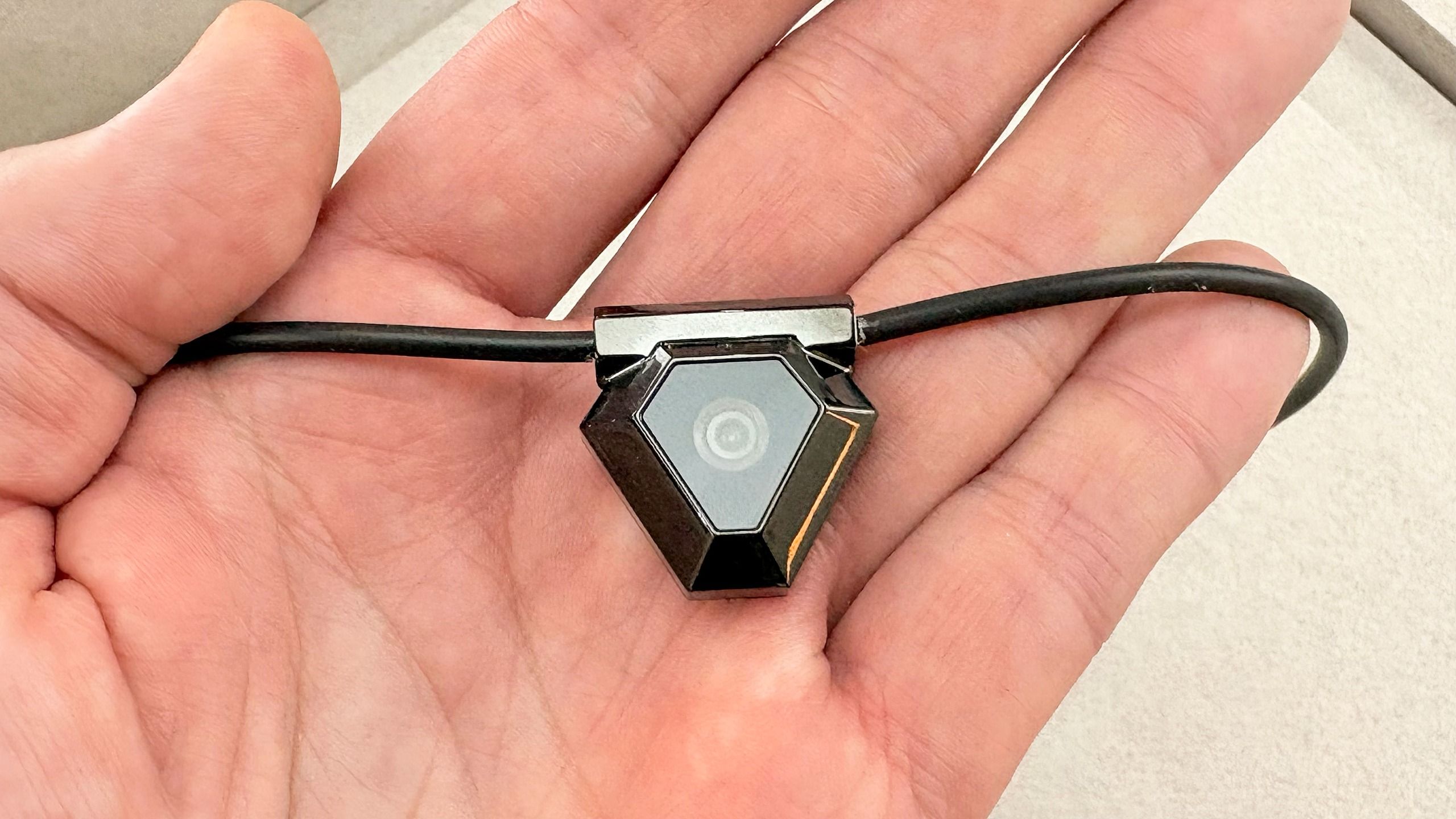
- A 120-degree wide-angle camera, G-sensor and dual microphones sit near the collarbone to catch meals and hand-to-mouth movement.
- Wearers can correct entries in the companion app and add meals the necklace missed.
- The camera takes still images only during detected eating or drinking or on manual trigger, and a physical Privacy Mode button turns capture off.
Why it matters
- decision Early buyers lock in $199 on figures from pre-production units, before independent tests of shipping hardware are possible.
- cost Correction work lands on the wearer, and a wearer who stops correcting gets scores built on whatever the camera guessed.
- exposure Diners and colleagues near a wearer fall inside the camera's view at every detected meal, and only the wearer can press Privacy Mode.
In a hands-on demonstration, The Gadgeteer confirmed that a coffee entry in the N1's companion app had been recognized automatically [11]. Noodles sat in the same meal history, and the report did not establish whether the necklace logged them or a person added them by hand [11].
The N1 has three jobs: noticing that someone is eating, naming the food, and estimating how much of it there is. The headline accuracy figure covers the first, and ODYSS warns that even that one varies with the type of food, the environment and how the device is worn [9][10]. For naming, ODYSS matches what the camera sees against open food databases plus its own product-image and ingredient data [18]. A co-founder told The Gadgeteer that packaged foods can be identified precisely, a statement TechRepublic says is not backed by published independent testing [12]. Portion size and calories come from visual and depth information, according to the company's demonstration [13]. ODYSS has not published independent validation of how well the N1 identifies foods, estimates portions or calculates calories [14].
The pitch is a wearer who never types a meal again [5]. TechRepublic's assessment is that the N1 may reduce logging without ending manual input, particularly when it is not being worn or cannot identify a meal confidently [2].
The three scores lean on different jobs. Rhythm considers meal timing and eating speed, so it rests mostly on event detection, the one task ODYSS has put a number on [16]. Energy compares intake against targets and Quality looks at nutritional balance [16]. Both need the food named and the calories estimated. Research on that step says the approach can work, with accuracy that varies considerably. A 2025 systematic review of 47 studies covering 22 image-based dietary apps found an average per-meal calorie error of 18.7% across the 31 studies with usable data [15]. The other 16, about a third, did not feed that average [20].
The VIP price is $100 below list, about a third off, and includes lifetime access to the N1's AI features [19][6]. TechRepublic's report does not say whether list-price buyers get the same access.
In my view the N1 is for someone who wants a rough record of when and how fast they eat, and who is willing to open the app and fix what it gets wrong. ODYSS says its analyses, scores and AI guidance are for general wellness and should not replace medical or professional dietary advice [17].
Anyone recommending it can sort the decision on two axes: whether the action they would take depends on calorie numbers or on meal timing, and whether the wearer will correct entries. Meal timing with no corrections sits closest to what ODYSS has measured. Adding corrections to a timing use changes little. On the calorie side, a wearer who corrects is getting a first draft of a food diary, worth the typing it saves minus the fixing it adds. The fourth quadrant is calorie targets with nobody correcting, where raw estimates go straight into the Energy score against a field average error of 18.7% [15]. That quadrant is the one to hold until an independent test on production units exists.
What to watch
- An independent test of the N1's food identification and calorie estimates on production units once mass production starts in late October.
- ODYSS stating whether $299 buyers get lifetime AI access or pay separately for the features VIP buyers receive.
- Whether global shipments hold to the December 2026 date.
Clarity's read
What the record supports and how the coverage leans. The claims behind it follow.
Reality
- Evidence25
- Adoption
- Insufficient
- Hype gap+55
- Incentives70
- Confidence45
Claim ledger
Ranked by verification strength, evidence, and original report placement.
- [1]
Users can manually correct entries or add meals the necklace missed.
- [2]
TechRepublic assesses that the N1 may reduce food logging rather than eliminate manual input completely, particularly when it is not being worn or cannot identify a meal confidently.
- [3]
ODYSS says the N1 only captures still images during detected eating or drinking events or when the wearer manually triggers a capture; a physical Privacy Mode button disables image capture, confirmed by LED, vibration and app status.
- [4]
TechRepublic writes that putting a camera on a necklace creates an obvious privacy problem, especially around restaurants, offices, and other people.
- [5]
ODYSS wants to eliminate manual food logging with the N1, a camera-equipped AI necklace designed to recognize meals, estimate nutrition, and build a dietary record while you eat.
- [6]
The N1 carries a $299 MSRP, while early customers can reserve a $199 VIP price with lifetime access to its AI features.
- [7]
ODYSS plans to begin mass production in late October and start global shipments in December 2026.
- [8]
The N1 combines a 120-degree wide-angle camera, G-sensor, dual microphones and other sensors to detect eating events; it sits near the collarbone, giving its camera a view of meals and hand-to-mouth movement.
- [9]
ODYSS claims greater than 99% accuracy for detecting eating events, a figure from internal testing of pre-production hardware under controlled conditions; ODYSS warns performance can vary with the type of food, environment, and how the device is worn.
- [10]
The accuracy claim refers to detecting an eating event, not necessarily identifying every ingredient or estimating calories with the same accuracy.
- [11]
During a hands-on demonstration, The Gadgeteer confirmed a coffee entry in the companion app had been automatically recognized; noodles also appeared in the meal history, but the report did not establish whether that entry was automatically detected or manually added.
- [12]
A company co-founder told The Gadgeteer that packaged foods can be identified precisely, but that statement was not backed by published independent testing.
- [13]
The system can estimate food size and calorie content using visual and depth information, according to the company demonstration.
- [14]
ODYSS has not published independent validation showing how accurately the N1 identifies foods, estimates portions, or calculates calories across everyday meals.
- [15]
Independent research suggests image-based dietary assessment can work but accuracy varies considerably; a 2025 systematic review of 47 studies covering 22 image-based dietary applications found an average per-meal calorie error of 18.7% across 31 studies with usable data.
- [16]
The N1 organizes results into three scores: Quality (nutritional balance), Energy (intake compared against targets), and Rhythm (factors including meal timing and eating speed).
- [17]
The N1 is not a medical device; ODYSS says its nutritional analyses, scores, and AI-generated guidance are intended for general wellness and should not replace medical or professional dietary advice.
- [18]
ODYSS combines open food databases with its own product-image and ingredient data for recognition.
- [19]
The $199 VIP price is $100, about 33%, below the $299 MSRP.
- [20]
16 of the 47 studies in the 2025 review, about a third, lacked usable data for the 18.7% average.
Sources
1 independent publisher whose own reporting we read for this story.
- techrepublic.comODYSS N1 AI Necklace Wants to Track Everything You Eat Without Food Logging
1 article · October 6, 2026
Topics and entities
Follow any of these and your For You feed starts watching them — no settings page required.
Topics
Entities
- ODYSSFollow
- ODYSS N1Follow
- IFA BerlinFollow
- The GadgeteerFollow