Product2 distinct publishers3 min readPublished
Acer's Vero 16 turns toolless access, a removable hinge and a two-generation processor path into spec-sheet lines a fleet buyer can quote, but the parts prices and stocking window that make them real are still missing.
The Product Desk · Product desk

Compiled by The Product DeskSomething wrong?How this is made
Nothing in a repair spec matters more than whether a site tech can reach the battery at a desk instead of boxing the machine, and Acer has put both the battery and the SSD behind a bottom panel that opens without a screwdriver [7]. The hinge is the same idea at a larger scale: if the whole hinge mechanism detaches [3], a cracked-lid job stops being a chassis teardown and becomes a module swap.
The two write-ups describe the service map differently, and the difference is practical. Engadget says the engraving is on the exterior and marks where the battery and motherboard sit [4]. Gizmodo describes a "user-friendly visual guide" engraved onto various components [5]. One version tells a tech what is inside before anything is opened; the other tells them what they are holding after it is already open.
Separate the repair engineering from the rest of the pitch. The Vero 16 is also billed as a Copilot+ PC carrying Windows Studio Effects, Cocreator and Click to Do, which Engadget waves off as AI tools nobody really uses [17]. That part of the spec sheet will not be why anyone keeps the machine for five years. The parts the two accounts actually name as swappable are the battery, the SSD, the port covers, the hinge and the processor [23]. Memory is left off that list, and the RAM is LPDDR5X [10], so 32GB is a decision made once on the purchase order.
Storage deserves the same care at order time. 512GB is the top SSD option [7], so the toolless panel earns its keep early: capacity is the thing most buyers will want to change first, and here that is desk work rather than a depot ticket.
Geography narrows who can act on any of it. Two of the three laptops Acer announced, the Vero 16 and the Swift Blade 14, are EMEA-only at launch [22], and the repairable one lands after the thin one [24]. A North American standards team reading this spec sheet is reading someone else's catalogue for now [16].
The test worth carrying into your own refresh cycle has two axes rather than one. First, can a tech remove the part without tools. Second, can you buy that part at a published price for a stated number of years. Both yes is a repair program. A toolless design with no parts channel behind it is a demo. A priced part that stays sealed inside a depot contract is the arrangement most fleets already have. Neither one is a replacement cycle wearing a better chassis. Acer has plainly built for the first axis; neither publisher reports what a hinge, a port cover or a mainboard will cost, or how long Acer will stock them [26]. That pricing and stocking page does not exist yet, so for now the Vero 16 is a well-built demo.
Ranked by verification strength, evidence, and original report placement.
Acer announced the Vero 16 laptop, which it says has been designed with repairability in mind.
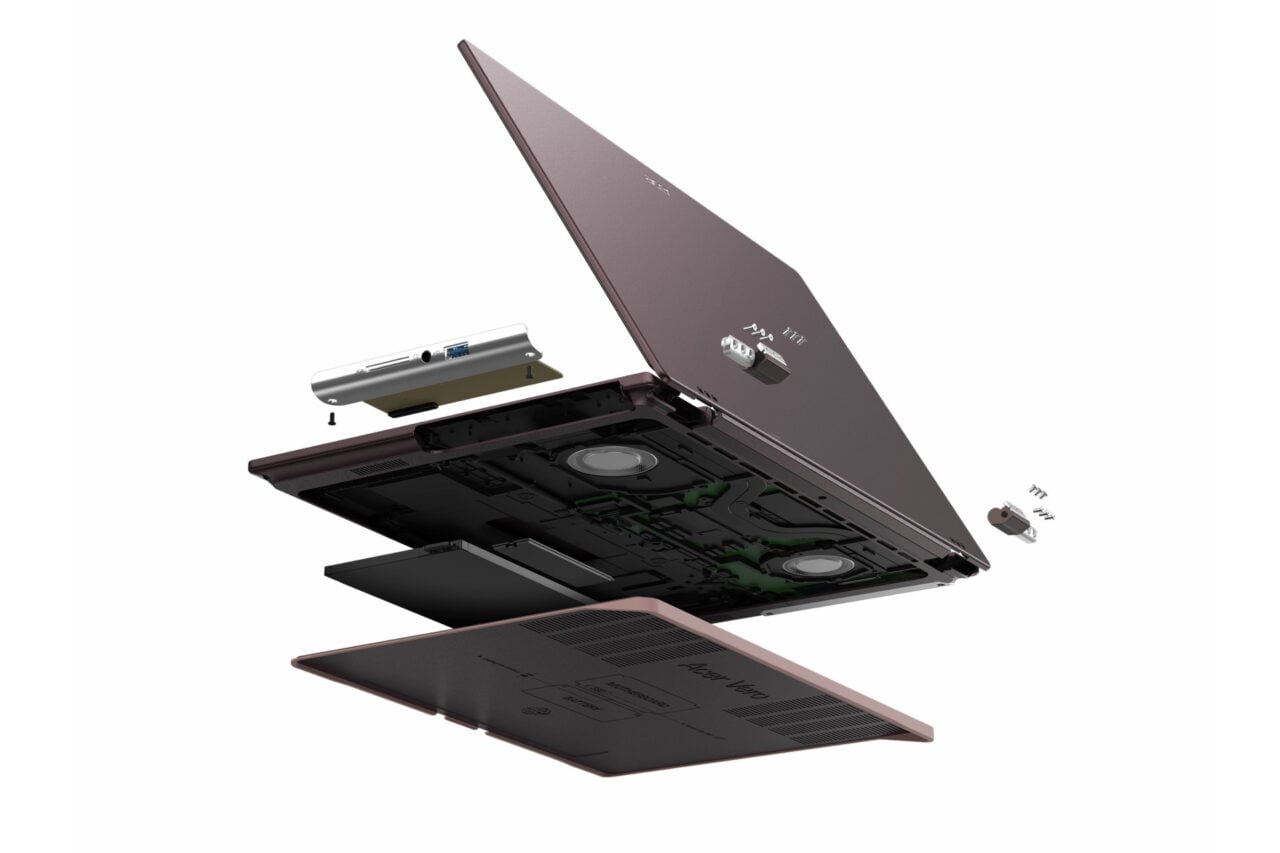
At IFA 2026, Acer said the Vero 16 is its most repairable mobile design ever, with toolless access to its components and the option to completely replace the laptop lid's hinge.
The Vero 16 has removable port covers, a detachable external hinge and a latch on the bottom that can be opened without tools.
Engadget reports an engraving on the exterior of the Vero 16 that shows the location of the battery and motherboard.
Gizmodo reports that the Vero 16 includes a "user-friendly visual guide" engraved onto various components to aid repair or upgrade.
The battery and SSD in the Vero 16 are user-replaceable.
Distinct publishers with included, body-backed reporting in this cluster.
engadget.com
1 article · September 2, 2026
gizmodo.com
1 article · September 2, 2026
Follow any of these and your For You feed starts watching them — no settings page required.
product
Acer drops a 14-inch laptop to 0.8 kg using Intel's budget Wildcat Lake chip1 distinct publisher
product
Google's Googlebook merges Android and ChromeOS at last, with the Gemini terms still blank1 distinct publisher
product
Broadcom folds private AI into an integrated VMware Cloud Foundation stack1 distinct publisher
security
TCG writes down what "quantum-safe TPM" means, and buyers finally get a document to argue with2 distinct publishers
Evidence-backed comparisons of source perspectives and observed adoption signals. Read the methodology
Which Builder, Operator, and Investor concerns the observed source mix emphasized—not a truth score.
Evidence, demonstrated adoption, hype gap, incentives, and confidence are assessed independently, each on its own current evidence. How these are measured.
One briefing, two write-ups
Engadget and Gizmodo match each other on 71Wh, 512GB, 32GB of LPDDR5X and the Core Ultra X9 388H, which shows Acer's press materials were consistent — not that anyone has verified them. Nobody in this reporting has pulled the hinge, timed a battery swap, or put a repair score on the machine, and the two-generation processor promise cannot be tested until Intel ships the chips it refers to. The specification detail is dense; the independent verification is zero.
Announced, nothing in anyone's hands
This is a trade-show reveal with a date attached and nothing behind it: early next year, Europe, the Middle East and Africa only. The Acer laptop that actually ships in December is the thin Swift Blade 14, not the repairable one. There are no units in service, no technicians reporting on how the toolless panel behaves after a year, and no buyers to count.
Promises outrun the parts counter
'Most repairable ever' and upgrades 'for at least two generations' are doing the persuading, and both outlets pass them along intact. Yet a hinge you can remove is only useful if you can buy one: no price for a replacement hinge, port cover or mainboard appears anywhere, and neither publisher asked how long Acer will stock them. The 32GB of LPDDR5X quietly sits outside the swappable list. Gizmodo supplies the only real friction on the page by declining to call the recycled-content story sustainability.
Vendor set the clock and the vocabulary
The two stories went live four seconds apart, which tells you who scheduled them. Acer supplies the superlative, the recycled percentages, the upgrade horizon and the specification ladder; no teardown outfit, repair-score house or standards body appears in either account to check any of it. The one visible counterweight is Gizmodo openly arguing with the sustainability language while still relaying the numbers, and Engadget's aside about the Copilot+ features.
Firm on the machine, blank on the ownership cost
Two independent outlets, a dated announcement and numbers that agree make the description of the hardware reliable enough to quote. What a buyer would actually decide on — price, spare-part cost, how long parts stay available, when it leaves EMEA — is simply not in this reporting, so treat the specifications as settled and everything about owning one as open.