BuildIndependently confirmed2 publishers3 min readPublished
The FCC read HOVERAir's Versa by what it was built to do, not how it was boxed
The Flight Kit had no radio and needed no FCC ID. The camera did, and the December Covered List names cameras, so the seam meant to preserve US access sat in the wrong half.
The Engineer · Build desk
What happened
- The FCC told DroneXL that the Versa's equipment authorization was granted erroneously and that Zero Zero was apparently willfully violating federal law by selling it in the US.
- HoverAir removed Flight Kit tiers for US buyers three days after the Indiegogo campaign opened on August 19, telling backers it was a matter of remaining logistics updates.
- FCC public notice DA 25-1086 defines UAS critical components to include sensors and cameras, and says the list is not exhaustive.
- The commission says it is sending guidance to all Telecommunications Certification Bodies to strengthen their due diligence on applications.
Why it matters
- constraint Splitting a product across modules no longer buys access, because the module holding the radio has to survive a purpose test, and there is nowhere left to move the radio that the component list...
- contradiction Backers cannot tell from the company whether their order is late or unlawful, and whether refunds are owed depends on which of the two accounts is accurate.
- exposure Americans who kept the camera-only tiers are holding pledges on hardware the agency has already labelled a prohibited component, with delivery scheduled for the autumn.
- precedent A lab grant now has to be priced as provisional rather than final, which pushes regulatory risk onto the applicant's own reading of the Covered List rather than the certifier's.
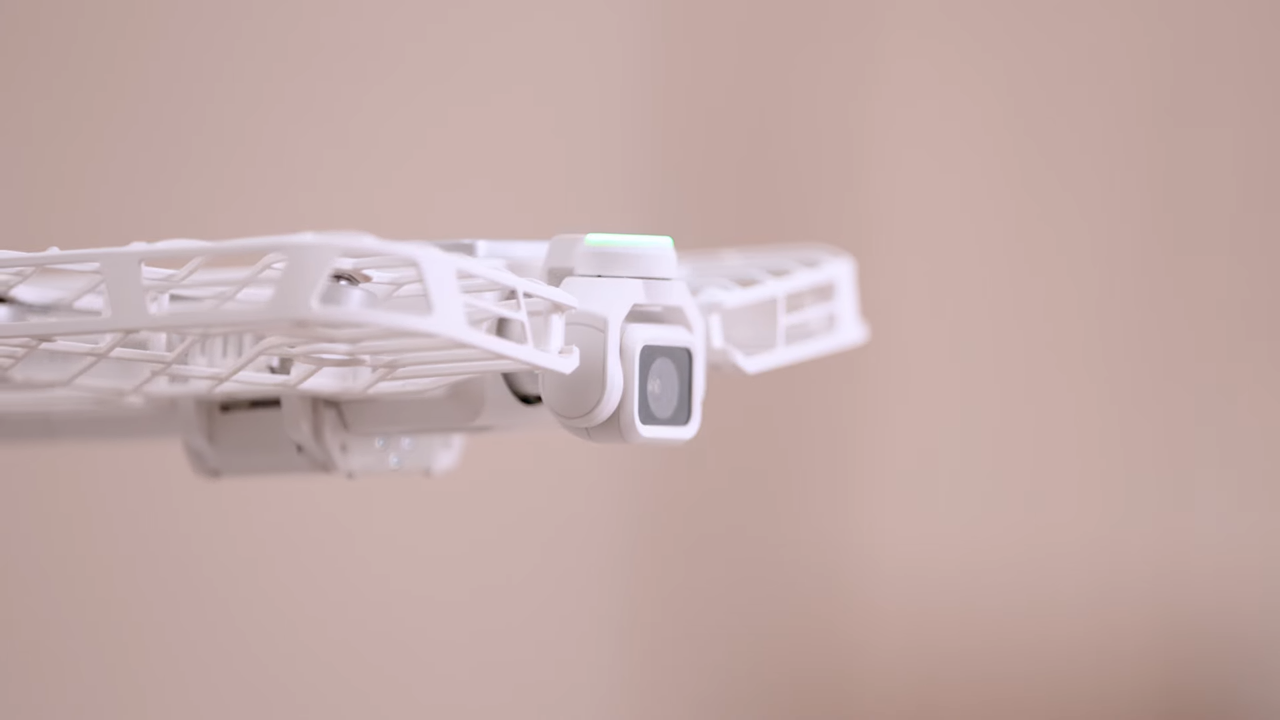
The unbundling logic was straightforward. Take the radio out of anything that looks like an aircraft, and only one part of the product needs a federal grant. Versa's Flight Kit carries the motors and propellers and no transmitter, drawing power and telemetry from the camera through pogo-pin contacts, so it never required an FCC ID of its own [5]. That leaves exactly one certifiable device, and the certifiable device is a camera. The December order lists "sensors and cameras" as UAS critical components alongside motors, batteries and flight controllers [6]. The half that needed authorising was the half the list already covered.
Runtimewire summarises the agency's boundary as one of intended use: a general-purpose camera that could theoretically be attached to a drone may qualify, while a camera designed primarily to serve as a drone camera does not [15]. Versa's own launch materials repeatedly presented the camera and the Flight Kit as one system [16], and the founder's pitch was that people do not want a drone, they want a camera that can fly [21]. The framing that made the product legible to buyers made it legible to the regulator.
The pricing shows how little the seam was worth commercially. Early bird pricing put the camera at $449, with Flight Kit bundles starting around $630 and shipping slated for October [11]. That values the flying chassis at roughly $181 [17], meaning the module the company treated as legally uninteresting was under a third of the bundle, and everything the FCC objected to sat in the $449 half.
The money moved first. Versa raised more than $230,000 in its debut [10], on a certification HoverAir promoted as clearance for US sales when the campaign opened [9]. Its previous crowdfunder, the Aqua, took more than $2 million from over 1,800 backers last August, missed the December deadline after the October government shutdown slowed FCC processing, launched in more than 50 countries in May without the US, and refunded American backers [12]. That is two consecutive campaigns collecting US pledges against an authorisation that did not hold [19].
The delegation is what made the timing possible. The FCC outsources equipment grants to private organisations accredited to issue them on its behalf [8], and one of those bodies approved Versa as a camera earlier in August [9]. The reversal came in days rather than years.
There is no obvious relief. The only exemptions issued so far date to January and cover Blue UAS-listed aircraft and components that qualify as domestic end products, neither of which fits a Chinese consumer camera [18]. DJI is challenging the underlying order in court [20]. Meanwhile the Flight Kit is still on sale in other markets [13] and the product is due at IFA in Berlin on September 3 with retail planned for the autumn [14], which leaves Versa available everywhere except the jurisdiction its architecture was designed for.
What to watch
- Whether the FCC acts against the camera-only tiers still on sale to US backers, or leaves the statement standing without enforcement.
Clarity's read
What the record supports and how the coverage leans. The claims behind it follow.
Reality
- Evidence60
- Adoption47
- Hype gap+12
- Incentives70
- Confidence63
Claim ledger
Ranked by verification strength, evidence, and original report placement.
- [1]
The FCC granted ID 2AIDW-ZZ-H-1-006 to Shenzhen Zero Zero Infinity Technology, the HoverAir parent's grantee entity, earlier in August, for the Versa as a camera rather than a drone.
- [2]
The Versa's FCC ID has disappeared from the commission's equipment database, according to The Verge, which said HoverAir declined to comment.
- [3]
In a statement to DroneXL, the FCC said the authorization "was granted erroneously," that the device is "a prohibited UAS critical component produced in a foreign country," and that the company was "apparently willfully violating" the law.
- [4]
HoverAir pulled the Flight Kit for the Versa from US buyers on its Indiegogo campaign three days after it opened on August 19, telling backers that "due to a few remaining logistics updates with the Flight Kit, we're currently only shipping our PocketOnly and PocketCombo combos to the US."
- [5]
The Flight Kit carries the motors and props but no radio, drawing power and telemetry from the camera through pogo pins, meaning it never needed its own FCC ID.
- [6]
The December 2025 Covered List order barred new authorizations for foreign-made drones and also covers "UAS critical components," which FCC public notice DA 25-1086 defines to include flight controllers, navigation systems, batteries, motors and "sensors and cameras," with the list marked as not exhaustive.
- [7]
The FCC said it is "sending guidance to all Telecommunications Certification Bodies to strengthen their due diligence of applications."
- [8]
Telecommunications Certification Bodies are private organisations accredited to issue equipment grants on the FCC's behalf, creating a system in which a product can clear an outside reviewer before the agency reverses the decision.
- [9]
A private Telecommunications Certification Body approved Versa as a camera earlier in August, and HoverAir then promoted the authorization as clearance for US sales when it opened the Versa campaign.
- [10]
The Versa raised more than $230,000 in its debut.
- [11]
HoverAir announced the certification on August 18 and priced the camera at $449 early bird, with Flight Kit bundles starting around $630 and shipping slated for October.
- [12]
HoverAir's previous crowdfunder, the waterproof Aqua, raised more than $2 million from over 1,800 Indiegogo backers in August last year but missed the December deadline after the October government shutdown slowed FCC processing; it launched in more than 50 countries in May without the US, with American backers offered refunds.
- [13]
The Versa is still listed with the Flight Kit in other markets, and US backers can still take the camera-only tiers, though the FCC's statement that even the camera is a prohibited component casts doubt on that option.
- [14]
HoverAir is due to show the Versa at IFA in Berlin on September 3, with retail availability planned for fall.
- [15]
The FCC's position draws the boundary around intended use: a general-purpose camera that could theoretically be attached to a drone may qualify for authorization, while a camera designed primarily to serve as a drone camera does not.
ReportedSupportedSource: runtimewire, citing Tom's Hardware as primary source2 sources— create a free account to open themView cited source - [16]
Versa's launch materials repeatedly presented the camera and Flight Kit as a single system, and the FCC treated the detachable seam as an engineering choice rather than a change in what the hardware was built to do.
- [17]
The marginal price of the Flight Kit chassis over the camera alone is about $181, roughly 29 percent of a $630 bundle.
- [18]
The only exemptions issued so far were approved in January and cover Blue UAS-listed aircraft and components that qualify as domestic end products; neither applies to a Chinese consumer camera.
- [19]
Two consecutive HoverAir crowdfunding campaigns have taken US pledges without ending up with a usable US authorization: Aqua in 2024 and Versa in 2025.
- [21]
Founder Mengqiu "MQ" Wang said in HOVERAir's August 18 launch announcement: "People don't really need a drone. They just want a camera that can fly."
Sources
2 independent publishers whose own reporting we read for this story.
- runtimewire.comFCC pulls HOVERAir Versa's US Flight Kit three days after launch
1 article · August 23, 2026
- tomshardware.comModular pocket gimbal camera that transforms into a self-flying drone retroactively banned by FCC, certification revoked — Agency closes foreign UAS loophole on 230g HoverAir Versa
1 article · August 23, 2026
Topics and entities
Follow any of these and your For You feed starts watching them — no settings page required.
Topics
Entities
- FCC Covered ListFollow
- Versa Flight KitFollow
- HoverAir VersaFollow
- Shenzhen Zero Zero Infinity TechnologyFollow
- US Federal Communications CommissionFollow
- HoverAirFollow
- HoverAir AquaFollow
- Telecommunications Certification BodyFollow
- Zero Zero RoboticsFollow
- IFA BerlinFollow
- Tony ZhangFollow
- DroneXLFollow
- Blue UASFollow
- Mengqiu "MQ" WangFollow
- IndiegogoFollow
- The VergeFollow
- FCC Public Notice DA 25-1086Follow
- DJI TechnologyFollow