ScienceNot yet confirmed elsewhere1 publisher2 min readPublished
Neanderthal-style birch tar holds back a common wound bacterium in lab tests
Every type of birch tar a University of Cologne-led team made with reconstructed Neanderthal methods inhibited the wound bacterium Staphylococcus aureus. That makes a medical role for the old hafting adhesive plausible, though proof that Neanderthals dressed wounds with it would have to come from their sites.
The Scientist · Science desk
Supported: all tar types the team made inhibited Staphylococcus aureus. Supported: so did tar from both the sealed pit and stone methods. Supported: tar traces at Neanderthal sites long read as glue. Insufficient: the release's line that tar may have doubled as medicine.
- Supported When the researchers tested their samples, every type of birch tar they produced was able to inhibit the growth of Staphylococcus aureus., claim 1
- Supported Tar made by both reconstructed techniques, the sealed pit and condensation on stone, inhibited Staphylococcus aureus., claim 13
- Supported Traces of birch tar have been found at numerous Neanderthal sites across Europe, often still attached to stone tools, which for decades led researchers to believe it was primarily used as glue for hafting stone blades or points to wooden handles., claim 6
- Insufficient evidence The release summary says every sample could inhibit the growth of bacteria responsible for dangerous wound infections, and that birch tar "may have doubled as a surprisingly effective natural medicine.", claim 14
| Claim | State | Claim number |
|---|---|---|
| When the researchers tested their samples, every type of birch tar they produced was able to inhibit the growth of Staphylococcus aureus. | Supported | 1 |
| Tar made by both reconstructed techniques, the sealed pit and condensation on stone, inhibited Staphylococcus aureus. | Supported | 13 |
| Traces of birch tar have been found at numerous Neanderthal sites across Europe, often still attached to stone tools, which for decades led researchers to believe it was primarily used as glue for hafting stone blades or points to wooden handles. | Supported | 6 |
| The release summary says every sample could inhibit the growth of bacteria responsible for dangerous wound infections, and that birch tar "may have doubled as a surprisingly effective natural medicine." | Insufficient evidence | 14 |
What happened
- The work came from researchers at the universities of Cologne, Oxford and Liege and at Cape Breton University in Canada.
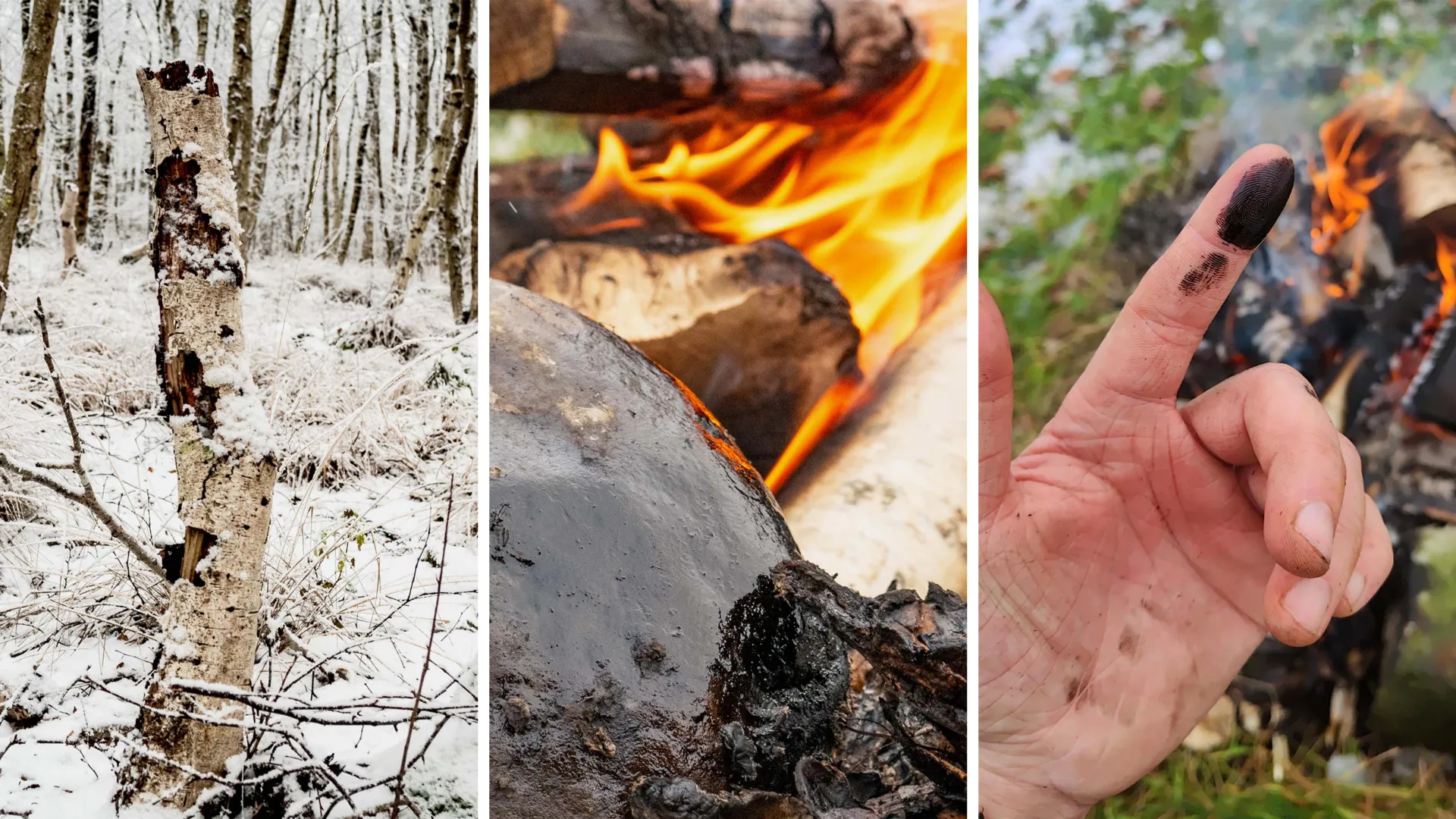
- One method heated birch bark in a sealed, oxygen-poor underground pit; the other burned bark beside a stone and collected the tar that condensed on it.
- The study appears in PLOS One as 'Antibacterial properties of experimentally produced birch tar and its medicinal affordances in the Pleistocene.'
- Traditional societies around the world have used birch tar as medicine as well as for other purposes, according to the University of Cologne's release.
Why it matters
- capability Since tar condensed on a stone also inhibited the bacterium, antibacterial tar was within reach of any group able to burn bark beside a rock, without building a sealed pit.
- constraint Inhibiting a bacterium in a lab test is a long way from preventing infection in a living wound, so the result supports antibacterial potential and stops short of showing a treatment.
- precedent With a lab basis for antibacterial activity, birch tar traces at Neanderthal sites are likely to be argued over as possible medicine as well as glue.
To make the tar, the team used tree species that grew during the Neanderthal era and production methods reconstructed from archaeological evidence, instead of modern industrial processes [5]. That choice keeps the question narrow. A positive result for commercial birch tar would have said little about the material Neanderthals could actually have made.
Running both production routes adds a useful check. The researchers set out to learn whether tar from different techniques would have similar antibacterial properties [12]. Tar from the sealed pit and tar condensed on stone both inhibited Staphylococcus aureus [13], a bacterium commonly associated with wound infections [3]. So the activity does not depend on the more demanding of the two processes.
How large the effect was is harder to judge from the University of Cologne's release [11]. It does not say how many samples were tested, how strongly growth was held back, or whether the tar was compared with an untreated control or a standard antibiotic. Its summary says "every sample" could inhibit bacteria responsible for dangerous wound infections, while its main text says every type of tar the team produced inhibited S. aureus [14] [1]. Those two wordings can describe different counts. The same summary says birch tar "may have doubled as a surprisingly effective natural medicine" [14].
The case for medicine leans on evidence from outside the experiment. Tjaark Siemssen of the University of Cologne and Oxford, who leads the study [9], said, "Alongside these findings, there is also growing evidence of medicinal practices and the use of plants among Neanderthals, which is why we were interested in the use of birch tar in this context" [10].
The thing this doesn't tell you is whether any Neanderthal ever put tar on a wound. Antibacterial activity is a property of the material. Medical use is a behaviour, and the record so far consists of tar traces found at Neanderthal sites across Europe, often still attached to stone tools and long read as hafting glue [6].
We think the study supports its capability claim well: tar made two Neanderthal ways held back a common wound pathogen [13] [3]. The medical reading is now a plausible hypothesis, and testing it will take residue evidence from those sites.
What to watch
- The PLOS One paper's sample count, strength of inhibition and controls will show how large the effect actually is.
- Whether the full results extend the antibacterial activity beyond Staphylococcus aureus to other wound pathogens.
- Any Neanderthal tar residue found somewhere other than a tool haft would bear directly on the medical-use hypothesis.
Clarity's read
What the record supports and how the coverage leans. The claims behind it follow.
Reality
- Evidence40
- Adoption
- Insufficient
- Hype gap+35
- Incentives55
- Confidence50
Claim ledger
Ranked by verification strength, evidence, and original report placement.
- [1]
When the researchers tested their samples, every type of birch tar they produced was able to inhibit the growth of Staphylococcus aureus.
- [2]
The study was conducted by researchers at the University of Cologne, the University of Oxford, the University of Liege and Cape Breton University in Canada.
- [3]
Staphylococcus aureus is a bacterium commonly associated with wound infections.
- [4]
One technique heated birch bark inside a sealed underground pit with little or no oxygen, a dry distillation; a simpler technique burned birch bark near a solid surface such as a stone, where tar vapours condensed and left a sticky residue that could be collected.
- [5]
The researchers produced birch tar from tree species present during the Neanderthal era, recreating production techniques reconstructed from archaeological evidence associated with Neanderthals instead of relying on modern industrial processes.
- [6]
Traces of birch tar have been found at numerous Neanderthal sites across Europe, often still attached to stone tools, which for decades led researchers to believe it was primarily used as glue for hafting stone blades or points to wooden handles.
- [7]
The research was published in PLOS One under the title "Antibacterial properties of experimentally produced birch tar and its medicinal affordances in the Pleistocene."
- [8]
Evidence from traditional societies around the world shows that birch tar has been used for medicinal purposes as well as other applications.
- [9]
Tjaark Siemssen of the University of Cologne and Oxford University is leading the study.
- [10]
"Alongside these findings, there is also growing evidence of medicinal practices and the use of plants among Neanderthals, which is why we were interested in the use of birch tar in this context."
ReportedSupportedSource: Tjaark Siemssen, University of Cologne and Oxford, quoted in the releaseView cited source - [11]
The release, dated October 10, 2026, was issued by the University of Cologne and carried by ScienceDaily.
- [12]
The experiments were designed to investigate whether birch tar made through different prehistoric techniques would have similar antibacterial properties.
- [13]
Tar made by both reconstructed techniques, the sealed pit and condensation on stone, inhibited Staphylococcus aureus.
- [14]
The release summary says every sample could inhibit the growth of bacteria responsible for dangerous wound infections, and that birch tar "may have doubled as a surprisingly effective natural medicine."
ReportedInsufficientSource: University of Cologne release summary2 sources— create a free account to open themView cited source
Sources
1 independent publisher whose own reporting we read for this story.
- sciencedaily.comNeanderthals may have used prehistoric glue as an ancient antibiotic
1 article · October 10, 2026
Topics and entities
Follow any of these and your For You feed starts watching them — no settings page required.
Topics
- Antimicrobial researchFollow
- Experimental ArchaeologyFollow
- Neanderthal archaeologyFollow
Entities
- University of CologneFollow
- University of OxfordFollow
- University of LiègeFollow
- Cape Breton UniversityFollow
- Tjaark SiemssenFollow
- PLOS ONEFollow
- Staphylococcus aureusFollow