ScienceIndependently confirmed2 publishers2 min readPublished
Four Artemis II astronauts logged far-side geology and lunar impacts for NASA's science report
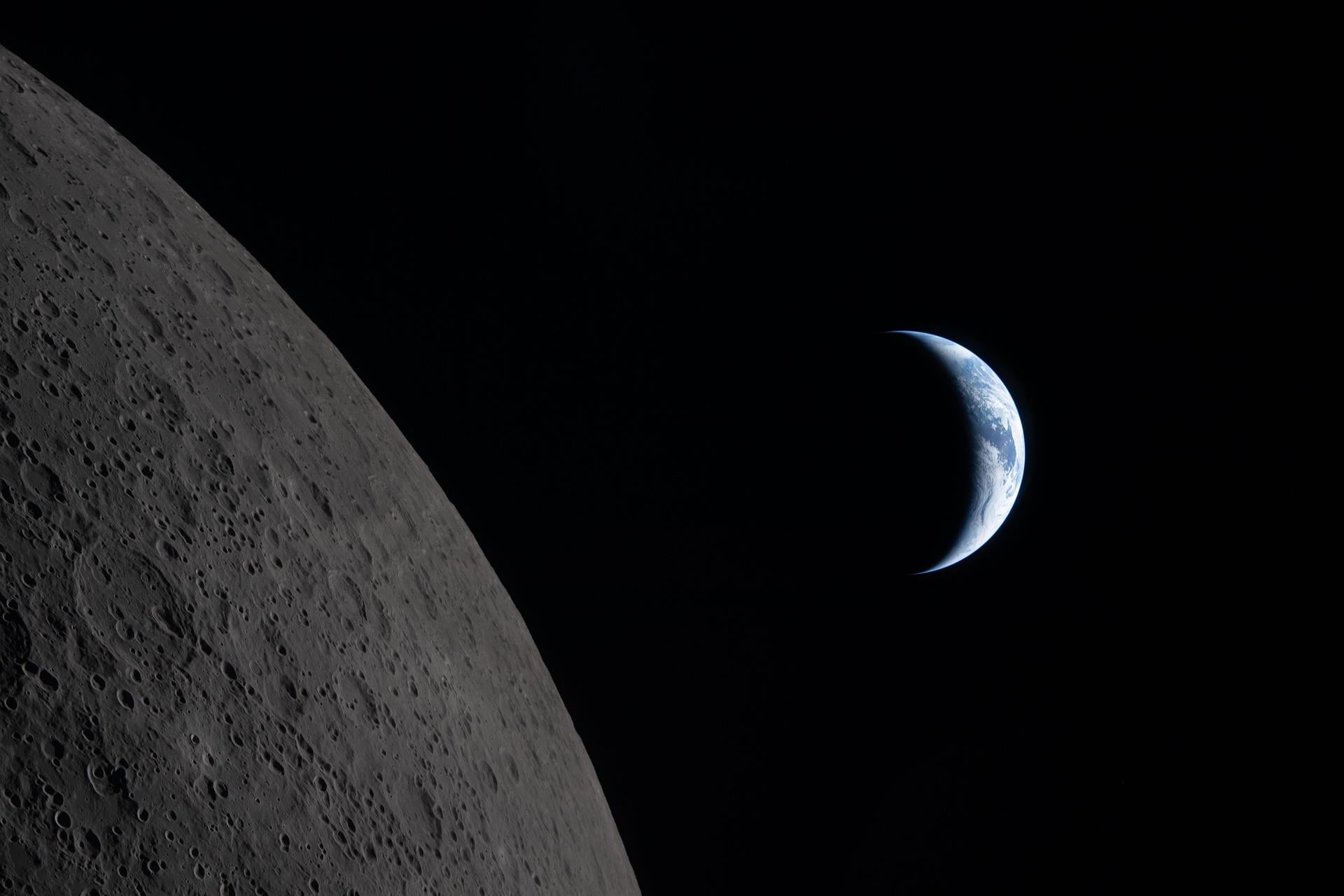
NASA released a preliminary Artemis II lunar science report built from the four-person crew's photos, spoken notes and drawings. Researchers can now test whether those observations hold science that instruments alone would have missed.
The Scientist · Science desk
What happened
- Reid Wiseman, Victor Glover, Christina Koch and Jeremy Hansen launched on April 1, 2026, atop NASA's Space Launch System in the Orion spacecraft Integrity.
- On the flight they studied the Moon's far-side geology, watched nighttime impacts on its surface and saw Earth and the Sun rise from the far side.
- Passing behind the Moon, the crew saw it block the Sun for 54 minutes, far longer than a solar eclipse lasts on Earth.
- A Day 2 photo of Earth caught weather systems, auroras at both poles, atmospheric layers, a Saharan dust plume, zodiacal light and city lights.
Why it matters
- capability Scientists outside NASA can check the crew's impact and eclipse sightings against their own instrument records, since the full reports and select data are published.
- decision Planners of later Artemis landings now have a crewed observation record to weigh when they decide how much astronaut time to set aside for observing.
- precedent Publishing crew drawings and spoken notes as a formal NASA report makes an observation log an expected product of future crewed lunar flights.
Much of what the report credits to the crew comes from where Orion was. Universe Today says the Day 2 picture of Earth showed in one frame what Earth-observation satellites see only in strips [10]. It also says moonlight, not sunlight, lit Earth's face in that picture [11]. Both points are about distance and lighting. A camera fixed at the same spot, in our view, would have caught the same scene.
The eclipse is a better test of an observer. The crew followed the corona's changing shape and structure for nearly an hour [5]. The corona is the layer of the Sun's atmosphere that drives space weather [6]. The 54 minutes of totality were about 0.4 percent of a flight that lasted 13,052 minutes [17][16]. The crew's image of the eclipse was taken on April 6, 2026, during the lunar flyby [7]. In a window that short, we'd expect timed, specific notes from a trained observer to add the most to the images.
The impact sightings come closest to the claim that astronauts add science. The Moon has no atmosphere, so meteors reach the surface instead of burning up, and astronomers on Earth sometimes catch the small flashes they make [14]. According to Universe Today, the crew saw impacts that would otherwise be too faint to observe [13]. The outlet's summary does not give a count of flashes, their positions or their times. Researchers would need those figures to check the sightings against telescope records.
The spoken record also holds perceptions that differ from the images. "The Earth has not quite looked like the pictures. You really can't make out the deep royal blue," Koch said [12]. Of the stars, Hansen said that "there's a depth to them that you don't see from Earth" [15].
We think the report supports a narrower version of the case for astronauts as science observers on later landings. It shows that a flyby crew can build an annotated record of far-side geology, nighttime impacts and an eclipse [2][4]. Whether that record holds findings instruments would have missed depends on analysis of material NASA itself calls preliminary, released for now as a field guide titled "Artemis II: Sights & Sounds of Science" [3].
What to watch
- Publication of the counts, positions and times of the impact flashes the crew reported, and whether they match flashes recorded by telescopes on Earth.
- Follow-up papers that tie the crew's far-side geology notes and drawings to orbital imagery of the same terrain.
- Whether NASA's plans for crewed Artemis landings assign astronauts specific observation tasks drawn from this flight's record.
Clarity's read
What the record supports and how the coverage leans. The claims behind it follow.
Reality
- Evidence60
- Adoption
- Insufficient
- Hype gap+10
- Incentives
- Insufficient
- Confidence65
Claim ledger
Ranked by verification strength, evidence, and original report placement.
- [1]
On April 1, 2026, astronauts Reid Wiseman, Victor Glover, Christina Koch and Jeremy Hansen launched on Artemis II atop NASA's Space Launch System, aboard the Orion spacecraft named Integrity.
ReportedSupportedSource: Universe Today2 sources— create a free account to open themView cited source - [2]
During the flight the astronauts studied the Moon's far-side geology, witnessed nighttime impacts on the surface, and watched the Earth and Sun rise from the far side of the Moon.
ReportedSupportedSource: Universe Today2 sources— create a free account to open themView cited source - [3]
NASA released 'Artemis II: Sights & Sounds of Science', a field guide to the Artemis II Preliminary Lunar Science Report.
ReportedSupportedSource: Universe Today2 sources— create a free account to open themView cited source - [4]
According to the report, the crew created a scientific record through photographs, spoken observations, drawings and annotations, now available to the science community and the public, with the full suite of reports and select data resources published.
ReportedSupportedSource: NASA report, quoted by Universe Today2 sources— create a free account to open themView cited source - [5]
As the crew passed behind the Moon, the Moon blocked the Sun for 54 minutes, far longer than a solar eclipse lasts on Earth, and the crew observed the corona's evolving shape and structure for nearly an hour.
ReportedSupportedSource: Universe Today2 sources— create a free account to open themView cited source - [6]
The Sun's corona, the outer layer of its atmosphere, drives space weather.
ReportedSupportedSource: Universe Today2 sources— create a free account to open themView cited source - [7]
The crew's image of the Moon fully eclipsing the Sun was captured during the lunar flyby on April 6, 2026.
ReportedSupportedSource: Universe Today, NASA image credit2 sources— create a free account to open themView cited source - [8]
The Artemis II crew spent 9 days, 1 hour and 32 minutes in space.
- [9]
The crew's Day 2 picture of Earth captured active weather systems, auroras at both poles, distinct atmospheric layers, a Saharan dust plume, zodiacal light and city lights.
- [10]
Earth-observation satellites observe the Earth in strips rather than getting a holistic view.
- [11]
In the Day 2 picture, the Moon's light, not sunlight, was illuminating Earth's face.
- [12]
"The Earth has not quite looked like the pictures. You really can't make out the deep royal blue."
ReportedSupportedSource: Christina Koch, mission specialist, quoted by Universe TodayView cited source - [13]
The crew saw impacts on the lunar surface that would otherwise be too faint to observe.
- [14]
Because the Moon is airless, meteors do not burn up and regularly strike the surface; astronomers on Earth are sometimes able to witness these impacts by the tiny flashes of light they produce.
- [15]
"there's a depth to them that you don't see from Earth"
ReportedSupportedSource: Jeremy Hansen, Canadian astronaut, quoted by Universe TodayView cited source - [16]
The 54-minute eclipse was about 0.4 percent of the flight's duration.
- [17]
The Artemis II flight lasted 13,052 minutes.
Sources
2 independent publishers whose own reporting we read for this story.
- livescience.com'Swamp-like colors' on the moon: NASA report reveals strange sights from Artemis II mission
1 article · October 11, 2026
- The Preliminary Lunar Science Report for Artemis II is Out!
universetoday.com
1 article · October 10, 2026
Topics and entities
Follow any of these and your For You feed starts watching them — no settings page required.
Topics
- Planetary ScienceFollow
- Lunar ExplorationFollow
- Crewed spaceflightFollow
Entities
- Reid WisemanFollow
- Jeremy HansenFollow
- OrionFollow
- Victor GloverFollow
- Space Launch SystemFollow
- Artemis IIFollow
- NASAFollow
- Artemis ProgramFollow
- Christina KochFollow