ProductNot yet confirmed elsewhere1 publisher2 min readPublished
Lockheed unveils PAC-3 Edge interceptor, built around a seeker backed by $250 million in facility investment
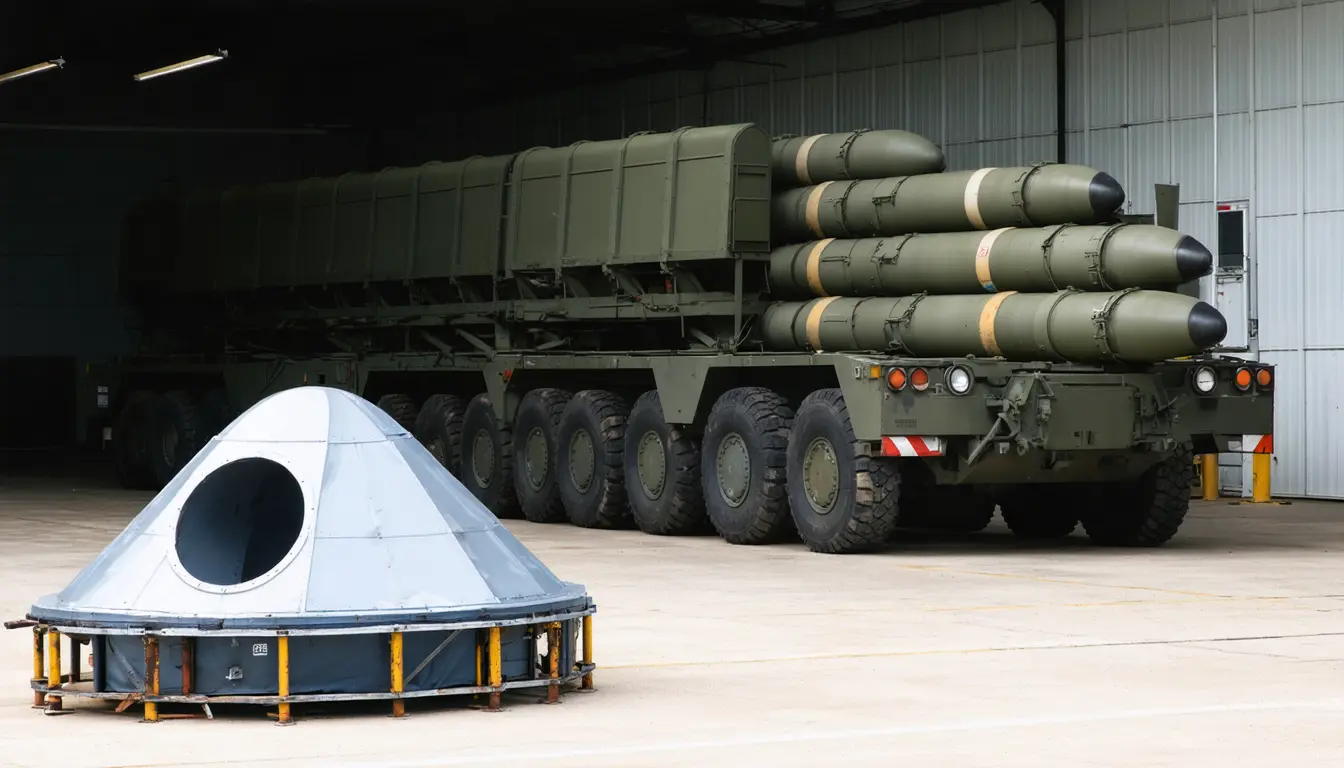
Lockheed Martin unveiled PAC-3 Edge, a Patriot-family interceptor it plans to test in 2027 and field in 2031, built on a new seeker. The design keeps the Army's existing launchers and battle-command system, so a crew would field new rounds inside hardware already in service.
The Product Desk
What happened
- Northrop Grumman is building a multi-pulse solid rocket motor that delivers thrust in stages so the missile can control its acceleration through flight.
- Lockheed also lists containerized launchers and HIMARS Flex among PAC-3 Edge's intended integration options, on top of the M903 launcher and battle-command system.
- PAC-3 Edge is Lockheed's entry in the Army's Future Interceptor competition, and the company has advanced to the program's next development stage.
Why it matters
- capability A Patriot unit could gain the new reach without replacing its launchers or command system, which lowers the cost and disruption of putting it in the field.
- cost The $250 million seeker facility is Lockheed's own spend against a competition it has not won, so the vendor, not the Army, is funding this stage of development.
- constraint The new seeker, controls and motor have not flown together, so the Army cannot verify the pitched capability until the 2027 flight test.
The part a Patriot crew should read first is the integration list. PAC-3 Edge is designed to fire from the M903 launcher and plug into the Integrated Battle Command System the Army already runs [11]. Lockheed also names containerized launchers and HIMARS Flex among the intended options [12]. If the schedule holds, the unit fielding this in 2031 loads a different round into launchers it already owns [3][8].
The pitch is reach and speed. Tim Cahill, who runs Lockheed Martin Missiles and Fire Control, said the interceptor builds on the PAC-3 MSE's established capabilities and offers greater maneuverability, power, and velocity [10]. The threat it names is weapons that travel at extreme speed and can change course in flight [14], at the longer ranges and higher altitudes the system is built to reach [1].
What is actually new sits in three places. The seeker was developed at Lockheed's Strigo Product Center, and the company has put $250 million into that facility to build it [5][6]. The control systems are upgraded to work at longer range and higher altitude [7]. The motor is new as well: Northrop Grumman is building a multi-pulse solid rocket motor that delivers thrust in stages so the missile keeps control over its acceleration in flight [9]. The airframe stays in the PAC-3 family [2][8].
That leaves an operator trusting three new subsystems to work together inside a launch chain that already works. The missile is still in development, and Lockheed says testing will show whether the new parts perform together and meet the Army's requirements [13]. The first test is set for 2027 and fielding for 2031, four years apart [3][15]. Future Interceptor is a competition, and Lockheed has only advanced to the next development stage [4].
The useful question for anyone handed an upgrade that reuses existing kit is how many genuinely new parts have to work together for the first time. Here it is three, the seeker, the controls, and the motor, and 2027 is when they first fly together [16][3].
What to watch
- The 2027 flight test, the first time the new seeker, upgraded controls and Northrop Grumman motor fly together.
- The Army's Future Interceptor decision on whether Lockheed's proposal beats competing designs.
- Whether the 2031 fielding date slips as integration with IBCS and HIMARS Flex is proven out.
Clarity's read
What the record supports and how the coverage leans. The claims behind it follow.
Reality
- Evidence35
- Adoption5
- Hype gap+30
- Incentives70
- Confidence40
Claim ledger
Ranked by verification strength, evidence, and original report placement.
- [1]
Lockheed Martin unveiled PAC-3 Edge, a missile interceptor designed to strengthen US Army defenses against hypersonic weapons and other advanced aerial threats, aiming to engage targets at greater ranges and altitudes than existing capabilities allow.
- [2]
PAC-3 Edge draws on technology from the combat-proven Patriot Advanced Capability-3 Missile Segment Enhancement (PAC-3 MSE).
- [3]
Lockheed Martin plans to begin testing PAC-3 Edge in 2027, with deployment targeted for 2031.
- [4]
PAC-3 Edge is part of the Army's Future Interceptor program, and Lockheed Martin has advanced to the program's next development stage as the Army evaluates potential solutions.
- [5]
The advanced seeker at the heart of PAC-3 Edge was developed at Lockheed Martin's Strigo Product Center.
- [6]
Lockheed Martin has invested $250 million in the Strigo facility to support seeker development.
- [7]
PAC-3 Edge incorporates upgraded control systems intended to improve performance across greater distances and at higher altitudes.
- [8]
The design retains a connection to the existing PAC-3 family, an approach the source says could let the Army strengthen defenses without abandoning technology and infrastructure already in use.
- [9]
Northrop Grumman is developing a multi-pulse solid rocket motor for the interceptor that can deliver thrust in multiple stages, helping maintain control over acceleration throughout flight.
- [10]
Lockheed Martin Missiles and Fire Control President Tim Cahill said the interceptor builds on the PAC-3 MSE's established capabilities, describing PAC-3 Edge as offering greater maneuverability, power, and velocity.
ReportedSupportedSource: Tim Cahill, President, Lockheed Martin Missiles and Fire ControlView cited source - [11]
PAC-3 Edge's planned integration options include the M903 launcher and the Integrated Battle Command System (IBCS).
- [12]
Lockheed Martin identifies containerized launchers and HIMARS Flex among PAC-3 Edge's intended integration options.
- [13]
The system remains in development, and Lockheed says testing will determine how its new components perform together and whether the interceptor meets the Army's operational requirements.
- [14]
Hypersonic weapons pose particular challenges because they travel at extreme speeds and can maneuver during flight.
- [15]
There are four years between PAC-3 Edge's first planned test and its targeted deployment.
- [16]
PAC-3 Edge introduces three new subsystems: the seeker, the upgraded control systems, and the Northrop Grumman motor.
Sources
1 independent publisher whose own reporting we read for this story.
- interestingengineering.comUS unveils PAC-3 Edge interceptor targeting hypersonic threats at higher altitudes
1 article · October 9, 2026
Topics and entities
Follow any of these and your For You feed starts watching them — no settings page required.