ScienceIndependently confirmed2 publishers2 min readPublished
NASA rides 12 student-designed heat-shield capsules down on a Cygnus packed with station waste
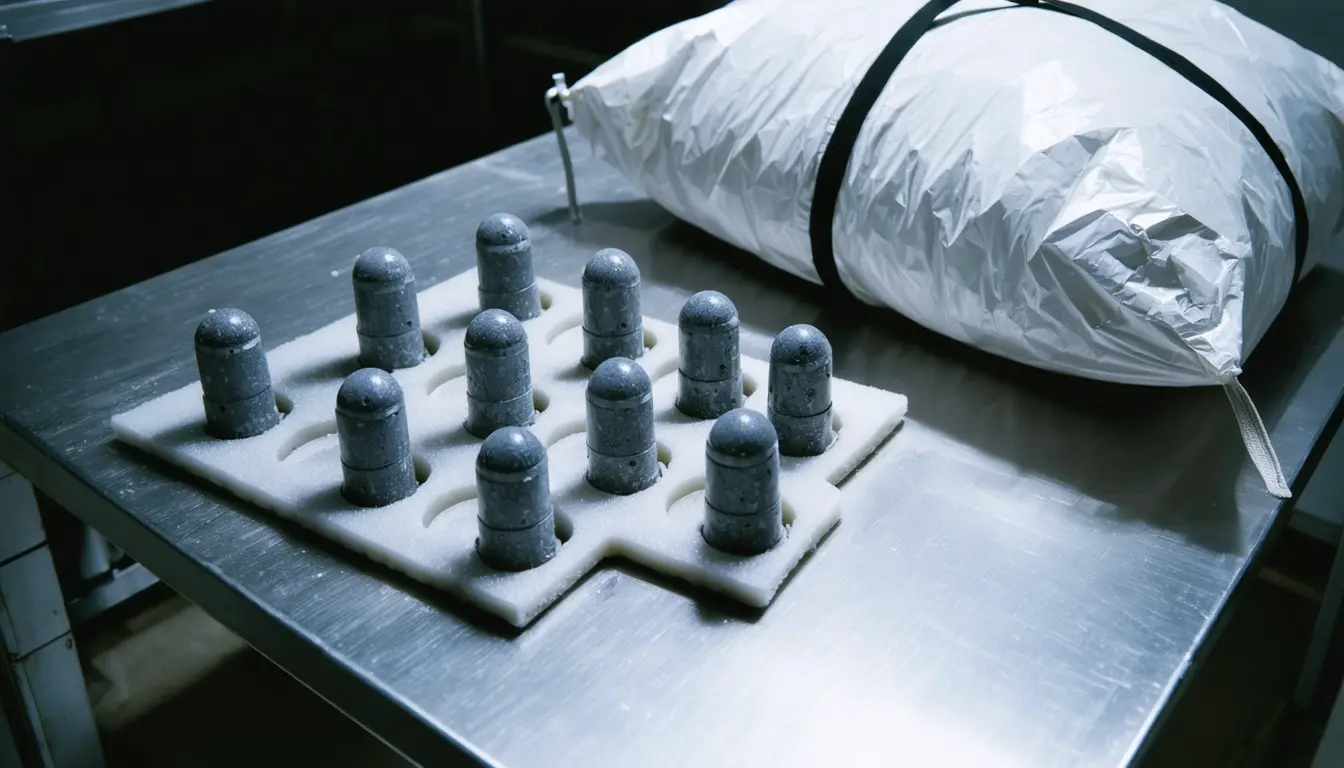
NASA sent 12 student-built heat-shield test capsules down with a trash-filled Cygnus XL cargo ship that breaks apart on its planned reentry. The capsules eject during the breakup, so Moon and Mars materials still in development get flight data without a launch of their own.
The Scientist · Science desk
What happened
- KREPE-3 is the third in a series of experiments that use the final moments of a cargo spacecraft's life to gather reentry data.
- Before the Cygnus XL left the station, astronauts packed it with waste and switched on capsules carrying sensors for temperature, pressure, motion, magnetic field and light.
- The work is a collaboration of the University of Kentucky, the state of Kentucky, NASA's EPSCoR program, several NASA centers and other federal and commercial partners.
- One capsule tests ADEPT, an umbrella-shaped deployable shield that at full scale could fold to deliver payloads larger than the rockets that launch them.
Compiled by The ScientistSomething wrong?How this is made
Why it matters
- capability Heat-shield teams can put a material through a real Earth reentry while it is still in development, on a ship that was being disposed of anyway.
- constraint MERINO is flying an Earth return, a different entry from the Mars landings it is meant for, where NASA says heat loads are lower, so its Mars case will still rest on models.
- cost NASA bills the KREPE flights as low-cost, but the release does not include a figure, so the saving over a dedicated test flight cannot be checked.
A Cygnus at the end of its station run enters the atmosphere and breaks apart on a planned route, whatever it carries [6]. Put small instrumented capsules inside and the reentry becomes the experiment. The capsules only have to eject during the breakup and send what their sensors recorded over satellite links [6]. "We're essentially hitching a ride on a vehicle that's already coming back to Earth," said Keith Peterson, a materials engineer at NASA's Ames Research Center [8].
The first question is the denominator. NASA's release gives a capsule count for five of the 12 [1][16]: two flying Ames's MERINO felts, a dual-cone capsule, one shaped like the Dragonfly aeroshell and one carrying the ADEPT deployable shield [10][12][13][14]. MERINO is layers of carbon and phenolic fibers stitched together like felt, and it is the most replicated new material on that list. Counting the aft cone of the dual-cone design, it appears on three capsules, all riding the same reentry [10][12][15]. The dual-cone capsule is there to check computer models against real-world data [12], and a sample this size suits that job. I would treat the results as development data, a step before qualifying anything for crew. Peterson put it in similar terms: "It's a smart way to get flight data on materials that are still in development" [7].
The manifest also includes materials with a flight record. Among the proven technology on board is the ceramic tile used on the space shuttle [9]. The Dragonfly-shaped capsule, which tests the shape's dynamic stability, is covered in Phenolic Impregnated Carbon Ablator, an Ames material that flew on Stardust, Mars Science Laboratory and Mars 2020 [13]. I think those are the closest thing KREPE-3 has to a control. Readings from the new 3D-printed shield, developed at NASA Johnson and Oak Ridge National Laboratory, will be easier to interpret next to a known material that went through the same breakup [9].
The release was written before any data came down. In it, the capsules "will eject" and satellite signals will transfer live data to researchers [6].
Students at the University of Kentucky designed the capsules [5]. "We are supporting the next generation of scientists and engineers as they develop unique projects that benefit their education and NASA's mission goals," said David Berger, EPSCoR program manager at NASA's Headquarters in Washington [4].
What to watch
- Whether all 12 capsules eject and return data over satellite links during the Cygnus XL breakup.
- Published comparisons between the dual-cone capsule's flight measurements and the computer models it was built to check.
- Whether MERINO or the 3D-printed shield moves from a KREPE ride to a dedicated flight test aimed at Mars or crew return.
Clarity's read
What the record supports and how the coverage leans. The claims behind it follow.
Reality
- Evidence55
- Adoption25
- Hype gap+15
- Incentives60
- Confidence60
Claim ledger
Ranked by verification strength, evidence, and original report placement.
- [1]
NASA is testing heat shields for astronauts returning from Moon and Mars missions; when Northrop Grumman's 24th cargo resupply mission undocked from the International Space Station it carried 12 small experimental capsules designed to test next-generation thermal protection materials.
- [2]
The Kentucky Reentry Probe Experiment (KREPE-3) is the third in a series of low-cost, high-impact missions that use the final moments of the cargo spacecraft's lifespan to gather data.
- [3]
KREPE-3 is a collaboration among the University of Kentucky, the state of Kentucky, NASA's Established Program to Stimulate Competitive Research (EPSCoR), several NASA centers, and other federal and commercial partners.
- [4]
"We are supporting the next generation of scientists and engineers as they develop unique projects that benefit their education and NASA's mission goals," said David Berger, EPSCoR program manager at NASA's Headquarters in Washington.
ReportedSupportedSource: David Berger, NASA EPSCoR, quoted in NASA release2 sources— create a free account to open themView cited source - [5]
Before the Cygnus XL departed the station, astronauts packed it with waste and activated the 12 capsules, which were designed by University of Kentucky students and include sensors measuring temperature, pressure, motion, magnetic field and light during reentry.
- [6]
As the vehicle breaks apart in Earth's atmosphere on its planned route, the capsules will eject and begin collecting data on how each set of experimental heat shield materials performs; satellite signals will transfer live data to researchers.
- [7]
"It's a smart way to get flight data on materials that are still in development," said Keith Peterson, a materials engineer at NASA's Ames Research Center.
ReportedSupportedSource: Keith Peterson, NASA Ames, quoted in NASA release2 sources— create a free account to open themView cited source - [8]
"We're essentially hitching a ride on a vehicle that's already coming back to Earth," said Keith Peterson, a materials engineer at NASA's Ames Research Center.
ReportedSupportedSource: Keith Peterson, NASA Ames, quoted in NASA release2 sources— create a free account to open themView cited source - [9]
The capsules carry proven technology such as the ceramic tile material used on the space shuttle, and new options such as a 3D-printed heat shield from the Additive Manufacturing of Thermal Protective Systems project developed at NASA Johnson and Oak Ridge National Laboratory.
- [10]
NASA Ames contributes two capsules flying MERINO, layers of carbon and phenolic fibers stitched together like felt, which NASA says are more flexible, faster to produce and less expensive than traditional protective materials, making them promising candidates for Mars missions.
- [11]
Because of Mars' thinner atmosphere, missions to land on Mars involve lower heat loads and allow for lighter protection.
- [12]
A third capsule, the Kentucky Instrumented Conical Hypersonic Experiment, uses a dual-cone shape: a tungsten tip on a cone layered with carbon and heat-resistant plastic fibers, and an aft cone wrapped in MERINO; the design will validate computer models against real-world data.
- [13]
Another capsule is shaped like the aeroshell for NASA's Dragonfly mission to Titan and will test the design's dynamic stability; it is covered in Phenolic Impregnated Carbon Ablator, an Ames-developed material that flew on Stardust, Mars Science Laboratory and Mars 2020.
- [14]
One capsule will test Adaptable Deployable Entry and Placement Technology, an umbrella-shaped deployable heat shield that at full scale could be folded, suiting payloads larger than the rockets that launch them.
- [15]
MERINO appears on three capsules as described: two dedicated capsules plus the aft cone of the dual-cone capsule.
- [16]
The release gives an explicit capsule count for five of the 12 capsules.
Sources
2 independent publishers whose own reporting we read for this story.
- interestingengineering.comNASA tests 12 next-gen heat shields aboard trash-filled spacecraft for Mars missions
1 article · October 9, 2026
- nasa.govNASA Demonstrates Next-Generation Heat Shield Technologies
1 article · October 9, 2026
Topics and entities
Follow any of these and your For You feed starts watching them — no settings page required.
Entities
- Cygnus XLFollow
- University of KentuckyFollow
- NASA EPSCoRFollow
- University of StuttgartFollow
- Adaptable Deployable Entry and Placement TechnologyFollow
- Kentucky Reentry Probe ExperimentFollow
- International Space StationFollow
- NASAFollow
- Keith PetersonFollow
- Oak Ridge National LaboratoryFollow
- NASA Ames Research CenterFollow
- Northrop GrummanFollow
- MERINOFollow
- DragonflyFollow
- Phenolic Impregnated Carbon AblatorFollow
- David BergerFollow