ScienceNot yet confirmed elsewhere1 publisher3 min readPublished
Genes and mating calls set Lantau's endangered horned toads apart in a 19-animal Lingnan study
Lingnan University researchers found that Lantau's endangered short-legged horned toads form their own genetic group, in a study of 19 animals. The team wants the island population managed as a separate conservation unit, while saying the evidence cannot yet establish a new species.
The Scientist · Science desk
What happened
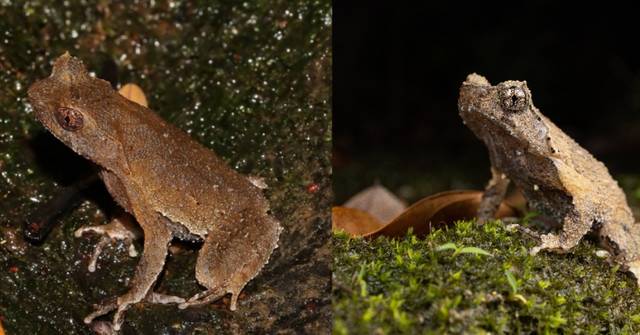
- In appearance the Lantau toads showed no marked differences from the others, so physical traits alone may not distinguish them.
- The 19 samples split nine from Lantau, six from Hong Kong Island and four from Kowloon.
- First author Sung Yik-hei said Lantau was cut off from the mainland about 10,000 years ago, which likely reduced gene flow between populations.
Why it matters
- constraint Because Lantau toads look like the rest, a survey by eye cannot sort them into the proposed unit. Tracking them separately would take DNA samples or call recordings.
- exposure According to the authors, a decline on Lantau could not be made good from Hong Kong Island or Kowloon stock, since the island's genetic traits cannot be replaced from other populations.
- decision Any change to Hong Kong's priorities for this toad would rest on the conservation-unit argument alone, because the authors say current evidence cannot establish a separate species.
- capability Pairing genetic and acoustic data gives surveyors a way to detect hidden divergence in look-alike amphibians, which morphology-only checks would miss.
Nine animals carry the Lantau side of the comparison [6]. The other ten samples came from Hong Kong Island and Kowloon [15]. The genetic analysis also set Lantau apart from Shenzhen toads [7]. None of the 19 listed samples came from Shenzhen, though, or from the New Territories, where the species also lives in mountain streams [16][5].
The design used three kinds of evidence. The team examined genetic and morphological traits in the samples [6] and recorded males calling on Lantau, Hong Kong Island and Kowloon [8]. Two of the three separated Lantau. Its toads form their own genetic group, which the team takes as a sign that the population has been apart for a considerable period [7]. Lantau males call faster, with shorter notes, and the researchers describe the difference as significant [8]. The published summary does not give the number of recordings, the size of the call differences or the genetic markers used.
The third line came back flat. In appearance, the Lantau toads showed no marked differences from the others [9]. Jonathan Fong, the corresponding author, said that is why the team combined methods. "Many amphibians look very similar, making evolutionary differences difficult to detect through traditional methods that examine morphology alone. By integrating genetic and acoustic data, we found that frogs on Lantau Island have a distinct genetic makeup and male toads have different mating calls. This suggests that the Lantau population is following a distinct evolutionary trajectory," he said [10].
On cause, the account is measured. Sung Yik-hei, the first author, said Lantau was cut off from the mainland about 10,000 years ago, and that the isolation likely reduced gene flow between populations [11]. The team offers geographic isolation as the likely contributor to the island's distinct traits [3]. That fits the genetic pattern. As reported, it is an explanation for the divergence and has not been shown to cause it.
Sung was also plain about how far the speciation reading goes. "The results suggest that the short-legged horned toad population on Lantau Island may represent an early stage of speciation, although current evidence is insufficient to determine whether the Lantau population constitutes a distinct species," he said [12].
So the management proposal does not depend on a new species name. It rests on the argument that the Lantau toads cannot be replaced. If the Lantau population declines or dies out, Sung said, "its unique genetic traits could be lost and could not be replaced by populations from other areas" [13]. "We therefore propose that conservation management recognize the Lantau population as an independent conservation unit, giving due consideration to its specific conservation needs to ensure the survival of this unique native population," he said [14].
I think the case for treating Lantau separately is reasonable on this evidence. Two independent kinds of data point the same way: DNA, and a behaviour that matters for mating. The condition is the sample. Nine Lantau animals is a small base. I would want the split to hold with more island animals, and with the unsampled New Territories populations, before calling it settled.
The species is endangered on the IUCN Red List and is the only known small frog in Hong Kong in the genus Boulenophrys [1]. The authors say the work suggests the territory may hold biodiversity not yet described [17]. The paper appears in Current Herpetology [4].
What to watch
- Whether Hong Kong's conservation authorities respond to the proposal to manage the Lantau toads as an independent conservation unit.
- Sampling of New Territories and Shenzhen animals, neither of which was among the 19 listed samples, to see whether the Lantau split holds.
- Further work testing whether the Lantau population constitutes a distinct species, which the authors say current evidence cannot settle.
Clarity's read
What the record supports and how the coverage leans. The claims behind it follow.
Reality
- Evidence55
- Adoption
- Insufficient
- Hype gap+15
- Incentives
- Insufficient
- Confidence50
Claim ledger
Ranked by verification strength, evidence, and original report placement.
- [1]
The short-legged horned toad (Boulenophrys brachykolos) is listed as endangered on the IUCN Red List and is the only known small frog species in Hong Kong belonging to the genus Boulenophrys of the family Megophryidae.
- [2]
A study led by the Division of Science at Lingnan University found the Lantau Island population of the short-legged horned toad shows clear genetic divergence from other local populations and differences in male mating calls.
- [3]
The research team suggests the Lantau population represents an early stage of speciation, says geographic isolation of Lantau from other landmasses likely contributed to its unique traits, and recommends treating it as a separate conservation unit.
- [4]
The findings were published in the journal Current Herpetology.
- [5]
The short-legged horned toad is found in mountain streams on Lantau Island, Hong Kong Island, Kowloon, the New Territories and adjacent Shenzhen.
- [6]
The team collected 19 samples (nine from Lantau Island, six from Hong Kong Island and four from Kowloon) to examine genetic and morphological characteristics.
- [7]
Lantau short-legged horned toads form a distinct genetic group separate from those on Hong Kong Island, Kowloon and Shenzhen, suggesting the Lantau population has been separated for a considerable period.
- [8]
The team recorded male mating calls from Lantau, Hong Kong Island and Kowloon and found significant differences; the Lantau population produces calls with a faster rhythm and shorter individual notes.
- [9]
The team found no marked differences in physical appearance between Lantau frogs and those from other regions, indicating physical characteristics alone may be insufficient to distinguish the Lantau population.
- [10]
"Many amphibians look very similar, making evolutionary differences difficult to detect through traditional methods that examine morphology alone. By integrating genetic and acoustic data, we found that frogs on Lantau Island have a distinct genetic makeup and male toads have different mating calls. This suggests that the Lantau population is following a distinct evolutionary trajectory."
- [11]
Sung Yik-hei, first author, said Lantau Island became geographically isolated from the mainland approximately 10,000 years ago and that the isolation likely reduced gene flow between populations.
- [12]
"The results suggest that the short-legged horned toad population on Lantau Island may represent an early stage of speciation, although current evidence is insufficient to determine whether the Lantau population constitutes a distinct species."
- [13]
"The short-legged horned toad is an endangered species, and if the Lantau population declines or becomes extinct, its unique genetic traits could be lost and could not be replaced by populations from other areas."
- [14]
"We therefore propose that conservation management recognize the Lantau population as an independent conservation unit, giving due consideration to its specific conservation needs to ensure the survival of this unique native population."
- [15]
Ten of the 19 samples came from outside Lantau (Hong Kong Island and Kowloon).
- [16]
The 19 listed samples covered three of the five areas where the species is reported; none came from the New Territories or Shenzhen.
- [17]
The study highlights that Hong Kong may harbor undiscovered biodiversity.
Sources
1 independent publisher whose own reporting we read for this story.
- phys.orgEndangered Lantau toads show genetic and call differences that could signal an emerging species
1 article · October 6, 2026
Topics and entities
Follow any of these and your For You feed starts watching them — no settings page required.
Topics
- Hong Kong biodiversityFollow
- Speciation and population geneticsFollow
- Amphibian conservationFollow