Science1 publisher2 min readPublished
Camera-trap photos place a male jaguar in the corridor between Guatemala and Honduras
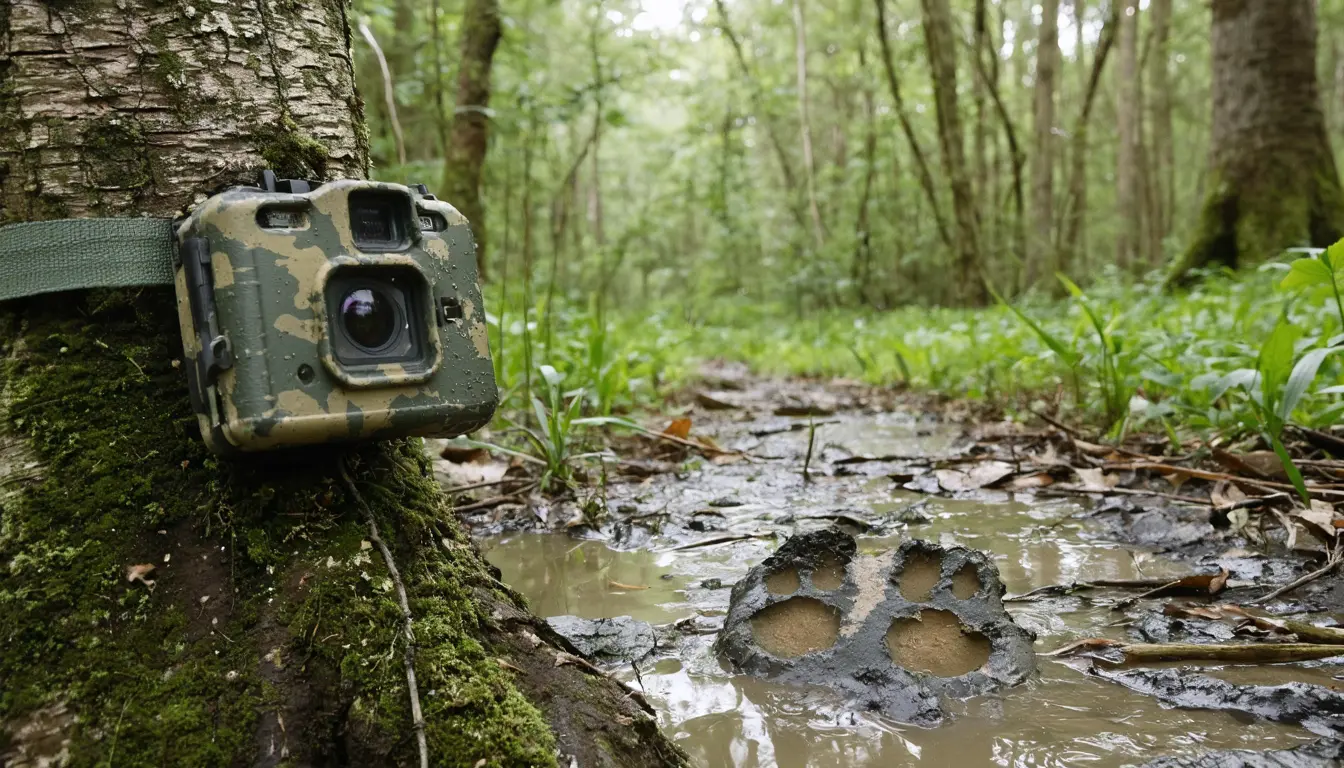
Camera-trap photos of a male jaguar show the corridor linking Guatemala and Honduras is still in use, a kind of image Panthera says comes once a decade. One animal at one site confirms presence, but it cannot show that protection kept the route open.
The Scientist · Science desk
Drafted by a language model from the sources cited here and checked against its claim ledger before publication. How we use AISend a correction
What happened
- A statement to Popular Science says the images prove the pathway still links jaguar populations despite people moving into their habitat.
- The Bi-National Corridor runs through the border region and joins core jaguar populations in Mexico, Belize and Guatemala to those in central and eastern Honduras.
- Jaguar populations in Guatemala and Honduras are each classified as Endangered within their own range.
- The corridor area is also the water source for more than 200,000 people and is home to several Critically Endangered species.
Compiled by The ScientistSomething wrong?How this is made
Why it matters
- constraint Until monitoring yields enough detections to compare across years or between protected and unprotected ground, claims that corridor protection works will rest on rare single sightings.
- exposure If the corridor breaks, the Guatemalan and Honduran populations would face isolation and inbreeding separately, with no exchange of animals between them.
- decision Planners of Guatemala's national jaguar strategy get a fresh argument for protecting the corridor, but they still need counts and movement records to set targets against.
A camera trap records one thing well: an animal stood in front of the lens at a given moment. The photographs of the male jaguar establish that for the Guatemalan side of the corridor [1]. Allison Devlin and Franklin Castañeda, directors at the wild cat conservation group Panthera, draw more from it. "The camera trap images of the jaguars in both Honduras and Guatemala give us hope," they told Popular Science [3].
A sighting like this, they said, "brings so much motivation and hope to the teams on the ground (rangers) and in the office (techs and directors), proving that our efforts to keep connectivity are paying off, jaguars are indeed still moving across this land, and every action taken to protect this corridor has been worth it" [5].
That sentence holds several claims, and the evidence supports them unevenly. Presence is what the photograph shows. Movement across the land goes a step further, because one image fixes a location and records no path. Linking populations, the claim in the statement to Popular Science [2], would take evidence of animals passing between the groups at either end of the corridor. The report does not say how many cameras ran, over what period, or whether one individual was photographed in both countries.
The claim that conservation is paying off is the hardest to test. It needs a comparison. That could be detection rates before and after protection began, or protected stretches set against unprotected ones. Devlin and Castañeda describe camera-trap shots of jaguars as a "luxury treat" that occurs once every decade [4]. At that rate there is no series to compare. The years without a photograph would have looked the same whether jaguars were passing through or not.
The species-wide rating blends very different populations. The IUCN Red List classes the jaguar as Near Threatened, but an estimated 89 percent of jaguars belong to the Amazonian subpopulation, which is rated Least Concern [8]. The other 33 populations are Endangered or Critically Endangered [9]. Take away the Amazonian share and those 33 hold roughly 11 percent of all jaguars [1]. For them, connection to neighbouring populations is a defence against isolation, inbreeding and a higher risk of extinction [7].
Popular Science reports that the snapshot makes Guatemala's National Jaguar Conservation Strategy more pressing [12]. I think the photograph is good news for the rangers and a fair reason to keep the corridor protected. As a test of whether protection put the jaguar there, it is one detection of one animal with no comparison group [1][4].
What to watch
- Whether Panthera reports that the same individual jaguar was photographed on both the Guatemalan and Honduran sides, which would be direct evidence of cross-border movement.
- Detection rates across years, or between protected and unprotected stretches of the Bi-National Corridor, the comparison needed to test whether conservation changed jaguar use.
- How Guatemala's National Jaguar Conservation Strategy treats the Bi-National Corridor in its protections.