Science1 publisher3 min readPublished
Aquarium of the Pacific counts 1,000 mountain yellow-legged frogs released since the 2020 Bobcat Fire
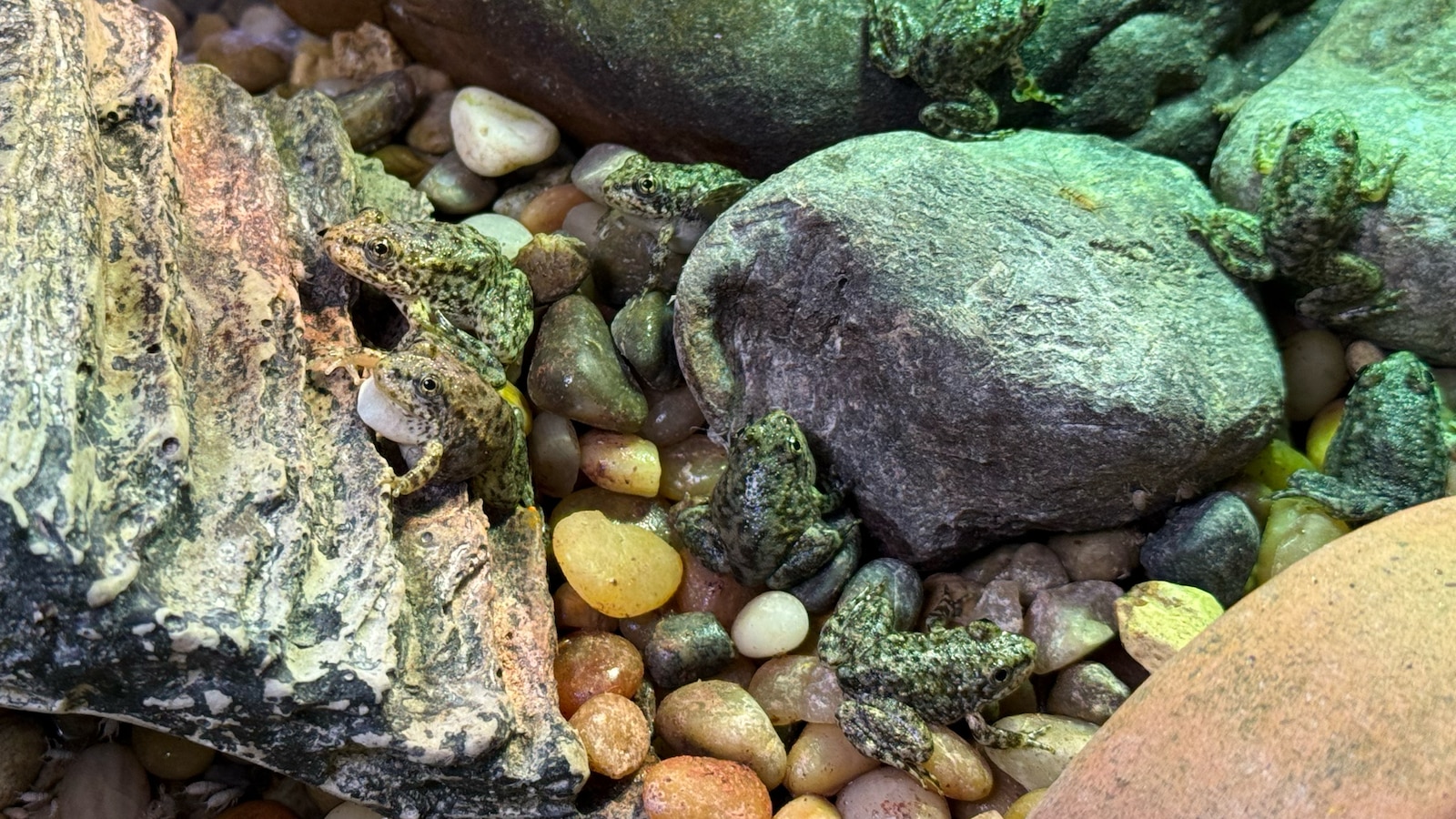
Aquarium of the Pacific has released 1,000 mountain yellow-legged frogs since 2020, after the species' wild count fell below 200. The count tracks frogs put into streams, so the recovery it points to still has to show up as survival and breeding in the wild.
The Scientist · Science desk
What happened
- More than 650 frogs were released in August, and nearly 400 of them were raised at the aquarium's Long Beach nursery.
- The Bobcat Fire in fall 2020 destroyed about 95% of the frog's habitat, and later rain turned burn areas into mudslides.
- The Los Angeles and San Diego zoos breed the tadpoles, and the aquarium raises them through metamorphosis until they are ready for release.
- About 60 to 65% of the aquarium's tadpoles survive to have four legs and no tail, the stage at which they can be released.
Compiled by The ScientistSomething wrong?How this is made
Why it matters
- exposure Released frogs stay susceptible to chytrid fungus, so a strong nursery survival rate says little about how they will fare in streams where the fungus is present.
- decision Trout removal is the one measure the report links to wild recovery, so where frogs are released may matter as much as how many.
- capability At the nursery's survival rate, a shipment of about 500 zoo-bred tadpoles can be planned as roughly 300 frogs for release.
Put the two figures side by side and the program looks large. The aquarium's 1,000 released frogs are more than five times the fewer than 200 left in the wild by 2021 [1][2][1]. A frog enters that tally when it leaves its container, though. The report does not say how many released frogs are still alive, how many have bred, or what the wild count is now.
The count also spans more than one nursery. August's figures imply that roughly 250 of that month's frogs were raised somewhere other than the aquarium [2].
The one survival rate in the account comes from inside the nursery. About 60 to 65% of tadpoles reach release stage, a rate Erin Lundy, the aquarium's conservation initiatives manager, called high [9][18]. Apply it to the nearly 500 tadpoles that recently arrived from the San Diego Zoo [8] and you get about 300 to 325 frogs ready to go out [3]. Those tadpoles are raised as two groups. San Jacinto Mountains stock is kept apart from San Bernardino Mountains stock because of slight genetic differences [13].
Much of the care is aimed at the day after release. Tadpoles are fed four to five times a day from plates spread with spirulina, fish food and calcium, so they graze the way they would on algae-covered rocks [12]. Staff vary the water flow in the tanks so juveniles build strong limbs and get used to different conditions. They also add beetles to the crickets and fruit flies to get closer to a wild diet [14].
Lundy used to doubt it would be enough. "I was like, 'There's no way you guys have any idea,'" she said. "The good news is, I don't always think frogs think that hard." [15] At one release she watched a frog jump from its container onto a rock and immediately eat a housefly, prey it had never seen [16]. That is one frog on one day.
The released frogs return to the threats that were there before the fire. Nonnative trout, stocked for recreational fishing since the late 1800s, eat the tadpoles. Where the trout were removed, frog populations began to recover [10]. The frogs are also susceptible to chytrid fungus. It has caused the decline or extinction of hundreds of amphibian species worldwide [11]. In my view the release totals will mean most in streams cleared of trout, because trout removal is the only intervention the report ties to wild recovery [10].
Captive rearing and breeding under the U.S. Fish and Wildlife Service began in the early 2000s [4]. "Although they're pretty slow growers, given the right conditions, frogs are pretty successful, so my hope is that we can get them back," Lundy said [6].
What to watch
- Post-release monitoring counts showing how many of the 1,000 frogs survive and breed in the wild.
- A new wild population estimate that can be compared with the fewer than 200 frogs counted by 2021.
- Whether release sites are streams where nonnative trout have been removed.