ScienceNot yet confirmed elsewhere1 publisher2 min readPublished
Indonesia releases eight orangutans rescued from Borneo fires into a protected reserve
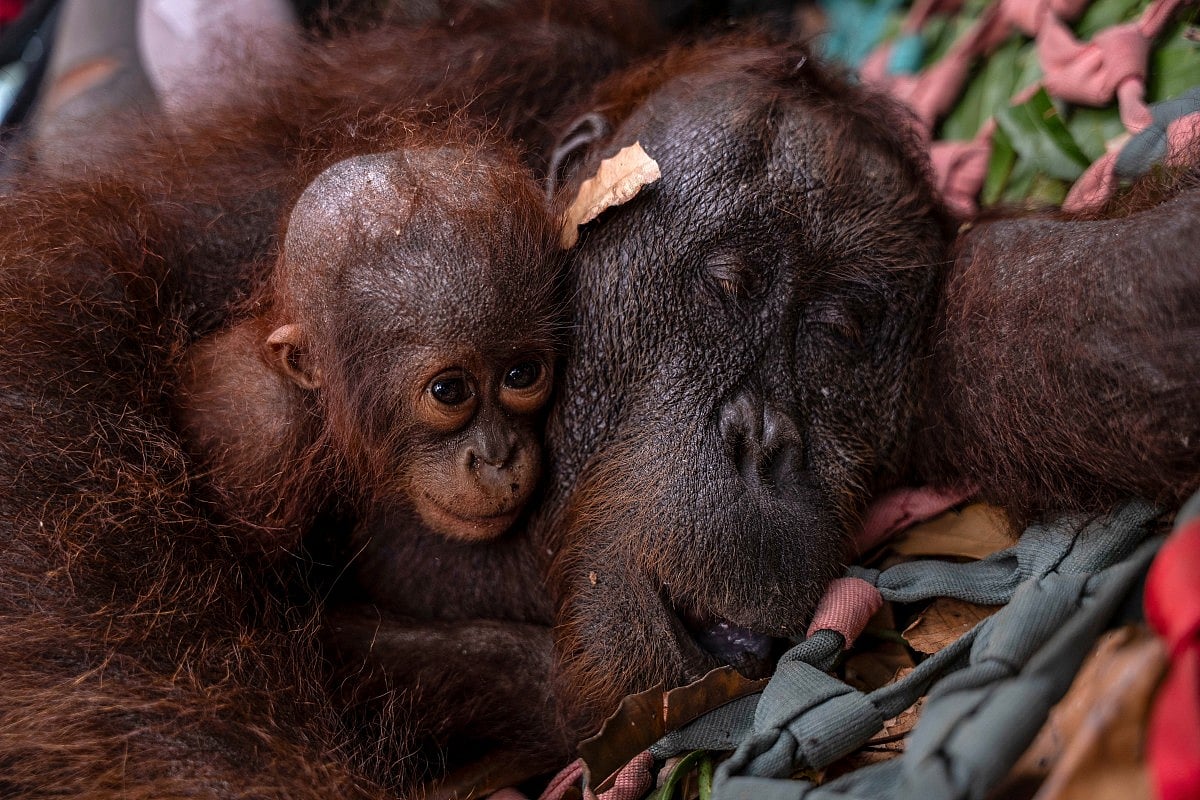
Indonesian authorities and the YIARI foundation released eight orangutans into a protected forest in West Kalimantan after rescuing them from fires on Borneo. Rescuers call the relocation a necessary step once a habitat is no longer safe.
The Scientist · Science desk
A before-and-after figure: orangutans across Borneo and Sumatra numbered more than 230,000 a century ago and about 104,000 now, a decrease.
| Measure | Value | As of | Claim |
|---|---|---|---|
| A century ago | 230,000 orangutans | a century ago | 8 |
| Now | 104,000 orangutans | 8 |
What happened
- The eight were three mother-and-baby pairs and two male teenagers, relocated on Oct 9 to Batu Nyambu, a 23,000-hectare reserve of primary and secondary forest in West Kalimantan.
- Rescue teams took the apes from several sites razed by fire last month, mostly plantations next to their forest homes in West Kalimantan province.
- Rescuers said they chose the reserve for its food and water and its connections to other forests, so the apes are not simply moved on.
- Indonesia fights dry-season wildfires most years, but 2026's are worse because of an El Nino forecast to rank among the strongest in four decades of comparable records.
- The fires produced tens of thousands of respiratory illnesses locally and pushed air-pollution spikes into Singapore and Malaysia.
Why it matters
- constraint A relocation only helps if the apes can survive where they land, so the work turns on finding forest that can hold them rather than on getting them out.
- exposure The IUCN warned fires were burning in habitats holding 52 percent of Borneo's orangutans, so the population exposed to this season far outnumbers the few dozen rescue teams reached.
- precedent With slash-and-burn clearing having stripped the landscape of its natural fire resistance, severe fire seasons and the rescues they force are likely to recur.
Karmele Llano Sanchez, who runs the YIARI rehabilitation foundation, framed the release as a fallback. "Protection of habitats will always be a top priority to ensure orangutans continue to have safe forests to live in, but as long as their habitat remains threatened, rescue is one of the best options we can take to help them survive," she said. [5] On the rescuers' own account, rescue is the fallback, not the plan.
Argitoe Ranting, YIARI's operational director, said the goal is survival in the wild. "We want to ensure that rescued orangutans are not simply moved from one place to another, but actually have a chance to survive in their natural habitat," he said. [6]
The pace is set by the fire season. Rescue teams took in 46 orangutans between August and Oct 9. [7] Eight of them went to Batu Nyambu on the last of those days; the statements do not say where the other 38 are. [13] On this evidence the tempo tracks the fires, so whether relocation hardens into a permanent program depends on whether the fire seasons keep coming.
Set against the wild population, those are small numbers. The WWF puts the orangutans of Borneo and Sumatra at about 104,000, down from more than 230,000 a century ago. [8] Fewer than half of the earlier count survives. [14]
What to watch
- Whether YIARI reports the fate of the other 38 orangutans rescued but not in this release.
- Whether the El Nino fire season eases or keeps pushing apes out of fire-hit habitat.
- Whether habitat protection, which rescuers call the priority, gains ground against plantation burning.
Clarity's read
What the record supports and how the coverage leans. The claims behind it follow.
Reality
- Evidence50
- Adoption
- Insufficient
- Hype gap0
- Incentives35
- Confidence65
Perspective Coverage
4 publishers- Builder
- Builder 10%
- Operator
- Operator 69%
- Investor
- Investor 21%
Claim ledger
Ranked by verification strength, evidence, and original report placement.
- [1]
Eight orangutans rescued from fires on Borneo have been released into a protected forest, Indonesian authorities and the YIARI wildlife rehabilitation foundation said.
- [2]
The orangutans were saved from several locations razed by fires last month, mostly plantations near their forest homes, in West Kalimantan province.
- [3]
The eight, three mother-and-baby pairs and two male teenagers, were relocated on Oct 9 to the Batu Nyambu Protected Forest, a 23,000-hectare reserve with primary and secondary forest cover.
- [4]
YIARI operational director Argitoe Ranting said the reserve was chosen for the availability of food and water sources and its connectivity to other forests.
ReportedSupportedSource: Argitoe Ranting, YIARI operational director2 sources— create a free account to open themView cited source - [5]
Protection of habitats will always be a top priority to ensure orangutans continue to have safe forests to live in, but as long as their habitat remains threatened, rescue is one of the best options we can take to help them survive.
ReportedSupportedSource: Karmele Llano Sanchez, YIARI CEO2 sources— create a free account to open themView cited source - [6]
We want to ensure that rescued orangutans are not simply moved from one place to another, but actually have a chance to survive in their natural habitat.
ReportedSupportedSource: Argitoe Ranting, YIARI operational director2 sources— create a free account to open themView cited source - [7]
Indonesian authorities and YIARI rescued 46 orangutans from threats of fires between August and Oct 9, local natural resources agency head Murlan Dameria Pane said.
ReportedSupportedSource: Murlan Dameria Pane, local natural resources agency head2 sources— create a free account to open themView cited source - [8]
Around 104,000 orangutans remain in Borneo and Sumatra, down from more than 230,000 a century ago, according to WWF, which lists them as critically endangered.
- [9]
The IUCN warned in September that fires were burning in habitats containing 52 percent of Borneo's orangutan population.
ReportedSupportedSource: International Union for Conservation of Nature2 sources— create a free account to open themView cited source - [10]
Indonesia regularly battles dry-season wildfires, but they intensified in 2026 because of an El Nino set to be one of the strongest since comparable records began four decades ago.
- [11]
The fires created severe haze locally, with tens of thousands of cases of respiratory illnesses, and caused regional air pollution spikes in Singapore and Malaysia.
- [12]
Sanchez said relocating the animals to a new location was a necessary step when their habitat was no longer safe.
ReportedSupportedSource: Karmele Llano Sanchez, YIARI CEO2 sources— create a free account to open themView cited source - [13]
Of the 46 orangutans rescued, 38 were not part of this release of eight.
- [14]
The current population of about 104,000 is fewer than half the more than 230,000 counted a century ago.
- [15]
Experts have pointed to slash-and-burn land-clearing practices that have changed the naturally fire-resistant landscape.
Sources
1 independent publisher whose own reporting we read for this story.
- Indonesia releases eight orangutans rescued from fires to protected forest | AFP.com
afp.com
1 article · October 10, 2026
- gulfnews.comEight Orangutans Rescued from Indonesia Fires Find New Home in Protected Forest
1 article · October 10, 2026
- phys.orgIndonesia releases eight orangutans rescued from fires to protected forest
1 article · October 11, 2026
- straitstimes.comIndonesia releases rescued orangutans to protected forest
1 article · October 10, 2026
Topics and entities
Follow any of these and your For You feed starts watching them — no settings page required.