ScienceNot yet confirmed elsewhere1 publisher2 min readPublished
Florida Tech finds Banana River oxygen runs 10 to 15 percent lower at the riverbed than above it
Florida Tech researchers sampling 80 sites on the Banana River floor found oxygen 10 to 15 percent lower there than near the surface or at mid-depth. They tie that bottom layer to the release of phosphorus that feeds algal blooms, though the size of that release is still unmeasured.
The Scientist · Science desk
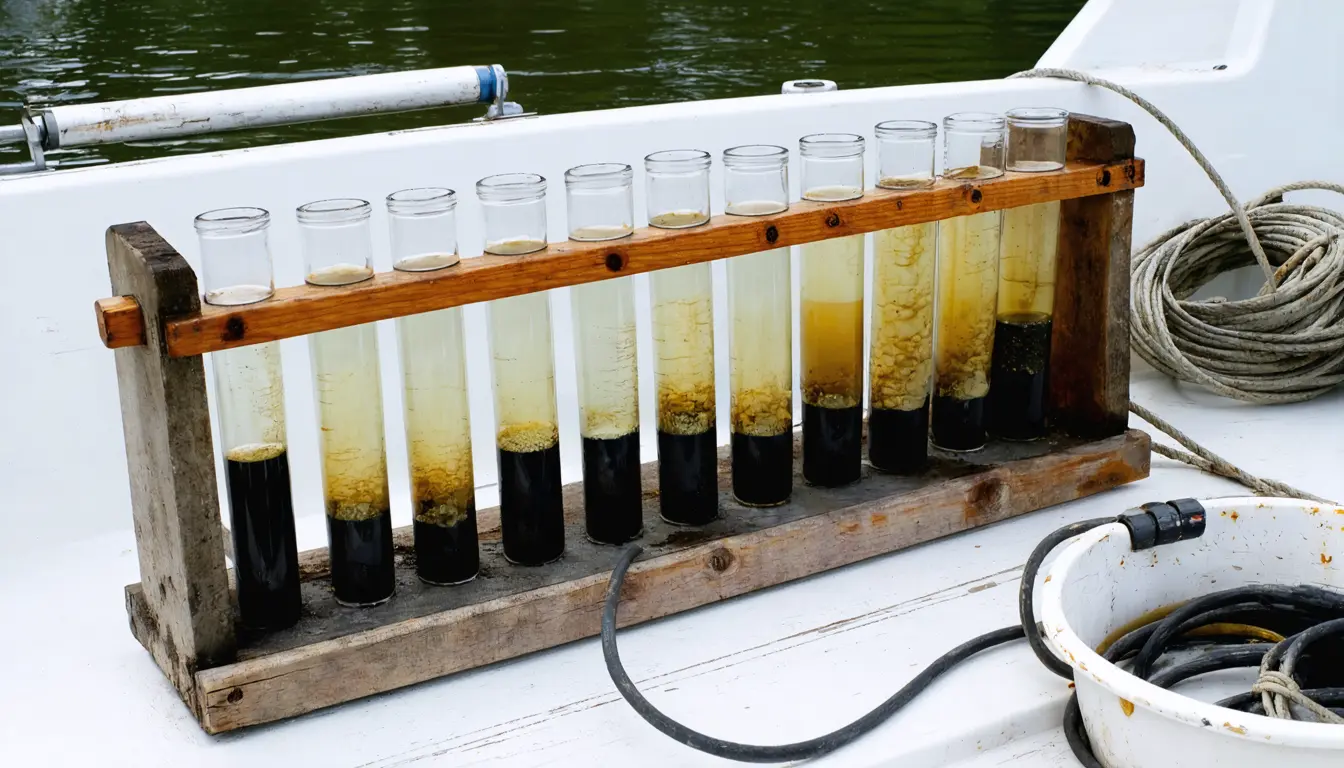
Clams, shrimp and worms: low oxygen is restricted to the very bottom layer they dig in. Typical sensors: they measure near the surface or mid-depth; bottom oxygen is 10%-15% lower. Seabed around muck: deposits contribute to hypoxia as much as 500 meters beyond their footprint.
- exposure Clams, shrimp and worms Low oxygen is restricted to the very bottom layer where they dig; fish swimming above may not notice, claim 6
- constraint Typical monitoring sensors They measure near the surface or at mid-depth; oxygen at the sediment-water interface is 10%-15% lower, claim 5
- exposure Seabed around muck deposits Muck deposits contribute to hypoxia as much as 500 meters away from their physical footprint, claim 7
| Who | How | Kind | Claim |
|---|---|---|---|
| Clams, shrimp and worms | Low oxygen is restricted to the very bottom layer where they dig; fish swimming above may not notice | exposure | 6 |
| Typical monitoring sensors | They measure near the surface or at mid-depth; oxygen at the sediment-water interface is 10%-15% lower | constraint | 5 |
| Seabed around muck deposits | Muck deposits contribute to hypoxia as much as 500 meters away from their physical footprint | exposure | 7 |
What happened
- At least one sensor somewhere in the lagoon was recording hypoxic conditions 90 percent of the time, according to the team's data.
- Deposits of muck, the region's fine, organic-rich sediment, were linked to hypoxia as far as 500 metres beyond their physical footprint.
- Low oxygen kills the bottom dwellers and bacteria that keep sediment oxygenated, letting buried phosphorus return to the water and feed algal blooms.
- Florida Tech says the paper, published in August in Frontiers in Marine Science, is the first to show internal nutrient loading in the estuary.
Why it matters
- constraint Water-quality programs that sample near the surface or at mid-depth will log better oxygen than burrowing animals get, so their records understate bottom-water hypoxia in the Banana River.
- decision Restoration work sized to where muck sits would leave out seabed the muck starves of oxygen, so drawing project boundaries needs oxygen mapping alongside sediment surveys.
- constraint Until the flux from hypoxic zones is measured, lagoon managers cannot tell how much of the blooms' phosphorus comes back up from the riverbed.
The 90 percent figure is a lagoon-wide count. A moment counts as hypoxic when one or more sensors somewhere records it [8]. If all 80 locations [4] were logging at once, a single site, 1.25 percent of the network, would be enough [14]. The figure measures how often hypoxia exists somewhere in the river. It says less about how much of the bed is hypoxic at a given time, or how long any one spot stays that way. The release says individual events can be brief [9], and the paper's title calls the hypoxia "diel and episodic" [3].
The vertical comparison is the result a monitoring program can act on. The study set riverbed readings against the depths where routine water-quality sensors sit, near the surface and at mid-depth [5].
"If you're a fish swimming in the water above the bottom, you may not even notice that there's an oxygen problem, because it's restricted to that very bottom layer. What does notice are all the clams and the shrimp and the worms and all the things that dig around in the sediment," Fox said [6].
The nutrient step is where the evidence thins. The paper's title describes a study of hypoxia in bottom water [3], and the release does not report how much phosphorus the sediment gives up. Fox talks about that quantity as something still to be pinned down.
"We have some new mechanisms that we're identifying for shallow, well-mixed, short-duration hypoxia that can help us better understand just how many nutrients come from hypoxic zones. And when we really understand the problem, then we can start to find solutions for this internal loading," Fox said [13].
In our view, the monitoring half of the argument is already supported. Sensors near the surface or at mid-depth will read better oxygen than the sediment receives [5]. The muck result [7] also means a restoration plan sized to the deposits' footprints would miss part of the seabed they strip of oxygen. Whether routine monitoring understates the nutrient target as well is not yet backed by a measurement; the team's next work is aimed at quantifying hypoxia's effects across the Indian River Lagoon and its tributaries [12]. This is one shallow estuary, described so far through a university release, and the claim of the most widespread oxygen testing ever across the Banana River is Florida Tech's own [2].
What to watch
- Whether agencies monitoring the Indian River Lagoon add oxygen sensors at the sediment-water interface.
- Repeat surveys in other shallow, well-mixed estuaries, which would show whether bottom-only hypoxia is particular to the Banana River.
Clarity's read
What the record supports and how the coverage leans. The claims behind it follow.
Reality
- Evidence45
- Adoption
- Insufficient
- Hype gap+25
- Incentives35
- Confidence50
Claim ledger
Ranked by verification strength, evidence, and original report placement.
- [1]
A study led by Florida Tech assistant professor of marine sciences Austin Fox found that low oxygen levels are contributing to the rerelease of nutrients buried on the Banana River floor that feed harmful algal blooms.
- [2]
According to Florida Tech, the study was based on the most widespread testing ever of oxygen levels across the Banana River.
- [3]
The paper, "Spatiotemporal extent of diel and episodic hypoxia in bottom water of a shallow, well-mixed estuary," by Fox, Ben Crews, Rebecca English and Mary McDonald, was published in August in Frontiers in Marine Science.
- [4]
Researchers used data on oxygen levels at the floor of the Banana River from 80 test locations to map where hypoxia was most severe in the shallow estuary, which is part of the Indian River Lagoon system.
- [5]
Oxygen levels were 10%-15% lower at the sediment-water interface than near the surface or at mid-depth, where sensors take measurements for more typical water quality monitoring.
- [6]
"If you're a fish swimming in the water above the bottom, you may not even notice that there's an oxygen problem, because it's restricted to that very bottom layer. What does notice are all the clams and the shrimp and the worms and all the things that dig around in the sediment," Fox said.
- [7]
Deposits of muck, the fine-grained, organic-rich sediment on the Indian River Lagoon floor, were found to contribute to hypoxia as much as 500 meters away from the deposits' physical footprint.
- [8]
90% of the time, one or more of the sensors somewhere in the lagoon were recording hypoxic conditions.
- [9]
The hypoxic events can be brief but are very frequent.
- [10]
Bottom dwellers and bacteria in healthy sediment keep the sediment oxygenated, creating a barrier between the water and the phosphorus beneath.
- [11]
When those organisms die, phosphorus is rereleased into the water, starting a cycle that leads to algal blooms that contribute to hypoxia.
- [12]
Fox's future research will focus on quantifying the effects of hypoxia in the Indian River Lagoon and its tributaries.
- [13]
"We have some new mechanisms that we're identifying for shallow, well-mixed, short-duration hypoxia that can help us better understand just how many nutrients come from hypoxic zones. And when we really understand the problem, then we can start to find solutions for this internal loading," Fox said.
- [14]
If all 80 locations were logging at once, a single hypoxic site, 1.25 percent of the network, would be enough for a moment to count toward the 90 percent figure.
- [15]
Florida Tech says Fox's paper is the first to determine that internal nutrient loading is happening in the estuary.
Sources
1 independent publisher whose own reporting we read for this story.
- phys.orgNew study shows effects of hypoxia in Florida's Banana River
1 article · October 11, 2026
Topics and entities
Follow any of these and your For You feed starts watching them — no settings page required.