ScienceNot yet confirmed elsewhere1 publisher2 min readPublished
Historian traces Australia's illegal 1983-84 blackberry rust release through law and science
A History Australia study traces the illegal 1983-84 release of blackberry rust fungus, an offence that could have meant five years in prison. The historian does not identify who did it; what the study can show is the sequence that followed.
The Scientist · Science desk
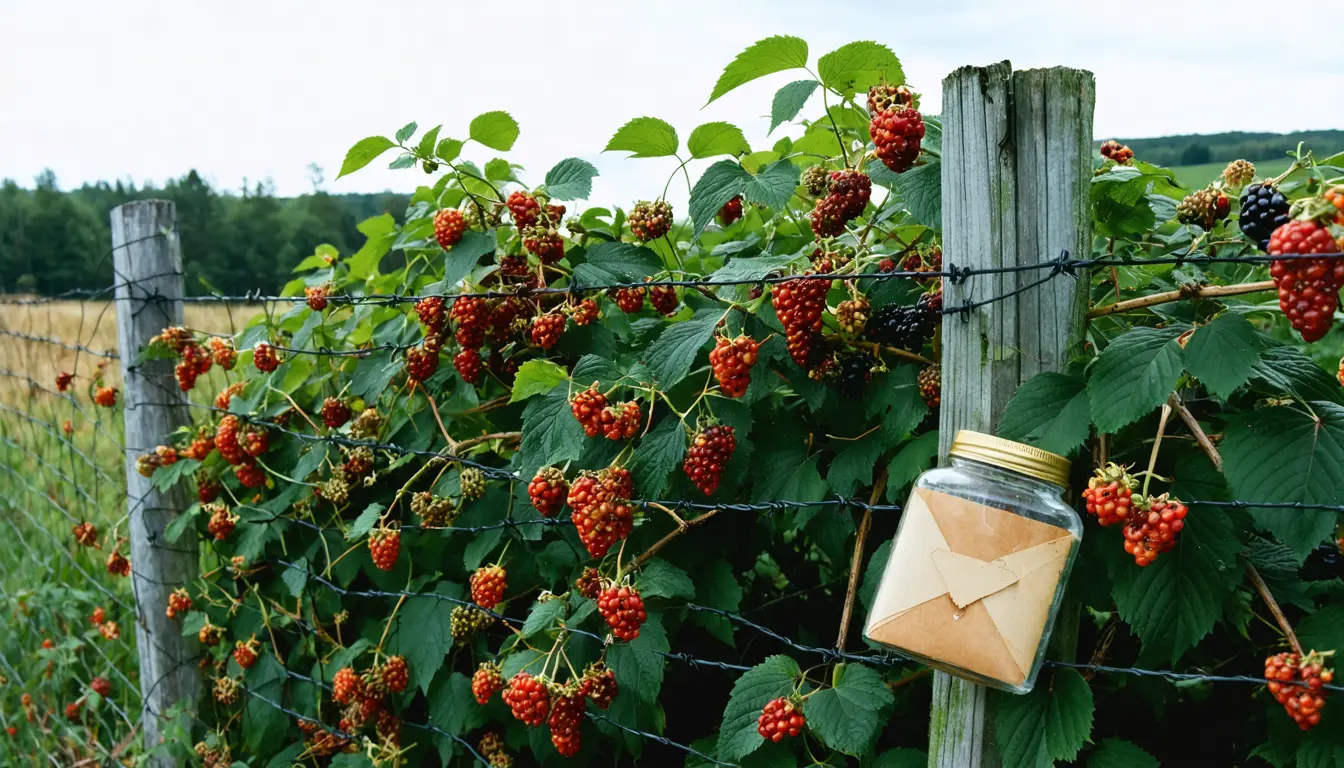
Key figures: within days of the February 1984 Yarram find, more rust cases were spotted over 100 km away; authorities began releasing further strains seven years after the Yarram find, in 1991; had anyone been prosecuted for the release, they faced an A$100,000 fine.
| Figure | Value | Note | Claim |
|---|---|---|---|
| More rust cases spotted within days, distance away | 100 km, over | 8 | |
| Yarram find to authorities releasing further strains | 7 years | from 1984 to 1991 | 15 |
| Possible fine if prosecuted | A$100,000 | 4 |
What happened
- The rust turned up in February 1984 on blackberry near Yarram in southeastern Victoria, before the research institute had been able to release it.
- Within days, more infected plants were found more than 100 km away, in the Dandenong Ranges and in Melbourne's eastern suburbs.
- Institute scientist Eligio Bruzzese had tested the rust at a CSIRO laboratory in France, with results that seemed to show it would work well and spare more valued plants.
- Federal Parliament passed laws in 1984 easing biological-control research, and minister John Kerin cited the illegal release as evidence that regulation needed to be more transparent.
Why it matters
- constraint With rust established across that distance within days, we think withholding approval could no longer stop it. The author says authorities bowed to the inevitable, and the first official releases came seven years after the Yarram find.
- precedent Nature's 1933 prickly pear figures are destruction rates for a moth that kills its target. Blackberry rust slows growth and reproduction, so that benchmark cannot be applied to it.
- contradiction The only claim about how well other strains would have worked comes from Bruzzese himself, described as frustrated, and the account does not test it.
The case that a person did this is circumstantial, and it comes from a journalist writing at the time. Graeme O'Neill wrote in The Bulletin that the evidence indicated someone had visited Europe, probably France, and picked "some leaves from rust-affected blackberries" [16]. Department of Agriculture officers, he wrote, "actually located that first plant" and noted the regular spacing between the other infected plants [16]. Regular spacing points to spores applied by hand, and O'Neill's account is that they were dusted on [16]. It is an inference from where the plants were.
The study sits on top of that account. Its author is direct about the limit: "I'm a historian, not a detective" [3]. The research does not identify a culprit [2], so what it can establish is sequence and consequence. The author adds that there is no suggestion Bruzzese was involved [9].
The sequence is clearer than the result. On how much the rust has reduced blackberry, the account offers the author's summary, "mild", and the author notes that authorities still rely on poison and manual control [13]. The account does not compare the strain dusted onto plants in 1983-84 with the strains released from 1991.
Everything here is the author's own telling of the paper. The O'Neill quotations and the Kerin reference are reported second-hand, and the piece does not reproduce the underlying records.
What to watch
- Strain-level data comparing the 1983-84 rust with the strains released from 1991, which would show whether the illegal release was the weaker one.
- Any release of Department of Agriculture records from the 1984 search for the first infected plant, the likeliest route to a name.
- A measured figure for the rust's effect on blackberry cover, since the current summary is the author's word 'mild'.
Clarity's read
What the record supports and how the coverage leans. The claims behind it follow.
Reality
- Evidence62
- Adoption
- Insufficient
- Hype gap−5
- Incentives
- Insufficient
- Confidence60
Claim ledger
Ranked by verification strength, evidence, and original report placement.
- [1]
Over the summer of 1983-84, the fungus Phragmidium violaceum was introduced to Australia secretly, deliberately and illegally, for the purpose of killing blackberry plants.
- [2]
The historian's research on the illicit introduction of violaceum, published in History Australia, does not identify a culprit.
- [3]
"I'm a historian, not a detective."
- [4]
Had someone been prosecuted, they could have been punished with an A$100,000 fine or five years in prison.
- [5]
From the late 1960s, scientists at Victoria's Keith Turnbull Research Institute investigated blackberry rust as a biological control agent; the fungus does not kill blackberry plants but slows growth and reproduction.
- [6]
In the early 1980s the institute sent scientist Eligio Bruzzese to a CSIRO laboratory in France to test the fungus; his experiments seemed to show the rust would work well and would not threaten more valued plants, and he returned to Australia in early 1983.
- [7]
The institute never got a chance to release the rust; in February 1984 the violaceum fungus was unexpectedly found on blackberry plants near Yarram in southeastern Victoria.
- [8]
Within days, more cases of rust were spotted over 100 km away on blackberry plants in the Dandenong Ranges and in Melbourne's eastern suburbs.
- [9]
There is no suggestion Bruzzese was involved in the release.
- [10]
In public statements, Bruzzese claimed the strains of violaceum he had hoped to introduce would have been far more effective.
- [11]
In 1984 the federal Parliament passed laws making it easier for scientists to research biological control, and minister for primary industry John Kerin cited the illegal introduction of violaceum as evidence of the need for more transparent regulation.
- [12]
In 1991 authorities, in the author's words, "bowed to the inevitable" and began releasing further strains of blackberry rust.
- [13]
Despite the controversy, the fungus had only a mild effect on blackberry, and authorities still rely on poison and manual control.
- [14]
In the mid-1920s the Commonwealth Prickly Pear Board introduced the Cactoblastis moth from Argentina; by 1933 Nature reported that 80% of the prickly pear infesting Queensland and 50%-60% in New South Wales had been destroyed.
- [15]
Authorities began releasing further strains seven years after the rust was found near Yarram (1991 minus 1984).
- [16]
Science journalist Graeme O'Neill wrote in The Bulletin that the evidence indicated somebody visited Europe, probably France, picked "some leaves from rust-affected blackberries", returned with them and dusted the fungal spores onto blackberry leaves; Department of Agriculture officers "actually located that first plant" and noted the regular spacing between other infected plants.
ReportedContestedSource: Graeme O'Neill, The Bulletin, as quoted by the study authorView cited source
Sources
1 independent publisher whose own reporting we read for this story.
- phys.orgIllegal fungus release reveals tangled history of Australia's decadeslong battle with blackberry
1 article · October 13, 2026
Topics and entities
Follow any of these and your For You feed starts watching them — no settings page required.
Topics
- BiosecurityFollow
- Invasive SpeciesFollow
- Biological ControlFollow