ScienceNot yet confirmed elsewhere1 publisher2 min readPublished
About 300 glaciers in the Lower 48 have disappeared since mid-century, a PNAS review finds
PNAS review reports the contiguous US lost about 300 of its 1,450-plus mid-century glaciers and 35% of glacier area. Rockies survivors persist in shaded niches, and the author writes that shrinkage continues, perhaps faster.
The Scientist · Science desk
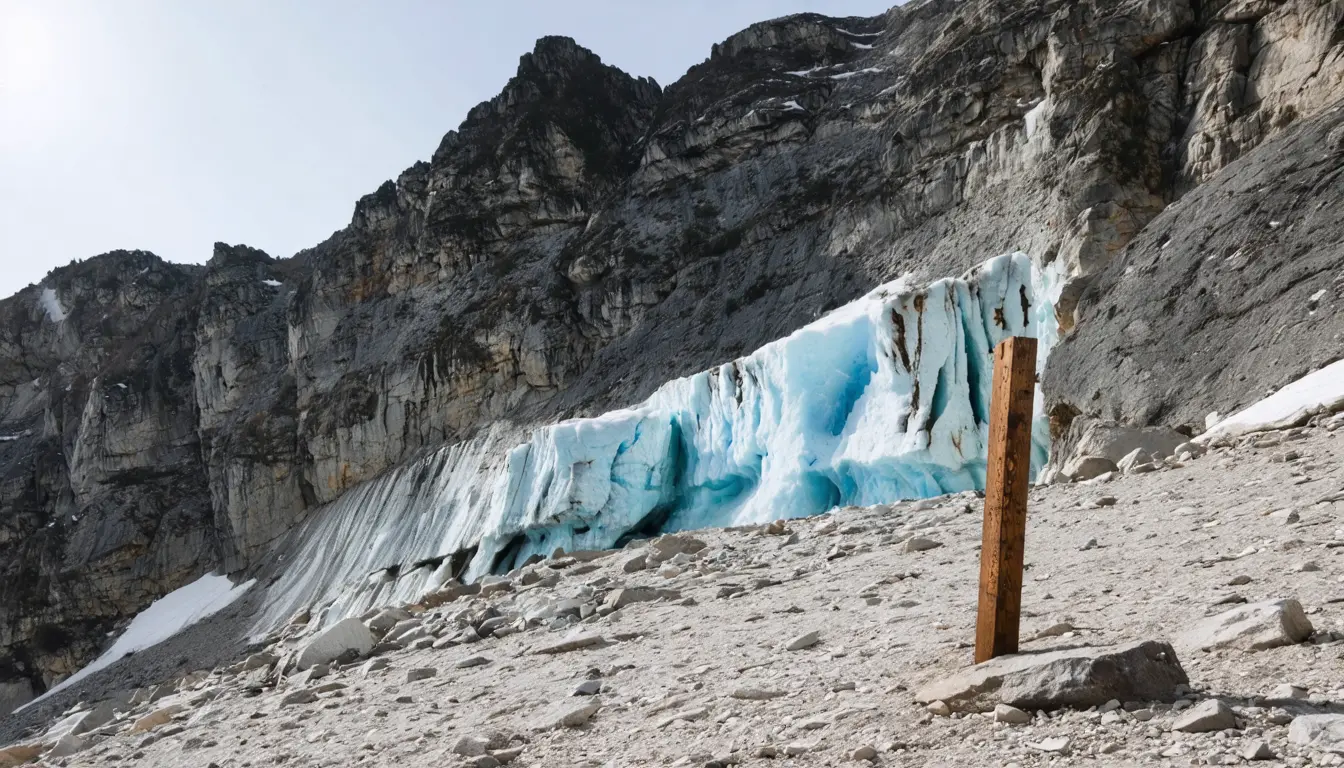
Key figures: mid-century glaciers covered 217 square miles in six Western states. Roughly 76 square miles of that area has been lost. The fastest-thinning glaciers, in Montana's Beartooth-Absaroka Mountains, lose about 1.5 feet of ice a year.
| Figure | Value | Note | Claim |
|---|---|---|---|
| Mid-century glacier area, six Western states | 217 square miles | 1 | |
| Area lost, roughly | 76 square miles | 12 | |
| Ice thickness lost a year, fastest, about | 1.5 feet | Beartooth-Absaroka Mountains, Montana | 6 |
What happened
- The mid-century ice covered 217 square miles across six Western states.
- The fastest thinning is in the Beartooth-Absaroka Mountains of southern Montana, at about 1.5 feet of ice thickness per year.
- Glaciers on Mount Rainier and Mount Baker are thinning at about half a foot of ice a year, roughly 15 centimeters.
- Mount Rainier alone holds more glacier area than all the other states combined.
Why it matters
- constraint Regional temperature trends will misplace which Rockies glaciers go next, because survival there tracks local shade and avalanche snow.
- exposure The first stakeholders exposed are cold-water fish and stream life, since the author frames the ice's role mainly as ecological, with hydropower in Washington.
- precedent A model has the Olympic Peninsula glaciers mostly gone by 2070, and the author says glaciers elsewhere are "probably not far behind".
The 300 is a count and the 35% is an area, and the two figures answer different questions. By count, about one in five of the mid-century glaciers is gone [13]. By area, 35% of 217 square miles is roughly 76 square miles [12][2]. Unless the vanished glaciers were much larger than average, the survivors have lost area too. They are small: the average glacier covers about a tenth of a square mile [4].
The author of the account wrote: "A little more than 300 glaciers have disappeared, far more than I had anticipated." [3] The same author says the glaciers are still shrinking, "perhaps faster" [2]. We would carry that as the author's suspicion, not a measured rate.
The Beartooth-Absaroka glaciers thin three times as fast as those on Mount Rainier and Mount Baker [14]. The Washington glaciers are the larger ones, with cooler summers and heavier snowfall [7]. Within Washington, glacier loss falls as elevation rises, which is what cooler air at height would predict [9]. The Rockies show no such trend, and the author takes that to mean the survivors are niche glaciers that depend on local topographic benefits [9]. They sit in shaded spots and collect extra snow from avalanches. With more sun and less snow accumulation, the author writes, they likely wouldn't exist at all [5].
The author frames the ice's water role mainly in ecological terms: late-summer melt gives cool water to cold-adapted fish and other stream life when seasonal snow is gone and rain is scarce [10]. In the Rockies the glaciers are primarily important for ecosystems at this point, the author writes, while Washington's also contribute to hydropower [11]. The thing this doesn't tell you is how much streamflow the ice supplies, or whether losses have sped up. The account gives one 35% figure for the whole period [2].
Of the Washington glaciers, the author writes that those on Mount Rainier and Mount Baker "will likely survive past 2100, but how much longer is an open question" [16].
What to watch
- Decade-by-decade thinning rates in the PNAS review, which would show whether the loss is speeding up.
- Streamflow measurements in glacier-fed Washington and Montana basins that put a number on late-summer melt contribution.
- Repeat surveys of Olympic Peninsula glaciers against the modeled 2070 disappearance.
Clarity's read
What the record supports and how the coverage leans. The claims behind it follow.
Reality
- Evidence72
- Adoption
- Insufficient
- Hype gap−5
- Incentives
- Insufficient
- Confidence66
Claim ledger
Ranked by verification strength, evidence, and original report placement.
- [1]
In the middle of the 20th century, more than 1,450 glaciers could be found in the contiguous U.S., covering 217 square miles (562 square kilometers) in six Western states.
- [2]
A comprehensive review published in the Proceedings of the National Academy of Sciences shows the glaciers' total area has shrunk by 35% and they are still shrinking, perhaps faster.
- [3]
A little more than 300 glaciers have disappeared, far more than I had anticipated.
ReportedSupportedSource: Author of the phys.org account of the PNAS review, a member of the review teamView cited source - [4]
The average glacier area is about one-tenth of a square mile; the largest glacier, on Washington's Mount Rainier, is about 4.3 square miles.
- [5]
Glaciers in the Rockies and Sierra Nevada subsist because of their positions on the landscape; the surviving Rocky Mountain glaciers sit in shaded niches and gain extra snow from avalanches, and with more sun and less snow accumulation they likely wouldn't exist at all.
- [6]
The fastest-thinning glaciers are in the Beartooth-Absaroka Mountains of southern Montana, losing about 1.5 feet (about half a meter) of ice thickness per year.
- [7]
Glaciers on Mount Rainier and Mount Baker are much larger, have cooler summers and get much more snowfall, and are shrinking at about half a foot (15 centimeters) of ice thickness per year.
- [8]
The glacier area on Mount Rainier alone is greater than the combined glacier area in all the other states.
- [9]
In Washington, the higher you go, the less glacier loss; in the Rocky Mountain region there is no similar trend, suggesting the survivors are niche glaciers that depend on local topographic benefits.
- [10]
The principal importance of the glaciers is to provide water to high alpine ecosystems; they partially melt in late summer, providing cool water for cold-adapted fish and other stream life when seasonal snow has disappeared and the region doesn't get much rain.
- [11]
The glaciers of the Rockies are primarily important for ecosystems at this point, while those in Washington also contribute to hydropower production.
- [12]
A 35% area loss from 217 square miles is roughly 76 square miles.
- [13]
About 300 of more than 1,450 glaciers is roughly one in five by count.
- [14]
Thinning in the Beartooth-Absaroka glaciers (about 1.5 feet per year) is about three times the Mount Rainier and Mount Baker rate (about 0.5 feet per year).
- [15]
In an earlier study, the author and colleagues modeled glaciers on Washington's Olympic Peninsula and found most would disappear by 2070 under current climate trends.
- [16]
The other Washington glaciers, particularly on Mount Rainier and Mount Baker, will likely survive past 2100, but how much longer is an open question.
- [17]
The Olympic result indicates that glaciers elsewhere are probably not far behind.
Sources
1 independent publisher whose own reporting we read for this story.
- phys.org300 glaciers have disappeared from the American West since the mid‑20th century
1 article · October 13, 2026
Topics and entities
Follow any of these and your For You feed starts watching them — no settings page required.
Topics
- Climate changeFollow
- GlaciersFollow
- Water Resources and Groundwater StressFollow