ScienceNot yet confirmed elsewhere1 publisher2 min readPublished
Simulations leave the tropical Pacific El Niño-like for centuries after emissions stop
Melbourne-led simulations find the tropical Pacific's El Niño-like shift could last for centuries after emissions stop. Reaching net zero sooner would limit the shift, the authors report, but heat stored in the deep ocean keeps part of it in place.
The Scientist · Science desk
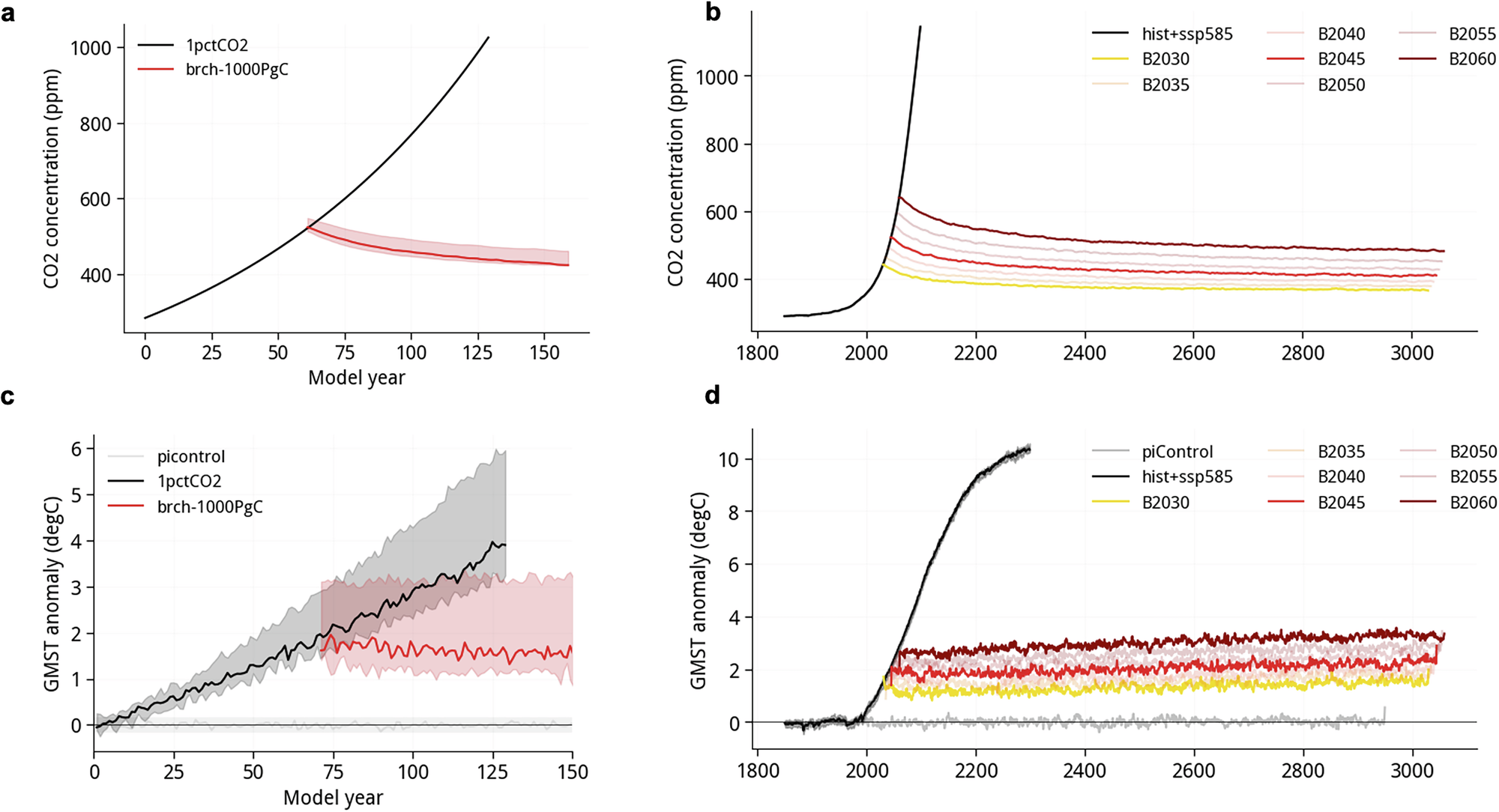
Key figures: the ACCESS Earth System Model simulated 1,000 years after emissions were stopped. The post-emission persistence runs come from 1 model, ACCESS, while the researchers first analyzed simulations from 9 Earth system models for the warming shift.
| Figure | Value | Note | Claim |
|---|---|---|---|
| Simulated after emissions stop, ACCESS model | 1,000 years | 5 | |
| Model in persistence runs | 1 model (ACCESS) | 16 | |
| Models first analyzed | 9 models | 4 |
What happened
- It then ran Australia's ACCESS Earth System Model for 1,000 years after emissions were stopped at different points in the 21st century.
- Across the models, warming moved the tropical Pacific's average state toward an El Niño-like pattern, with a weaker temperature difference between the warm west and the cool east.
- In an El Niño, warm surface water spreads farther east, cold upwelling weakens and rainfall shifts; the simulations suggest this could increasingly be part of the average climate.
Why it matters
- decision Sengupta says rapid emissions cuts and long-term adaptation planning have to proceed together even after net zero is reached, so planning horizons need to run past that date.
- exposure Regions where ENSO shapes rainfall, drought, floods, heat waves and fire conditions, Australia among them, are the ones exposed if the El Niño-like pattern becomes part of the average climate.
- constraint Net zero does not return the tropical Pacific to preindustrial conditions right away, so the benefit the study credits to an earlier date is a smaller shift.
The paper splits the question in two [1]. Nine Earth system models show which way the tropical Pacific moves while the planet warms [4]. One model, ACCESS, carries the 1,000-year runs that test whether the shift persists once emissions stop [5]. That is nine models for the direction and one for the duration [16]. Agreement across nine makes the warming-phase pattern less likely to be one model's quirk. The release does not say whether any other model was run past the stop date, so the multi-century persistence rests on a single model's physics.
The reason for the persistence is the deep ocean. "The atmosphere and the ocean surface can adjust relatively quickly, while the deep ocean absorbs and releases heat over hundreds or even thousands of years. This gives the ocean a long memory of previous greenhouse gas emissions," lead author Aditya Sengupta of the University of Melbourne said [9]. He drew a strong conclusion from the runs. "These findings indicate that key aspects of tropical Pacific climate change could be effectively irreversible over centuries." [10]
"El Niño-like" describes an average state, and the paper's title says as much: it refers to a tropical Pacific mean state shift [15]. The release says the Pacific does not become permanently locked in an El Niño event [7]. It does not report how large the shift is in degrees or rainfall, how much an earlier stop date shrinks it, or whether El Niño events themselves become more frequent or stronger. Those are the numbers an operator exposed to the region's weather would want, and they are not in what we have.
Sengupta tied the result to timing. He said that "the longer emissions continue, the more heat accumulates within the climate system and the greater the risk of long-lasting changes." [11] Co-author Andrew King, an associate professor at the University of Melbourne, framed the benefit in similar terms. "We found clear benefits from reducing emissions quickly," King said. "Reaching net zero earlier limits the changes occurring within the ocean and reduces the risk of leaving future generations with a substantially altered tropical Pacific." [13]
What to watch
- Whether the full paper reports how much an earlier stop date shrinks the shift, in degrees or rainfall.
- Whether models other than ACCESS reproduce the multi-century persistence when run past the stop date.
- Whether follow-up work separates the mean-state shift from changes in the frequency or strength of El Niño events.
Clarity's read
What the record supports and how the coverage leans. The claims behind it follow.
Reality
- Evidence55
- Adoption
- Insufficient
- Hype gap+10
- Incentives
- Insufficient
- Confidence50
Claim ledger
Ranked by verification strength, evidence, and original report placement.
- [1]
The study was published in Communications Earth & Environment and led by researchers from the University of Melbourne and the ARC Center of Excellence for Weather of the 21st Century.
- [2]
New climate modeling suggests that reaching net zero sooner would limit long-lasting changes to El Niño and the tropical Pacific, although heat stored deep in the ocean means changes could persist for centuries.
- [3]
Stopping emissions would not immediately return the tropical Pacific to its preindustrial state; changes to ocean temperatures, winds and rainfall patterns could endure for hundreds of years.
- [4]
The researchers first analyzed simulations from nine Earth system models.
- [5]
The researchers then used the Australian ACCESS Earth System Model to examine changes for 1,000 years after emissions were stopped at different points within the 21st century.
- [6]
Across the models, warming shifted the tropical Pacific's average conditions toward a more El Niño-like pattern, in which the usual temperature difference between the warmer western Pacific and cooler eastern Pacific becomes weaker.
- [7]
The shift does not mean the Pacific becomes permanently locked in an El Niño event.
- [8]
During an El Niño event, warm surface water extends farther east across the tropical Pacific, cold-water upwelling weakens and major rainfall patterns shift; the simulations suggest this pattern could increasingly become part of the Pacific's average background climate.
- [9]
Sengupta said: "The atmosphere and the ocean surface can adjust relatively quickly, while the deep ocean absorbs and releases heat over hundreds or even thousands of years. This gives the ocean a long memory of previous greenhouse gas emissions,"
- [10]
Sengupta said: "These findings indicate that key aspects of tropical Pacific climate change could be effectively irreversible over centuries."
- [11]
Sengupta said that "the longer emissions continue, the more heat accumulates within the climate system and the greater the risk of long-lasting changes."
- [12]
Sengupta said it is imperative that rapid emissions cuts and long-term climate adaptation planning go hand in hand even after net zero is reached.
- [13]
King said: "We found clear benefits from reducing emissions quickly. Reaching net zero earlier limits the changes occurring within the ocean and reduces the risk of leaving future generations with a substantially altered tropical Pacific."
ReportedSupportedSource: Andrew King, associate professor, University of Melbourne, co-authorView cited source - [14]
El Niño-Southern Oscillation events can influence rainfall, droughts, floods, heat waves and wildfire conditions in Australia and across many other regions.
- [15]
The paper is titled 'Ocean thermal inertia sustains a tropical Pacific mean state shift under net zero', Communications Earth & Environment (2026).
ReportedSupportedSource: Publication details in University of Melbourne release carried by phys.orgView cited source - [16]
The warming-phase pattern comes from nine models, while the post-emission persistence runs described come from one model (ACCESS).
Sources
1 independent publisher whose own reporting we read for this story.
- phys.orgReaching net zero sooner could limit long-lasting El Niño-like shift in the Pacific
1 article · October 13, 2026
Topics and entities
Follow any of these and your For You feed starts watching them — no settings page required.
Topics
- El Niño–Southern OscillationFollow
- Net zero emissionsFollow
- Climate Modeling and SimulationFollow
Entities
- University of MelbourneFollow
- ARC Center of Excellence for the Weather of the 21st CenturyFollow
- ACCESS Earth System ModelFollow
- Communications Earth & EnvironmentFollow
- Phys.orgFollow