ScienceNot yet confirmed elsewhere1 publisher2 min readPublished
CT scans of museum birds show gannet neck bones are stockier and carry an extra joint facet
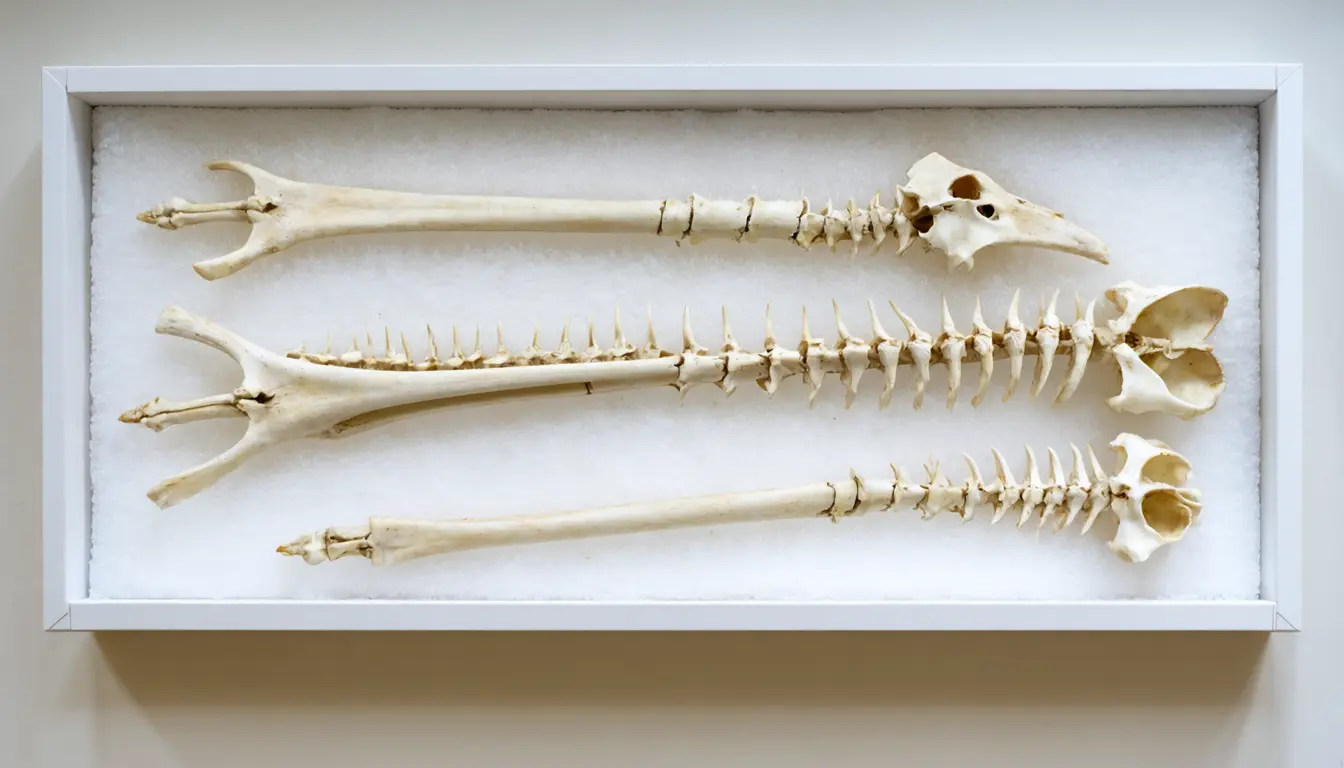
University of Washington researchers found an extra joint facet on neck vertebrae two through six in gannets and boobies. The authors read it as a brace for dives at 70 mph, an interpretation drawn from bone geometry.
The Scientist · Science desk
Share bar: the extra facet covers five of the gannet's 15 neck vertebrae, one third of the column.
- Vertebrae with the extra facet, claim 16 5 of 15 vertebrae 33% computed
Vertebrae with the extra facet The rest of the 15
| Share | Part | Whole | Percent | Claim |
|---|---|---|---|---|
| Vertebrae with the extra facet | 5 vertebrae | 15 vertebrae | 33% (computed) | 16 |
What happened
- The team took diving and nondiving bird specimens from the Burke Museum, built 3D models of their neck vertebrae from CT scans, and compared the shapes with geometric morphometrics.
- Plunge-divers' vertebrae are thicker, wider and shorter than other birds', so each bone sits closer to a square.
- Kingfishers, a different and much smaller family, have blocklike vertebrae too, but the researchers did not detect the extra facet in them.
Why it matters
- capability If the facet and the squarer shape reliably mark plunge-divers, the authors expect paleontologists could use them to pick out plunge-diving birds from fossil necks.
- precedent Beak shape is the familiar trait linking anatomy to foraging. This work gives the neck vertebrae a documented place beside it, at least for birds that load the neck in compression.
- constraint The phys.org account does not include specimen or species counts, so a reader cannot yet judge whether the shape difference between divers and other birds is large or modest.
A northern gannet reaches the water at 70 miles per hour after a nosedive from 100 feet [4]. On engineering grounds the neck looks like the wrong shape for that. Engineers typically favor short, fat structures for things that must tolerate compressive force, and the gannet neck is long and slender, with 15 stacked vertebrae in a slight S-curve [c7, c5]. Earlier studies had shown that the surrounding muscles help lock the vertebrae in place before impact, but few had examined the bones themselves [8].
That gap shaped the comparison. The team chose birds to span a range of feeding styles and the forces each one involves, and added morphological data from earlier studies [9]. Lead author Megan Vandenberg said: "Birds that rotate their heads side to side, or move them front to back, separate out from birds that use their heads in compression." [10]
The paper, published Oct. 12 in the Anatomical Record [1], places the extra facet on the second through sixth vertebrae [11]. That is five of the gannet's 15 vertebrae, a third of the column [16]. The researchers think the facet keeps the neck from bending backward when the bird hits the water at an angle, so that the load passes down the cervical column [17].
The design compares species, so it can show that the traits travel with diving. The facet's job is the authors' reading of that geometry.
Kingfishers are the useful control. Their strain per neck area matches the larger divers': both groups experience the same force per neck area, and both reach peak force nearly 5 milliseconds after impact [13]. Vertebra size scales with neck size [14]. In our view that makes the squarer, scaled vertebrae the better-supported half of the story. The comparison can't show whether gannets need the facet or merely use it.
What to watch
- The authors' planned analysis of how force travels down the neck, which would test the proposed backward-bending role of the facet.
- Scans of other large plunge-divers outside gannets and boobies, to see whether the facet appears wherever the dives are fast and the birds are big.
Clarity's read
What the record supports and how the coverage leans. The claims behind it follow.
Reality
- Evidence60
- Adoption
- Insufficient
- Hype gap+8
- Incentives
- Insufficient
- Confidence55
Claim ledger
Ranked by verification strength, evidence, and original report placement.
- [1]
A University of Washington study published Oct. 12 in the Anatomical Record shows that gannets and boobies have morphological adaptations that allow them to survive impact.
- [2]
Several neck vertebrae in gannets and boobies are joined by an additional contact surface, called an articular facet, that helps stabilize the cervical column.
- [3]
Plunge-diving birds have more robust vertebrae that are thicker, wider and shorter, shaped more like a square, and stockier than other birds' vertebrae.
- [4]
A northern gannet dives from about 100 feet (30 meters) and breaks the surface at 70 miles per hour (113 kilometers per hour).
- [5]
Gannet necks have 15 stacked vertebrae that bend slightly in an S-curve.
- [6]
The researchers collected specimens of diving and nondiving birds from the Burke Museum, used CT scans to build three-dimensional models of the cervical vertebrae, and analyzed the images with geometric morphometrics, a landmark-based statistical method.
- [7]
Engineers typically favor short and fat structures for things built to tolerate compressive force, but gannets have long, slender necks with segmented vertebrae.
- [8]
Previous studies have shown that muscles surrounding the vertebrae help lock them in place to prepare for impact, but few studies have looked at the actual morphology of diving birds' necks.
- [9]
The researchers considered the forces associated with various feeding styles, chose birds that represented a spectrum, and pulled in additional morphological data from previous studies.
- [10]
"Birds that rotate their heads side to side, or move them front to back, separate out from birds that use their heads in compression."
ReportedSupportedSource: Megan Vandenberg, lead author and graduate student of biology at UW's Friday Harbor LabsView cited source - [11]
The additional contact surface, called an articular facet, is present in the second through sixth vertebrae.
- [12]
Kingfishers show more blocklike vertebrae, but the researchers did not detect the extra facet; kingfishers belong to a different avian family and are much smaller than gannets and boobies.
- [13]
Kingfishers and the bigger plunge-divers experience the same amount of force per neck area during a dive, so strain on the tissue is the same, and both groups experienced peak force nearly 5 milliseconds after impact.
- [14]
The structural relationship is proportional: the larger the neck, the larger the vertebrae.
- [15]
The connection between beak shape and foraging behavior is well documented, but the link between neck structure and feeding has received less attention.
- [16]
The extra facet covers five of the gannet's 15 neck vertebrae, one third of the column.
- [17]
The researchers think the extra facet keeps the birds' necks from bending backward when they hit the water at an angle, so the load gets transferred down the cervical column.
- [18]
The researchers think the link between neck structure and function could help paleontologists identify plunge-diving birds from fossils.
- [19]
The researchers hope to explore in more detail how force transfers down the neck.
Sources
1 independent publisher whose own reporting we read for this story.
- phys.orgReinforced vertebrae allow plunge-diving seabirds to survive high-speed impact
1 article · October 12, 2026
Topics and entities
Follow any of these and your For You feed starts watching them — no settings page required.