InvestNot yet confirmed elsewhere1 publisher2 min readPublished
Investors pay up for a 2028 quantum timeline the industry keeps moving
Amazon, IBM and the White House expect the first fault-tolerant quantum computers around 2028 or 2029, a timeline that has shortened in recent years. Investors have followed, pushing IonQ up more than 300% since 2024, well before any fault-tolerant machine exists.
The Investor · Invest desk
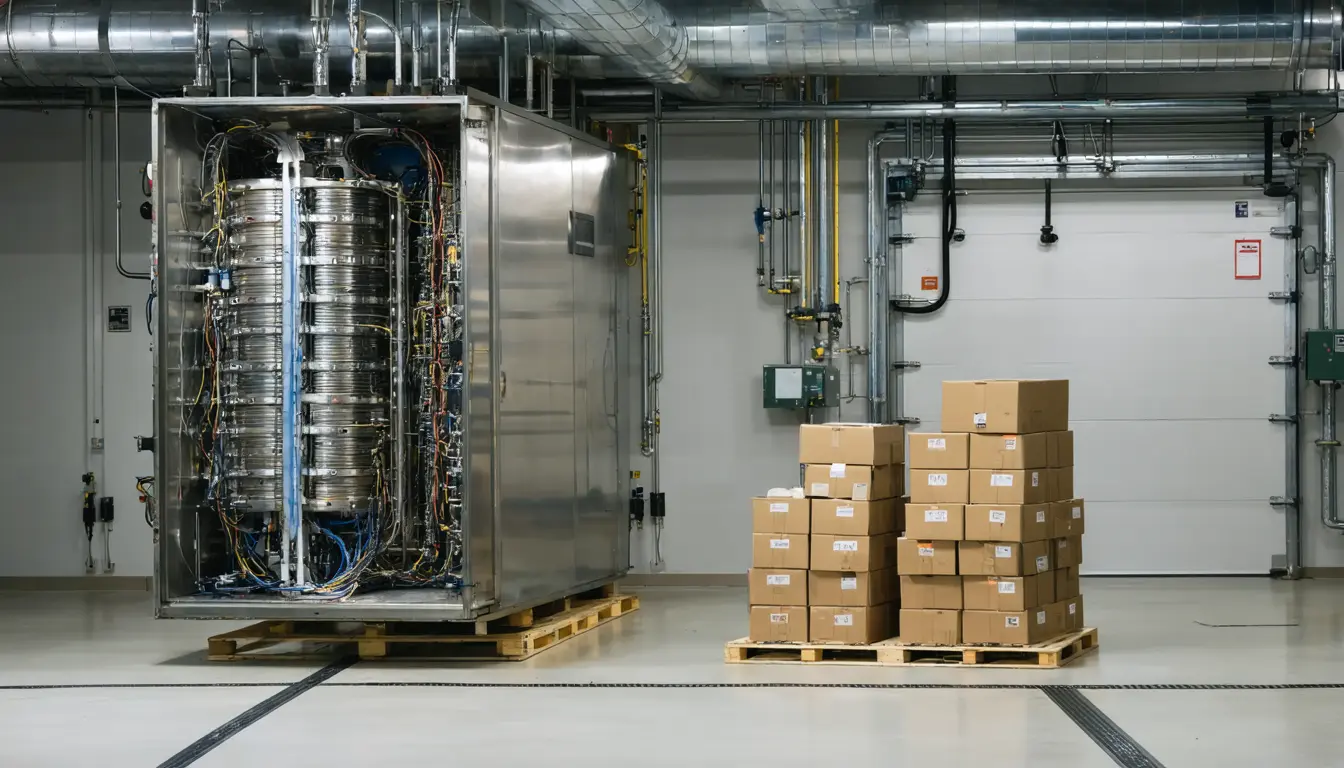
Exposure map of four actors. Investors: IonQ up over 300% since 2024. Governments and companies want to lead quantum, not become its victim. Pharma and agency buyers can own a rig; others rent. Enterprise clients outspent governments and labs last year.
- exposure Investors IonQ shares up more than 300% since around this time in 2024., claim 5
- exposure Governments and companies Look to lead quantum and not become its victim, since it could break modern encryption., claim 10
- cost Pharma & agency buyers Owning a dedicated rig can be worth it for pharma giants and agencies with cash and privacy needs; others rent., claim 11
- decision Enterprise clients Outspent governments and research labs on quantum for the first time last year., claim 7
| Who | How | Kind | Claim |
|---|---|---|---|
| Investors | IonQ shares up more than 300% since around this time in 2024. | exposure | 5 |
| Governments and companies | Look to lead quantum and not become its victim, since it could break modern encryption. | exposure | 10 |
| Pharma & agency buyers | Owning a dedicated rig can be worth it for pharma giants and agencies with cash and privacy needs; others rent. | cost | 11 |
| Enterprise clients | Outspent governments and research labs on quantum for the first time last year. | decision | 7 |
What happened
- Google's 2024 chip announcement showed a way to cut errors while adding qubits, the reverse of the usual tradeoff, which is what pushed the field's timeline forward in the first place.
- Enterprise clients collectively spent more on quantum computing last year than governments and research labs did, the first time that had happened, according to Boston Consulting Group.
- Shares of several quantum companies cooled off in recent months, but Bank of America expects more upside and upgraded IonQ late last month.
- Ernst & Young went further than renting access and bought its own quantum computer, using it in Toronto to test-run financial analyses.
Why it matters
- exposure Data encrypted today is reachable by a future fault-tolerant machine. That puts current secrets at risk, and it explains the defensive government interest in leading the field.
- decision Owning a rig only pencils out for buyers like pharma companies and government agencies with the cash and the privacy needs, Rigetti's CEO says, so most customers rent instead.
- capability Bhaskar says the foundry runs better the more customers and wafers it has, so rising demand is itself an input to how fast the hardware gets built.
The clearest public commitment so far is the government's. The Commerce Department this spring put $2 billion into nine quantum companies, including IBM and Rigetti, in exchange for small stakes [4]. That works out to about $222 million a company [19]. Because the stakes are small, the nine are collectively worth well above what Washington paid [4].
Private money is there too, and early. "There is already significant investor interest in quantum computing companies large and small," Scott Buchholz, who leads quantum computing at Deloitte, told The Daily Upside [13]. Big Tech hardware firms "are already making substantial R&D and venture investments in quantum computing," he added [14].
The demand feeds the timeline. Mihir Bhaskar runs the foundry business at chipmaker SkyWater and spent time at both IonQ and AWS [15]. "The scale, the demand and the urgency has increased," he said [16], and companies "have roadmaps that they need to deliver on aggressively" [17].
The case against buying at these levels is the field's own record. The commercial breakthrough has been described as roughly a decade away for most of quantum's history, and that decade kept sliding forward [3]. Buchholz ties the next leg of demand to "major announcements anticipated in the coming years" that have not yet landed [18]. The stated date could hold, in which case today's prices look early [1]. It could slip the way earlier dates did, leaving the stocks priced for a product that stays years out [3]. Or enterprise demand could drag hardware forward even while full fault tolerance lags. We would weight the slip more heavily than the market does, and the thing that would prove us wrong is a working fault-tolerant machine arriving on schedule, not another roadmap [1].
The people building quantum do not sell it as a replacement for AI [20]. The near-term commercial targets are materials science and chemistry, with drug discovery, financial modeling, supply-chain optimization and weather forecasting further out [21].
What to watch
- Whether sell-side desks beyond Bank of America raise quantum targets after the recent selloff.
- Whether more enterprises follow Ernst & Young from renting cloud access to owning the hardware.
- Any new federal equity stakes in quantum firms after the Commerce Department's $2 billion.
Clarity's read
What the record supports and how the coverage leans. The claims behind it follow.
Reality
- Evidence40
- Adoption25
- Hype gap+45
- Incentives70
- Confidence45
Claim ledger
Ranked by verification strength, evidence, and original report placement.
- [1]
Amazon, IBM and the White House have said they expect the first fault-tolerant quantum computers to come online in 2028 or 2029.
- [2]
In recent years the timeline for quantum computing has been shortened.
- [3]
The commercial breakthrough in quantum has long been described as about a decade away, a deadline that has been perpetually pushed back.
- [4]
The Commerce Department this spring put $2 billion into nine quantum companies, including IBM and Rigetti, in exchange for small stakes.
- [6]
Google's 2024 announcement showed a quantum computing chip that reduced errors while increasing qubits, typically the opposite of what happens, and pushed the field forward.
- [7]
Last year, enterprise clients for the first time collectively spent more on quantum than governments and research labs, Boston Consulting Group found.
- [8]
Shares of several quantum companies cooled off in recent months, but Bank of America analysts think more upside is incoming and upgraded IonQ late last month.
- [9]
Ernst & Young bought its own quantum computer to test run financial analyses in Toronto.
- [10]
Quantum's potential to break modern encryption is driving attention to the sector as governments and companies look to lead the technology and not become its victim.
- [11]
Rigetti CEO Subodh Kulkarni said owning dedicated quantum computers could be worth the investment for buyers such as pharma giants and government agencies that have the cash and prioritize privacy and computing power; other customers can rent access.
- [12]
Bhaskar said a foundry runs more effectively with more customers: 'The foundry works better when you have more wafers running through it.'
- [13]
Scott Buchholz, quantum computing leader at Deloitte, said: 'There is already significant investor interest in quantum computing companies large and small.'
- [14]
Buchholz said Big Tech hardware companies 'are already making substantial R&D and venture investments in quantum computing.'
- [15]
Mihir Bhaskar leads the foundry business for quantum chipmaker SkyWater and previously worked at both IonQ and AWS.
- [16]
Bhaskar said: 'The scale, the demand and the urgency has increased.'
- [17]
Bhaskar said companies 'have roadmaps that they need to deliver on aggressively.'
- [18]
Buchholz expects interest and demand could pick up if the industry makes some of the major announcements anticipated in the coming years.
- [19]
The Commerce Department's $2 billion across nine quantum companies averages about $222 million a company.
- [21]
Commercial uses could start with fields full of quantum problems such as materials science and chemistry, and could eventually lead to breakthroughs in drug discovery, financial modeling, supply-chain optimization, weather forecasting and artificial general intelligence.
Sources
1 independent publisher whose own reporting we read for this story.
- thedailyupside.comQuantum is Poised for a Commercial Leap, Investors Have Noticed
1 article · October 11, 2026
Topics and entities
Follow any of these and your For You feed starts watching them — no settings page required.
Topics
- Quantum threat to encryptionFollow
- Quantum ComputingFollow
- Fault-Tolerant Quantum ComputingFollow