Apatite trapped in 3.4-billion-year-old zircon shows the mantle responding to surface oxygen
Portsmouth-led researchers found the mantle recorded surface oxygen 3.4 to 3 billion years ago, up to 1.1 billion years before the Great Oxidation Event. Sulfur chemistry in apatite sealed inside zircon indicates oxidized surface material was already being carried down by some form of subduction, according to the Nature Geoscience study.
The Scientist · Science desk
Three figures: the mantle oxygen signal's rise began 1.1 billion years before the Great Oxidation Event and ended 0.7 billion years before it; the signal reached today's levels at most 0.2 billion years after the event.
| Figure | Value | Note | Claim |
|---|---|---|---|
| Lead over Great Oxidation Event, from start of rise | 1.1 billion years | 16 | |
| Lead, from end of rise | 0.7 billion years | 17 | |
| Mantle signal at today's levels, at most | 0.2 billion years | after the Great Oxidation Event | 18 |
What happened
- Laser dating at Portsmouth pinned some of the zircon samples to exactly 3.4 billion years old.
- The rock samples came from Australia, Finland, South Africa, Brazil and Scotland before going to Portsmouth for initial analysis.
- At the European Synchrotron Radiation Facility in Grenoble, researchers measured the chemical state of sulfur inside each apatite crystal.
- The oxygen signal persisted through the whole 3.4-billion-year span studied and reached today's levels by around 2.1 billion years ago.
Why it matters
- contradiction Measured from the Great Oxidation Event, the lead is up to 1.1 billion years, but in the study's own account surface oxygen came first and the mantle responded.
- constraint The sulfur proxy reads oxidation at subduction sites, so its reach is limited to the recycled portion of the mantle.
- capability If the proxy holds, the signal gives researchers a chemical marker for surface material being recycled into the early mantle, dated by the host zircon.
The "billion years" in the headline depends on which end of the signal you measure from. The Great Oxidation Event sits at about 2.3 billion years ago [9]. The mantle signal rose between 3.4 and 3 billion years ago [12]. Counted from 3.4 the lead is 1.1 billion years, and from 3.0 it is 0.7 billion [16][17]. At the other end, the signal reached today's levels by around 2.1 billion years ago [13], at most 0.2 billion years after the Great Oxidation Event [18].
In the study's account, surface oxygen comes first, in small patches, and the mantle responds: the sulfur shows the deep mantle was already reacting to oxygen from the surface [11], and scientists have long suspected brief local oxygen oases between 3 and 3.5 billion years ago [10]. The mantle signal rises inside that window. The account says this suggests some form of subduction was already carrying oxidized material downward [14].
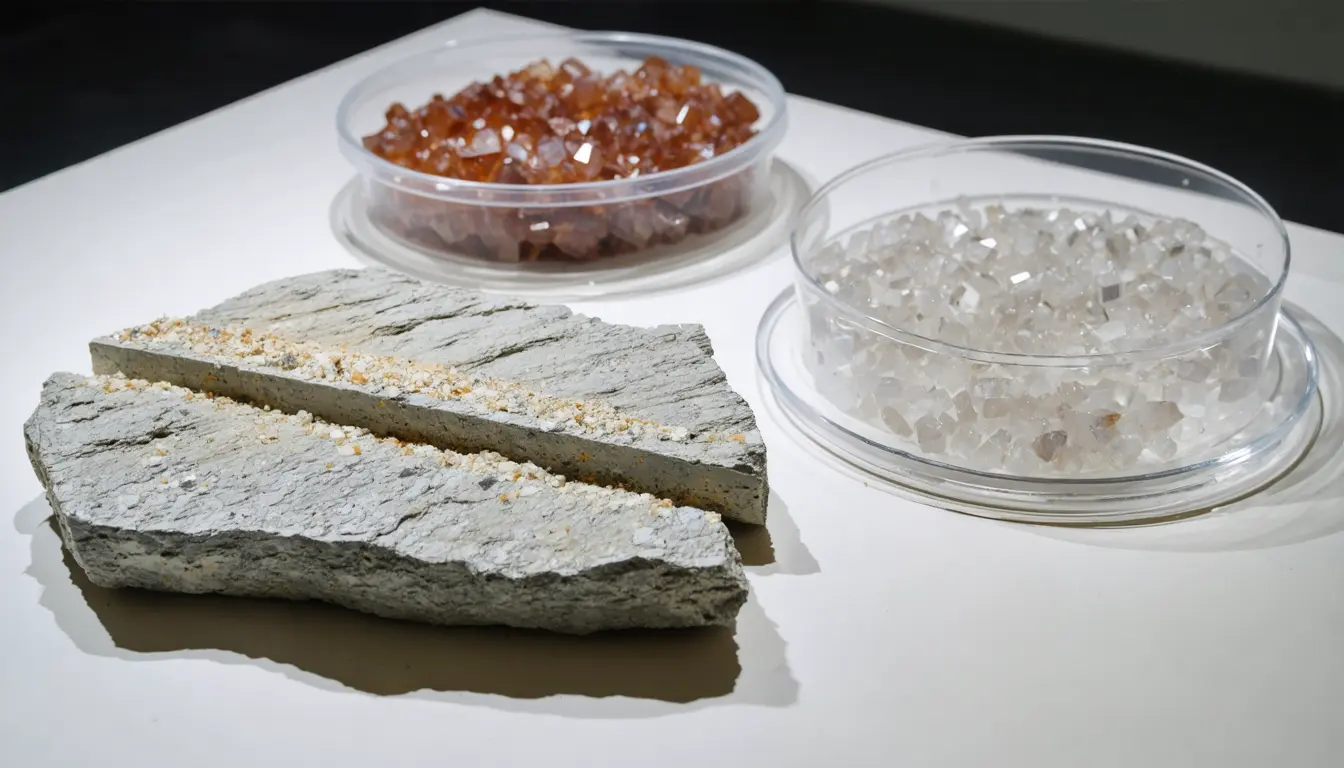
Zircon is one of the toughest minerals on Earth and survives largely unchanged for billions of years [2]. Some zircons enclose apatite, sealed in and protected from change, so the apatite is the same age as its host [3]. Moreira, who led the study, said of such grains: "Because they're so well protected, we can analyze their chemical fingerprints to get an untouched snapshot of a moment billions of years in the past." [15]
The team read the apatite's sulfur. Its form shows how much oxygen was present when the crystal formed, at the point where the outer shell is dragged down and recycled in subduction [6]. The grains are small. Co-author Marine Cotte, the scientist in charge of the ID21 beamline, said the crystals are often narrower than a human hair and hold only small amounts of sulfur [7]. She said the team therefore needed "an X-ray beam that was very fine, very sensitive and fast enough to measure lots of crystals. That way, we could be confident the results reflect the bigger picture and not just one or two samples." [8]
The curve covers only part of the mantle. The signal is for the mantle layers affected by recycling [12], and the sulfur reads oxygen at the subduction site [6]. On that design, mantle that never met subducted material is outside what the crystals sample.
Cotte's point is that many crystals were measured. The account does not say how many crystals or rock samples stand behind each time window. We think the shape of the curve is the sturdy result: a rise after 3.4 billion years ago, persistence, and modern values by 2.1 billion years ago. The step to subduction is a further inference, and the account itself words it as a suggestion.
What to watch
- The paper's crystal and sample counts per time window, which set how firm the rise between 3.4 and 3 billion years ago is.
- Whether other labs find the same sulfur signal in apatite from zircons at other localities.
- Whether independent evidence of subduction between 3.4 and 3 billion years ago lines up with the oxygen timing.
Clarity's read
What the record supports and how the coverage leans. The claims behind it follow.
Reality
- Evidence58
- Adoption
- Insufficient
- Hype gap+10
- Incentives
- Insufficient
- Confidence50
Claim ledger
Ranked by verification strength, evidence, and original report placement.
- [1]
The study was published in Nature Geoscience and led by Dr Hugo Moreira, a Royal Society university research fellow at the University of Portsmouth.
- [2]
Zircon is among the toughest minerals on Earth and its crystals can survive largely unchanged for billions of years; lasers at Portsmouth's Mass Spectrometry and Laser Ablation Lab date them, and in this study pinpointed some samples to exactly 3.4 billion years old.
- [3]
Some zircons contain a smaller mineral, apatite, sealed inside; protected from change, the apatite is exactly the same age as its host.
- [4]
Ancient rock samples from Australia, Finland, South Africa, Brazil and Scotland were sent to Portsmouth for initial analysis.
- [5]
The samples were then taken to the European Synchrotron Radiation Facility in Grenoble, France, where researchers measured the chemical state of sulfur trapped inside each tiny apatite crystal.
- [6]
The form that sulfur takes reveals how much oxygen was present when the crystal formed, at the point where the planet's outer shell is dragged down and recycled into its interior, a process called subduction.
- [7]
Co-author Marine Cotte, the scientist in charge of the ID21 beamline at the ESRF, said the crystals are often narrower than a human hair and contain only small amounts of sulfur.
- [8]
Cotte said: "So, we needed an X-ray beam that was very fine, very sensitive and fast enough to measure lots of crystals. That way, we could be confident the results reflect the bigger picture and not just one or two samples."
- [9]
For most of Earth's early history there was almost no oxygen in the air or oceans; that changed permanently around 2.3 billion years ago in the Great Oxidation Event.
- [10]
Scientists have long suspected brief, localized bursts of oxygen, small oxygen oases, between 3 and 3.5 billion years ago.
- [11]
The sulfur trapped in the ancient crystals shows that Earth's deep mantle was already responding to oxygen from the surface back then.
- [12]
The chemical signature of oxygen in the mantle layers affected by recycling increased between 3.4 and 3 billion years ago.
- [13]
The oxygen signature stayed consistently present for the whole 3.4-billion-year period studied, reaching today's levels by around 2.1 billion years ago.
- [14]
This suggests that some form of subduction was already carrying oxidized material downward as the atmosphere itself was changing above.
- [15]
Moreira said: "Because they're so well protected, we can analyze their chemical fingerprints to get an untouched snapshot of a moment billions of years in the past."
- [16]
From the 3.4-billion-year-ago start of the mantle signal's rise, the lead over the Great Oxidation Event is 1.1 billion years.
- [17]
From the 3.0-billion-year-ago end of the mantle signal's rise, the lead over the Great Oxidation Event is 0.7 billion years.
- [18]
The mantle signal reached today's levels at most 0.2 billion years after the Great Oxidation Event.
Get this ledger inside ChatGPT. Ask about any of our stories and the answer brings its figure, each claim’s verdict and the sources. Free, no account.
Sources
1 independent publisher whose own reporting we read for this story.
Topics and entities
Follow any of these and your For You feed starts watching them — no settings page required.
Topics
- Early Earth geochemistryFollow
- Great Oxidation EventFollow
- Plate TectonicsFollow
Entities
- University of PortsmouthFollow
- Hugo MoreiraFollow
- ESRFFollow
- Marine CotteFollow
- Nature GeoscienceFollow