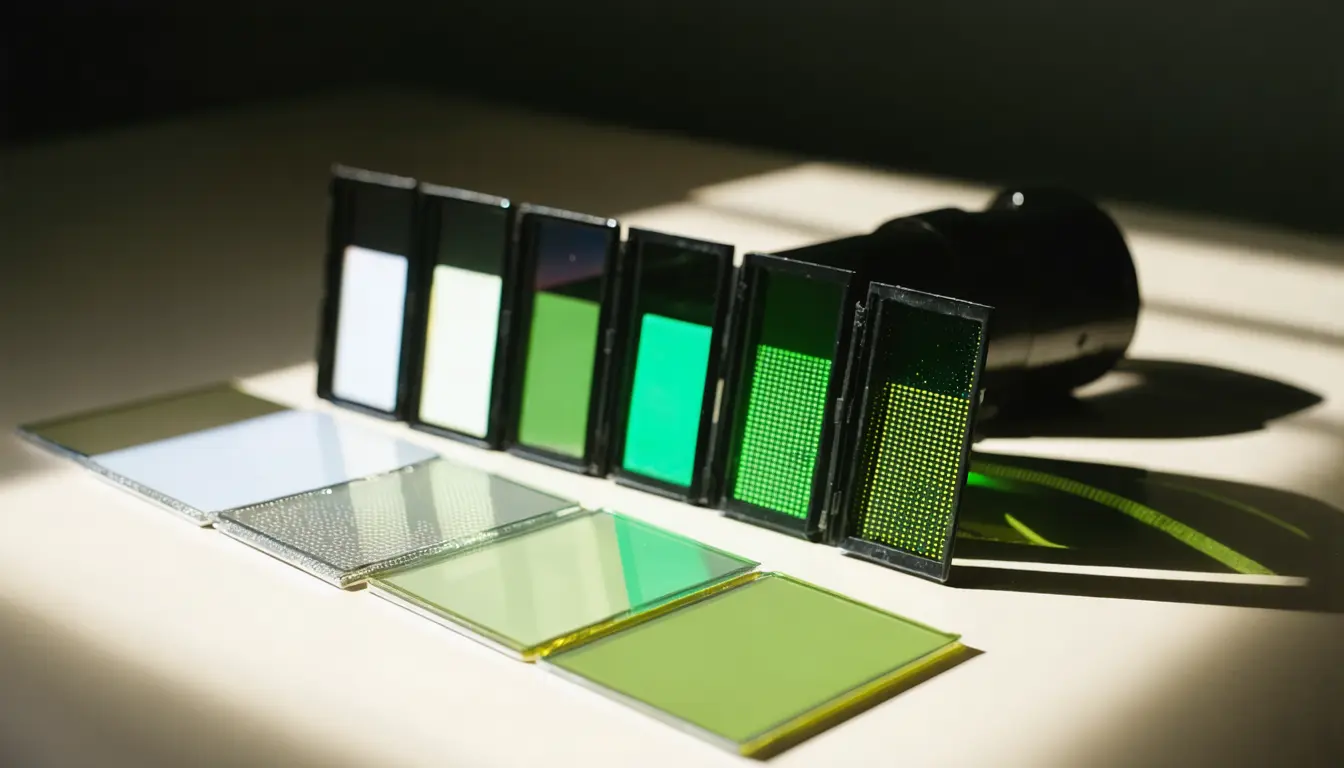
Warwick's color model turns the white dwarf WD J1330+6435 chartreuse green
Warwick astronomers calculate that some white dwarfs would look green, pink, cyan, yellow or purple, including what may be the first green star. The colors are computed from spectra, since no white dwarf is near enough to see.
The Scientist · Science desk
What happened
- The study, led by Mark Hollands and published in RAS Techniques and Instruments, finds that certain white dwarfs seen up close would shine in colors well beyond white and pale blue.
- The coolest white dwarf atmospheres reach about 1 gram per cubic centimeter, roughly the density of water and millions of times denser than the sun's photosphere.
- Carbon-rich white dwarfs come out pink or purple, those polluted with asteroid and comet debris lean yellow, and cooler hydrogen-helium ones often look cyan or pale blue.
- WD J1330+6435, at roughly 4,000 degrees Celsius, carries calcium, lithium and sodium from accreted rocky material and appears chartreuse green in the team's models.
- WD J1011+2845, 48 light-years away, produces a deep salmon-pink glow and may be the reddest star ever recorded.
Why it matters
- constraint Nobody can check these colors by eye, so each one is only as good as the measured spectrum and the color-vision model that produced it.
- constraint For the coolest white dwarfs with trace elements in the atmosphere, color stops tracking temperature the way it does for perfect radiators.
- contradiction Phys.org calls WD J1330+6435 the first known genuinely green star, while Discover says only that it could be; the 'first' is the researchers' own reading of the literature.
No white dwarf is close enough for its color to be seen directly, so the team computed it [5]. The inputs were spectra that astronomers already collect routinely, run through a model of human color vision to get the color an eye would register [5][6]. A spectrum already records a star's temperature and its chemical makeup, and this pipeline adds a third output, color [7].
The baseline the study departs from is the perfect radiator. "Most stars, including most white dwarfs, behave like 'perfect radiators,' so their color is set almost entirely by temperature. But nobody had really looked into what else might be possible for white dwarfs," said Dr. Mark Hollands, who led the work [2].
For white dwarfs the departure comes from the atmosphere. At densities near that of water, trace carbon, calcium and sodium interact with the dense helium plasma around them, and that interaction broadens the band of colors they absorb compared with what they would absorb at lower densities [4].
In the green case the absorbing element is sodium. "The traces of sodium in the atmosphere of this white dwarf absorb the orange part of the spectrum, leaving behind a ghostly green glow," Hollands said [11].
The reddest case has a different cause. WD J1011+2845 has a deep convection zone that has lifted carbon from its core to its surface, and the resulting carbon molecules push almost all of the star's light to wavelengths beyond 600 nanometers [13].
Discover, which attributes the Hollands quotes to a Warwick press release [16], notes that most of the white dwarfs seen are still white [15]. In our view the green is a credible prediction for that one star, conditional on the measured spectrum and the color-vision model behind it. The thing this doesn't tell you is how many white dwarfs fall outside the white-to-blue range, or how uncertain the computed colors are, and neither report says.
What to watch
- The paper's own uncertainty on the computed colors and the number of stars behind each color group, which would show how firm the green is.
- Whether other teams recompute WD J1330+6435's color from separate spectra or a different color-vision model and also land on green.
- Whether searches of existing spectra for cool, sodium-rich white dwarfs turn up a second green candidate.
Clarity's read
What the record supports and how the coverage leans. The claims behind it follow.
Reality
- Evidence62
- Adoption
- Insufficient
- Hype gap+20
- Incentives
- Insufficient
- Confidence65
Claim ledger
Ranked by verification strength, evidence, and original report placement.
- [1]
The study, published in RAS Techniques and Instruments and led by Dr. Mark Hollands of the University of Warwick, shows that if viewed up close, certain white dwarfs would shine in colors such as green, pink, cyan, yellow and purple.
- [2]
"Most stars, including most white dwarfs, behave like 'perfect radiators,' so their color is set almost entirely by temperature. But nobody had really looked into what else might be possible for white dwarfs," said Dr. Mark Hollands.
- [3]
The coolest white dwarf atmospheres can reach around 1 gram per cubic centimeter, roughly the density of water and millions of times denser than the sun's photosphere.
- [4]
At these densities, trace elements such as carbon, calcium and sodium interact with the surrounding dense helium plasma and absorb light across a wider range of colors than they would at lower densities, shifting a star's color away from the orange, white and blue of a perfect radiator.
- [5]
No white dwarf is close enough for its color to be seen directly, so the team calculated it from data astronomers already collect routinely: a star's spectrum.
- [6]
The team ran the spectra through a model of human color vision to reveal what color each star's light would appear as to the eye.
- [7]
A spectrum can reveal not just a star's temperature or its chemical makeup, but its true color as well.
- [8]
Applying the method across the sky, the team found colors fall into distinct groups linked to atmospheric contents: carbon-rich white dwarfs are typically pink or purple, those enriched with debris from asteroids and comets tend toward yellow, and cooler mixed hydrogen-helium white dwarfs often take on a cyan or pale blue tinge.
- [9]
WD J1330+6435, roughly 4,000 degrees Celsius, has accreted rocky material from its planetary system, enriching its atmosphere with calcium, lithium and sodium, and appears chartreuse green in the team's models.
- [10]
As far as the researchers are aware, no other star, living or dead, has ever been credibly reported as green, making this the first known genuinely green star in the galaxy.
- [11]
"The traces of sodium in the atmosphere of this white dwarf absorb the orange part of the spectrum, leaving behind a ghostly green glow," Hollands said.
- [12]
WD J1011+2845, a nearby white dwarf just 48 light-years from Earth, produces a deep salmon-pink glow and may be the reddest star ever recorded.
- [13]
WD J1011+2845 has a deep convection zone that has lifted carbon from its core to its surface, and the resulting carbon molecules distort its light so heavily that almost all of it is squeezed into wavelengths beyond 600 nanometers.
- [14]
Discover writes that WD J1330+6435, which appeared chartreuse green in the team's models, could be the first genuine green star in the galaxy.
- [15]
Most of the white dwarfs seen are still white.
- [16]
Discover attributes the Hollands quotations to a Warwick press release.
Get this ledger inside ChatGPT. Ask about any of our stories and the answer brings its figure, each claim’s verdict and the sources. Free, no account.
Sources
2 independent publishers whose own reporting we read for this story.
- discovermagazine.comWhite Dwarf Stars "Can Produce Colors Nobody Expected," Including What May Be the First Green Star
1 article · October 14, 2026
- phys.orgGreen, pink and purple: Astronomers reveal the surprising true colors of white dwarf stars
1 article · October 14, 2026
Topics and entities
Follow any of these and your For You feed starts watching them — no settings page required.
Topics
- Stellar AstrophysicsFollow
- White dwarfsFollow