Ctenosuchus, a Jurassic crocodile relative from Morocco, had teeth too thin for large prey
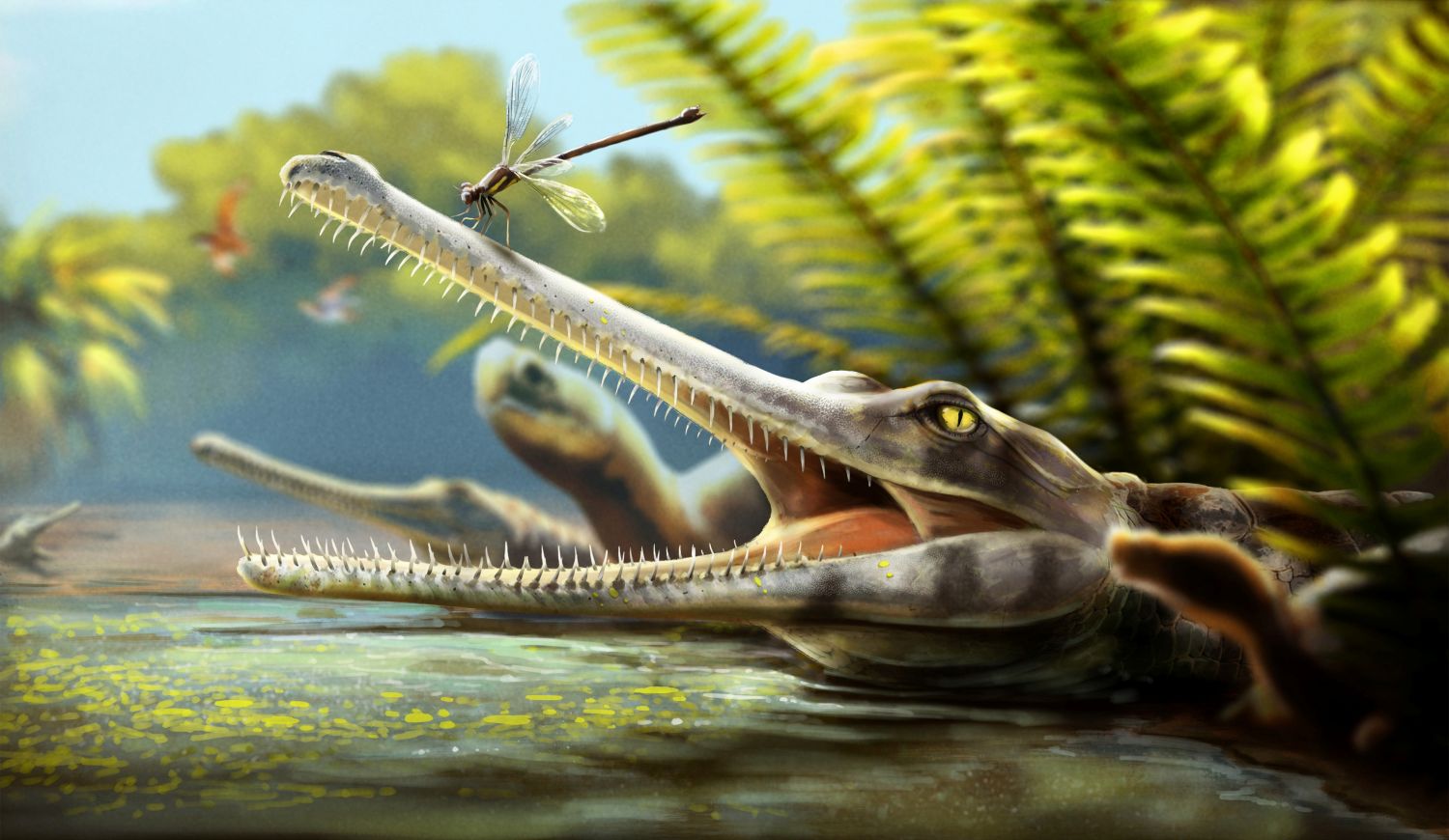
Portsmouth and Casablanca researchers name Ctenosuchus tenuidens, a 170-million-year-old Moroccan crocodile relative with needle-thin teeth. Its teeth were too fine for large prey, the researchers say, so it probably ate shrimp and tiny fish.
The Scientist · Science desk
What happened
- Its long, narrow snout was filled with exceptionally thin, needlelike teeth, unlike those of any known close relative.
- Lead author Hamzah Imran said the team first noticed small black circles beside the long bone in one fossil and put it under a microscope.
- Powerful microscopes and a look at internal structure showed the teeth had specialized ridges and sat closely spaced.
- The work appears in the Journal of Vertebrate Paleontology, with Imran of the University of Portsmouth as lead author.
Why it matters
- constraint If the diet reading holds, reconstructions of the Atlas Mountains river and lake system must leave room for a predator living on small, soft prey.
- precedent Similar tooth form in a crocodile relative, mesosaurs and some pterosaurs gives paleontologists a recurring pattern to check other slender-toothed fossils against.
- decision Teeth this fine surfaced only after scraping under a microscope, so anyone holding other Moroccan thalattosuchian material has a reason to look at tooth microstructure.
Imran's case for a soft-prey diet is an exclusion argument. He said, "The teeth are so fine that we don't think it was catching normal prey. If it caught a big fish, and the fish wriggled, those delicate teeth would get smashed. We think the animal was probably eating soft prey like shrimp, worms and tiny fish, so nothing that would break its teeth." [9] The account lists very small fish, crustaceans such as fairy shrimp and other small aquatic creatures as the likely food [8].
The thing this doesn't tell you is what the animal actually swallowed. The reading rests on tooth form. Imran speaks of "one of the fossils" [5], so the species rests on more than one specimen, but the phys.org account does not say how many, or whether any trace of a meal survives.
The comparisons add a second inference. The teeth resemble those of mesosaurs and of certain long-snouted pterosaurs that lived millions of years later [10]. The jaws and teeth also share many similarities with those of the Jurassic pterosaurs Gnathosaurus and Ctenochasma [11]. The account frames this as different groups evolving similar feeding adaptations independently [12]. It stops short of calling Ctenosuchus a filter feeder, and Imran's own list is soft prey. The pterosaurs' filter feeding is itself something, in the account's words, that "scientists believe" [11].
We think the exclusion of large, struggling prey is the sturdy part of the reading, because thin teeth cannot take that load. Which soft prey it took, fairy shrimp or worms or tiny fish, is a finer call than tooth shape is likely to settle. The wider feeding-roles claim, which the account makes for Jurassic crocodile relatives as a group [13], depends on the first of those holding.
What to watch
- Any specimen of Ctenosuchus that preserves stomach contents, which would test the shrimp-and-tiny-fish reading directly.
- The paper's own tooth measurements set against Gnathosaurus and Ctenochasma, to see how far the resemblance goes.
- Further slender-toothed thalattosuchians from Middle Jurassic Moroccan deposits, which would show whether Ctenosuchus was a one-off.
Clarity's read
What the record supports and how the coverage leans. The claims behind it follow.
Reality
- Evidence68
- Adoption
- Insufficient
- Hype gap+15
- Incentives
- Insufficient
- Confidence66
Claim ledger
Ranked by verification strength, evidence, and original report placement.
- [1]
A new species of ancient crocodile relative that lived around 170 million years ago has been discovered by scientists at the University of Portsmouth and Hassan II University of Casablanca, Morocco.
- [2]
The animal had a long, narrow snout filled with exceptionally thin, needlelike teeth, so slender that they are unlike those of any known close relative.
- [3]
The fossils were found in rocks that formed in ancient rivers and lakes in what is now the Atlas Mountains of southeastern Morocco.
- [4]
Hamzah Imran of the University of Portsmouth is lead author of the research, which was published in the Journal of Vertebrate Paleontology.
- [5]
Imran said: "We noticed these little black circles on either side of the long bone in the middle of one of the fossils, so we put it under a microscope."
- [6]
Imran said the team carefully scratched around one of the black circles with a scalpel, and as they uncovered more of it, it became longer and longer, at which point they realized the circles were incredibly thin teeth.
- [7]
Studying the fossil teeth under powerful microscopes and examining their internal structure, the researchers found the teeth had specialized ridges and were closely spaced.
- [8]
According to the account, rather than hunting large prey, Ctenosuchus likely fed on very small fish, crustaceans such as fairy shrimp and other small aquatic creatures.
- [9]
Imran said: "The teeth are so fine that we don't think it was catching normal prey. If it caught a big fish, and the fish wriggled, those delicate teeth would get smashed. We think the animal was probably eating soft prey like shrimp, worms and tiny fish, so nothing that would break its teeth."
- [10]
The teeth of Ctenosuchus resemble those seen in some ancient aquatic reptiles called mesosaurs and in certain long-snouted pterosaurs that lived millions of years later.
- [11]
The jaws and teeth of Ctenosuchus have many similarities with the jaws of some Jurassic pterosaurs such as Gnathosaurus and Ctenochasma that scientists believe were filter feeders.
- [12]
The research shows that different groups of prehistoric animals evolved similar feeding adaptations independently.
- [13]
According to the account, the fossils reveal that Jurassic crocodile relatives occupied a wider range of habitats and feeding roles than previously realized.
Sources
2 independent publishers whose own reporting we read for this story.
Topics and entities
Follow any of these and your For You feed starts watching them — no settings page required.
Topics
- Fossil discoveriesFollow
- Jurassic reptilesFollow
- PaleontologyFollow
Entities
- Hamzah ImranFollow
- ThalattosuchiaFollow
- Ctenosuchus tenuidensFollow
- Journal of Vertebrate PaleontologyFollow
- University of PortsmouthFollow
- Hassan II University of CasablancaFollow